
Furnace Installation in Baltimore, OH
Furnace Installation in Baltimore, OH: Expert full-service setup from assessment to commissioning. Learn more and schedule your installation today.

Furnace Installation in Baltimore, OH
A properly sized, code-compliant furnace keeps your Baltimore, OH home safe, comfortable, and efficient through cold Ohio winters.
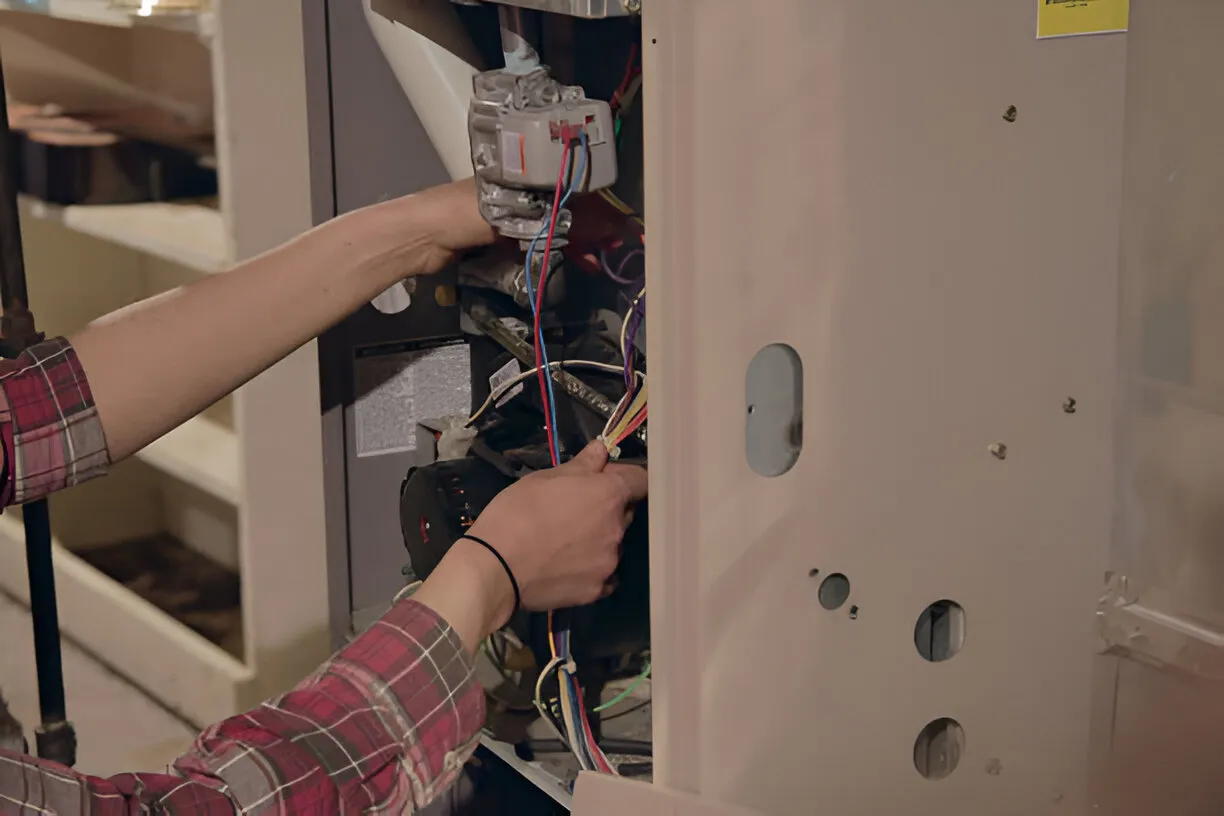
Why furnace replacement matters in Baltimore, OH
Baltimore and the surrounding Fairfield County area experience freezing temperatures and occasional heavy snow from late fall through early spring. Older furnaces can struggle to maintain steady indoor temperatures, run longer, and cost more to operate. Upgrading to a correctly sized, higher-AFUE furnace reduces fuel use, improves comfort in drafty or multi-level homes, and minimizes the risk of breakdowns during peak heating demand.
Common furnace issues in Baltimore, OH homes
- Undersized equipment that runs continuously and fails to reach set temperatures on the coldest nights
- Oversized furnaces that short-cycle, increasing wear and lowering comfort
- Deteriorated venting or unlined chimneys causing backdraft or carbon monoxide risk
- Leaky, uninsulated ducts that waste heat, especially in crawl spaces or attics common to older local homes
- Incompatible or outdated thermostats and zoning that prevent even temperature distribution
Pre-install assessment (what technicians inspect)
A thorough pre-install assessment ensures the right furnace and installation approach:
- Home heat load calculation (Manual J) to determine correct furnace capacity based on insulation, windows, orientation, and local climate.
- Duct evaluation (Manual D) to confirm the duct system can handle the new furnace’s airflow; identifies leaks, undersized trunks, or poor return pathways.
- Fuel and venting review to confirm natural gas, propane, or electric options and assess existing chimneys, flues, or vent termination locations.
- Electrical and clearance checks for safe equipment placement and any necessary upgrades.
- Discussion of comfort goals, budget, desired efficiency, and future plans (zoning, air quality upgrades, or humidification).
Equipment selection: AFUE, stages, and types
Selecting the right furnace depends on budget, efficiency goals, and home needs:
- AFUE ratings: Look for furnaces with AFUE percentages appropriate for long-term savings. Typical mid-efficiency units run in the mid-80s AFUE; high-efficiency condensing furnaces exceed 90% AFUE and use PVC venting. Higher AFUE means lower fuel cost but often higher upfront cost.
- Single-stage vs two-stage vs modulating:
- Single-stage operates at full capacity and is simplest and least costly.
- Two-stage furnaces have a low-fire and high-fire setting, improving comfort and efficiency during milder weather.
- Modulating furnaces adjust output continuously for the tightest control, best comfort, and highest efficiency in varied Baltimore winter conditions.
- Fuel type: Natural gas is common; propane or high-efficiency electric heat may be considered where gas service is not present.
- Compatibility: Ensure the furnace matches your existing thermostat and any zoning controls or consider upgrading to a smart thermostat for better control and diagnostics.
Typical installation steps
- Site preparation: Move or protect flooring and create a clear workspace.
- Remove old equipment: Safely disconnect gas, electrical, venting, and duct transitions, then remove the old furnace and clean the area.
- Duct and vent modifications: Modify or replace duct collars, add transition pieces, and prepare venting or flue connections per the new furnace requirements.
- Set and secure the new furnace: Install on level floor or platform with required clearances, attach venting, connect gas and electrical lines, and secure condensate drainage for condensing units.
- Connect controls and safety devices: Install thermostat wiring, high-limit switches, condensate switches, and carbon monoxide devices if applicable.
- Seal and insulate duct connections: Use appropriate mastic or UL-181 tape and add insulation where needed, especially in unconditioned spaces.
- Final checks and commissioning: Perform combustion analysis, gas pressure checks, electrical checks, airflow verification, and thermostat calibration.
Venting and duct considerations specific to Baltimore, OH
- Condensing furnaces (high AFUE) use PVC venting that can often be routed horizontally through an exterior wall; ensure proper slope for condensate and freeze protection in cold months.
- Existing masonry chimneys in older Baltimore homes should be inspected for integrity and may require lining before connecting a new gas furnace.
- Adequate combustion air is essential in tightly built homes; some installations require direct venting or dedicated outside combustion air.
- Duct sealing and insulation are especially important in older local homes with basements, crawlspaces, or attics to prevent heat loss and humidity issues.
Testing and commissioning (what gets verified)
- Combustion and carbon monoxide testing to confirm safe operation and proper fuel-air mixture.
- Gas line and joint leak checks.
- Electrical safety checks and verification of breakers and wiring.
- Airflow and temperature rise measurement to ensure the furnace is operating inside manufacturer specifications.
- Thermostat operation and zone control verification.
- Final safety shutoff and condensate drain performance on condensing units.
- Documentation of serial numbers, model numbers, and factory warranty registration instructions.
Timelines and inspections
- Typical full replacement in a retrofit situation: 1 day for a straight swap if duct and venting work is minimal.
- More complex jobs (chimney lining, duct redesign, added zoning) can stretch to 1 to 3 days.
- Permit processing and required municipal inspections may add several business days depending on local building department schedules in Baltimore, OH. Always plan for permit review and final inspection before assuming the installation is complete.
Permits and warranties
- A mechanical permit and final inspection by the local building department are commonly required for furnace replacements and new installations in the Baltimore area to ensure code compliance and safety.
- Manufacturer warranties typically cover parts and may include different terms for heat exchangers versus control boards. Installer warranties cover workmanship; ensure warranty registration happens promptly and that you receive written warranty documentation at completion.
Post-install maintenance and what to expect
- Annual preventive maintenance keeps efficiency high and prolongs equipment life; typical tasks include filter changes, burner cleaning, safety checks, and performance tuning.
- Replace filters regularly and maintain clear intake and exhaust terminations.
- Monitor for unusual noises, cycling patterns, or higher-than-expected fuel bills which can indicate airflow or control issues.
- A well-executed installation combined with routine maintenance will deliver safer operation, better comfort, and lower fuel costs for years.
Final notes on benefits
A properly sized and installed furnace tailored to Baltimore, OH conditions provides consistent warmth on the coldest nights, improves indoor air quality by enabling proper filtration and airflow, and reduces heating costs through improved AFUE and system efficiency. Prioritizing a complete pre-install assessment, correct venting and ductwork, thorough commissioning, and adherence to permits and warranties ensures a reliable, long-term heating solution for your home.
Hot Deals & Cool Savings

.webp)
New Service Agreement Membership
.webp)
Any New Client Service
Next Service for Referring a New Client
New Service Agreement Membership
Any New Client Service
Next Service for Referring a New Client
.webp)
.webp)

Service Areas
