
Heat Pump Replacement in Columbus, OH
Heat Pump Replacement in Columbus, OH: Learn when replacement is warranted, how professionals evaluate needs, installation timelines, rebates, and expected energy savings.

Heat Pump Replacement in Columbus, OH
Replacing a heat pump is a major home investment. In Columbus homes, where humid summers and cold winters place dual demands on HVAC systems, a poorly performing or aging heat pump can mean higher energy bills, uneven comfort, frequent repairs, and potential refrigerant or safety issues.
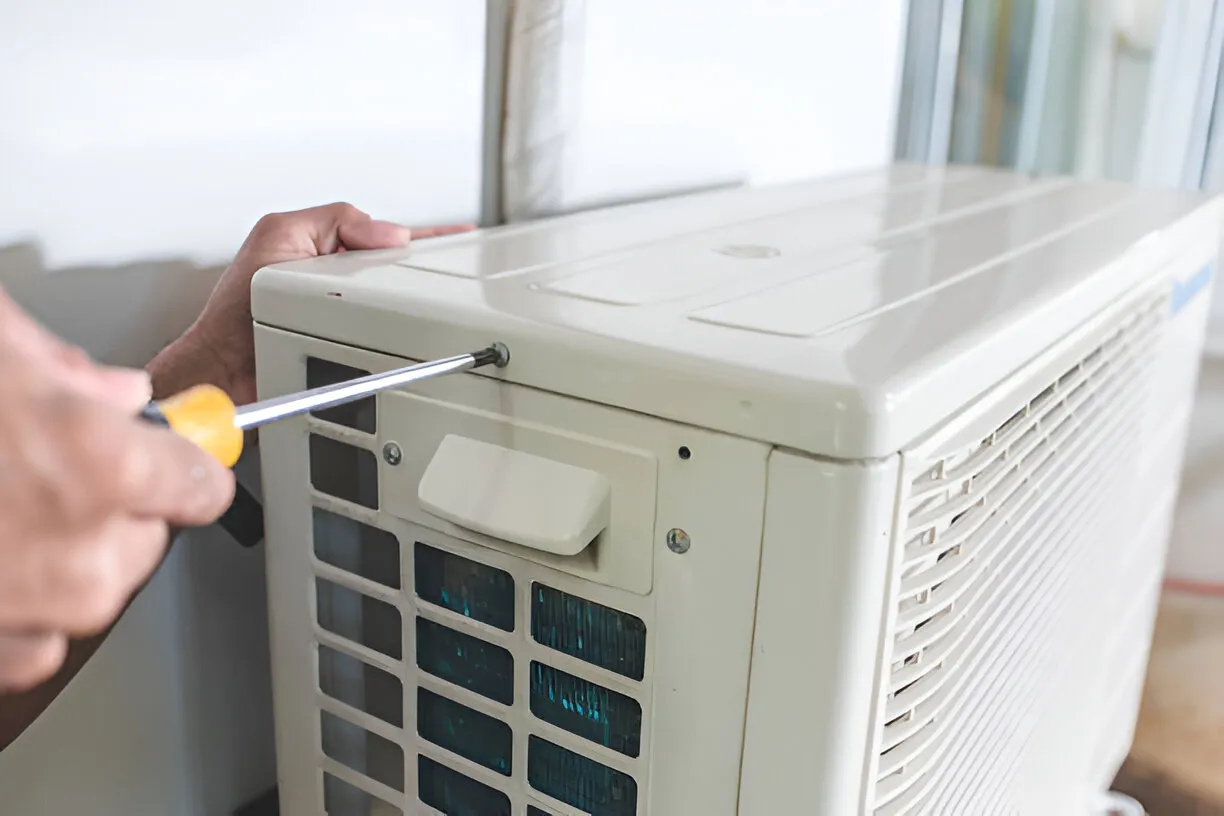
When a full heat pump replacement is needed
Common indicators that a full replacement is the appropriate option rather than repair:
- System age: most heat pumps older than 12–15 years are approaching end of useful life; performance and reliability degrade significantly.
- Frequent breakdowns or repeated compressor failures.
- Refrigerant issues: older units using phased-out refrigerants (for example R-22 on very old systems) are expensive to service.
- Rising energy bills despite routine maintenance.
- Inability to maintain consistent comfort (hot/cold rooms) even after balancing or repairs.
- Repair cost approach or exceed roughly half the cost of replacement.
- Existing equipment is badly undersized or oversized relative to the home’s current load.
How your system is evaluated: inspection and load calculation
A responsible replacement starts with a professional evaluation, not a quick “match and swap.” Typical steps:
- Full system inspection: measure current performance, inspect outdoor unit, indoor coil, ductwork, electrical connections, and thermostat.
- Manual J load calculation: precise room-by-room heat gain and loss analysis to determine correct heating and cooling capacity for your home, accounting for insulation, windows, occupancy, and local climate factors in Columbus.
- Ductwork assessment (including leakage testing): evaluating if ducts need sealing, repair, or resizing (Manual D) to deliver designed airflow.
- Electrical review: verify that existing wiring, circuit breakers, and service capacity meet new equipment requirements.
- Equipment recommendation (Manual S): choose models based on load, distribution system, and budget.
Equipment selection: efficiency and sizing recommendations
Choosing the right equipment is about matching capability and efficiency to your home’s needs.
- Right-sizing is critical: oversized units short-cycle, reducing comfort and efficiency; undersized units struggle during heat waves and cold snaps. Manual J and Manual S guide proper sizing.
- Efficiency metrics to compare:
- SEER (Seasonal Energy Efficiency Ratio) for cooling — modern air-source heat pumps commonly range from SEER 15 to SEER 22+. Higher SEER = lower cooling energy use.
- HSPF (Heating Seasonal Performance Factor) or HSPF2 for heating — newer, efficient models often range between HSPF 8.5 and 13+. Higher HSPF = better heating efficiency.
- EER and COP provide performance at specific conditions; consider low-temperature COP if you want strong cold-weather performance.
- Cold-climate and inverter-driven models: Columbus winters are moderate but can dip into cold periods. Variable-speed inverter heat pumps with good low-temperature performance maintain comfort and efficiency without excessive supplemental heat.
- Ducted vs ductless: if ducts are leaky or nonexistent, mini-split ductless options or a hybrid approach can be more efficient and cost-effective.
- Look for ENERGY STAR certification and manufacturer refrigerant warranties; many modern units use more environmentally friendly refrigerants.
Removal and disposal of old systems
Proper removal follows environmental and safety rules:
- Refrigerant recovery: certified technicians must recover and dispose of refrigerant in compliance with EPA regulations.
- Disposal and recycling: old compressors, coils, and scrap metal are recycled where possible; insulation and electronic components disposed of per local codes.
- Permits: many jurisdictions require permits and inspections for HVAC replacement and refrigerant handling; professionals typically arrange these.
- Documentation: keep disposal and refrigerant recovery records for warranty and rebate purposes.
Typical installation timeline
Timelines vary by complexity but here is a standard progression:
- Initial evaluation and load calculation: 1–2 hours onsite; report and equipment selection may take a few days.
- Ordering equipment: depends on model availability, usually 1–14 days.
- Permitting: can overlap equipment procurement; permit times vary.
- Installation: 1–3 days for a standard air-source heat pump replacement (outdoor unit swap, indoor coil and air handler work, refrigerant lines, electrical hookup, duct connections).
- Commissioning and testing: final balancing, thermostat setup, and homeowner orientation typically take a few hours after installation.
- Inspection and paperwork: local inspection scheduling can add a day or more.
Rebates, financing and incentives (Columbus, OH)
Columbus homeowners have multiple potential incentive sources. Availability and program details change, so consult current program guidelines when planning:
- Federal tax incentives: recent federal energy policies have supported tax credits for qualifying heat pump installations (for example, the Residential Clean Energy Credit). These credits may cover a percentage of qualified equipment and installation costs for eligible systems and taxpayers.
- State and local rebates: Ohio utilities and local programs sometimes offer rebates or incentives for high-efficiency heat pumps, energy assessments, or duct sealing. Check with your utility for current offerings.
- Income-qualified programs and local efficiency initiatives: some utilities and non-profit programs provide enhanced incentives or financing for lower-income households.
- Manufacturer or installer financing: many manufacturers and installers offer financing plans or seasonal promotions to spread installation costs.
Warranty and post-installation coverage
Understand the two parts of warranty protection:
- Manufacturer warranty: typically covers compressor and major components; common durations are 5–10 years for compressors and parts. Some premium models include extended warranties when registered.
- Labor warranty: installers may provide limited labor warranties for workmanship—confirm the length and what is covered.
- Registration and maintenance: timely product registration and regular maintenance (annual tune-ups) are often required to keep warranties valid.
Expected energy savings after upgrade
Actual savings depend on system age, efficiency difference, and home characteristics, but typical outcomes:
- Replacing an older unit (10–15+ years or low SEER/HSPF values) with a modern high-efficiency heat pump can reduce combined heating and cooling energy use by roughly 20–40% in many Columbus homes.
- If you are replacing electric resistance heating with a modern heat pump, heating energy use can drop by 30–50% or more because of the heat pump’s higher efficiency.
- Savings are maximized with proper sizing, sealed and insulated ductwork, a programmable thermostat, and addressing insulation or infiltration issues.
- Seasonal performance varies: cooling savings are often immediate in summer; heating savings depend on the new unit’s cold-weather performance and whether supplemental heat is needed during extreme cold.
Hot Deals & Cool Savings

.webp)
New Service Agreement Membership
.webp)
Any New Client Service
Next Service for Referring a New Client
New Service Agreement Membership
Any New Client Service
Next Service for Referring a New Client
.webp)
.webp)

Service Areas
