
AC Service in Columbus, OH
Air conditioning service in Columbus, OH to keep your home comfortable. Schedule expert diagnostics, maintenance, and reliable repairs—call or request service now.

Air Conditioning Service in Columbus, OH
Columbus summers bring hot, humid days that push home air conditioning systems to their limits. Reliable air conditioning service in Columbus, OH keeps your home comfortable, lowers energy bills, and prevents mid-summer breakdowns.
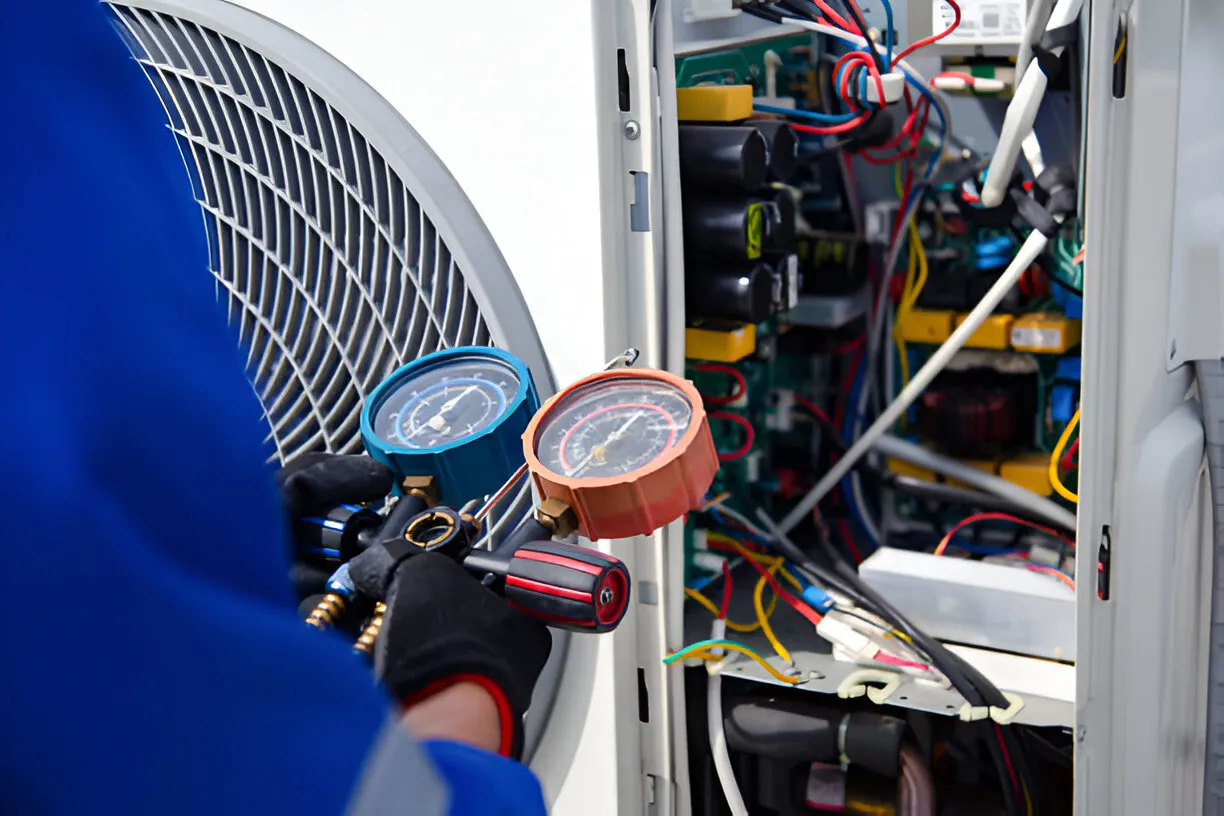
Why timely AC service matters in Columbus homes
Columbus experiences high cooling demand from late spring through early fall. Heat and humidity increase strain on compressors and condensers, while seasonal pollen and dust reduce airflow and indoor comfort. Prompt service prevents more expensive damage, improves indoor air quality, and preserves system efficiency—especially important for older homes in neighborhoods like German Village, Clintonville, and Bexley where ductwork and existing equipment may be aging.
Common air conditioning problems in Columbus and what causes them
- Insufficient cooling or warm rooms — undersized equipment, low refrigerant, blocked condensers, or duct leaks.
- Short cycling — thermostat issues, oversized unit, or failing compressor components.
- High energy bills — dirty coils, clogged filters, inefficient equipment, or poor insulation.
- Noisy operation — failing fan motors, loose panels, or worn bearings.
- Frozen evaporator coils — low airflow, dirty coils, or refrigerant issues.
- Water leaks or clogged condensate drain — blocked drain lines or pan issues.
- Refrigerant leaks or converted refrigerant requirements — due to age and phase-outs of older refrigerants.
Diagnostic process: how technicians find the root cause
A thorough diagnostic follows a consistent, transparent process:
- Visual inspection of indoor and outdoor units and ductwork.
- Electrical system and safety control checks (capacitors, contactors, breakers).
- Refrigerant pressure and leak detection when applicable.
- Airflow measurements (supply and return) and filter condition assessment.
- Thermostat calibration and control system verification.
- Load calculation (Manual J) for replacement recommendations when performance does not match home needs.
- Clear documentation of findings and repair options with expected outcomes.
Diagnostics focus on fixing the underlying problem, not just masking symptoms.
Common repairs and long-term solutions
- Refrigerant leak repair and recharge with approved refrigerants.
- Replacement of capacitors, contactors, motors, and compressors.
- Condenser and evaporator coil cleaning or replacement.
- Condensate drain clearing and overflow prevention.
- Duct sealing, repair, or reconfiguration to restore proper airflow.
- Thermostat upgrades or smart thermostat installation.
- Converting or replacing systems that use obsolete refrigerants.
Technicians prioritize repair longevity, recommending replacement only when repairs are no longer cost-effective or when a newer, more efficient system will deliver substantial savings.
Routine maintenance and tune-ups: what’s included and why it helps
Seasonal maintenance keeps systems running efficiently and reduces emergency calls. A typical tune-up includes:
- Filter inspection and replacement recommendation.
- Cleaning coils and condensate drains.
- Checking refrigerant levels and system pressures.
- Lubricating moving parts and checking belt condition.
- Inspecting electrical connections and safety controls.
- Verifying thermostat accuracy and airflow.
Regular maintenance increases efficiency, extends equipment life, lowers utility costs, and improves humidity control—critical in Columbus’s humid summers.
Installation and replacement options
When a replacement is recommended, choices include:
- Central split systems with modern high-SEER condensers and matched indoor coils.
- High-efficiency heat pumps for combined heating and cooling.
- Ductless mini-split systems for room additions or homes without ductwork.
- Zoning systems and variable-speed equipment for consistent comfort and lower operating costs.
Proper sizing with a Manual J load calculation, professional ductwork evaluation, and code-compliant installation are essential to achieve expected performance. For Columbus homeowners, selecting a system with higher SEER and good humidity control pays off across the cooling season.
Energy-efficiency recommendations for Columbus residents
- Upgrade to a higher SEER-rated system or variable-speed compressor.
- Install a programmable or smart thermostat and set sensible schedules.
- Seal and insulate ducts and attics to minimize cooling loss.
- Use well-sealed windows and shading for west-facing exposures.
- Change filters regularly and maintain scheduled tune-ups.
- Explore local utility rebates and ENERGY STAR incentives that apply to efficient equipment.
These measures reduce operating costs and improve comfort during hot, humid months.
Emergency response and service hours
Standard service hours typically cover weekday business hours; many providers also offer after-hours emergency response for sudden failures, often with priority dispatch for urgent cooling loss. Expect routine appointment windows during weekday 8 AM–5 PM hours, with emergency dispatch options available for overnight or weekend failures depending on provider coverage and staffing.
Financing and warranties
Financing options are commonly available to spread the cost of larger installations and replacements. Typical warranty structures include:
- Manufacturer limited parts and compressor warranties (varies by brand and model).
- Optional extended warranties or service agreements covering labor and parts.
- Transferable warranties on new installations when registered properly.
Compare warranty lengths and coverage scope when evaluating replacement proposals. Financing availability and terms vary; many homeowners choose finance plans to manage upfront costs while capturing long-term efficiency savings.
Technician qualifications and safety standards
Qualified technicians bring certifications and training such as:
- EPA Section 608 certification for refrigerant handling.
- Factory training on major equipment brands and systems.
- NATE or equivalent competency certifications and ongoing continuing education.
- Background checks and adherence to local code and permit requirements.
Technicians use calibrated diagnostic tools and follow safety protocols for electrical and refrigerant work.
Service area coverage in and around Columbus
Services typically cover Columbus neighborhoods and nearby communities, including Downtown Columbus, Clintonville, German Village, Bexley, Grandview, Gahanna, Westerville, Reynoldsburg, Dublin, Hilliard, Grove City, Worthington, Powell, New Albany, and adjacent suburbs.
How to schedule service
Scheduling is available through the service provider’s online service request form or by phone during standard business hours. When scheduling, have the following ready to speed the process: home address, HVAC model and approximate age, a brief description of symptoms, and preferred appointment days. For replacements, be prepared to discuss recent energy bills and any comfort issues in specific rooms.
Hot Deals & Cool Savings

.webp)
New Service Agreement Membership
.webp)
Any New Client Service
Next Service for Referring a New Client
New Service Agreement Membership
Any New Client Service
Next Service for Referring a New Client
.webp)
.webp)

Service Areas
