
Whole House Air Purifiers in New Albany, OH
Whole-house air purifiers improve New Albany, OH indoor air with HEPA, carbon, UV options and professional installation—schedule your consultation today.

Whole House Air Purifiers in New Albany, OH
Whole-house air purifiers provide continuous, whole-home indoor air quality control by treating the air that moves through your HVAC system. In New Albany, OH, where spring pollen, humid summers that encourage mold growth, and seasonal temperature swings increase indoor contaminant loads, a whole-house system protects everyone in your home from allergens, odors, volatile organic compounds (VOCs), and fine particles more effectively and conveniently than portable units.
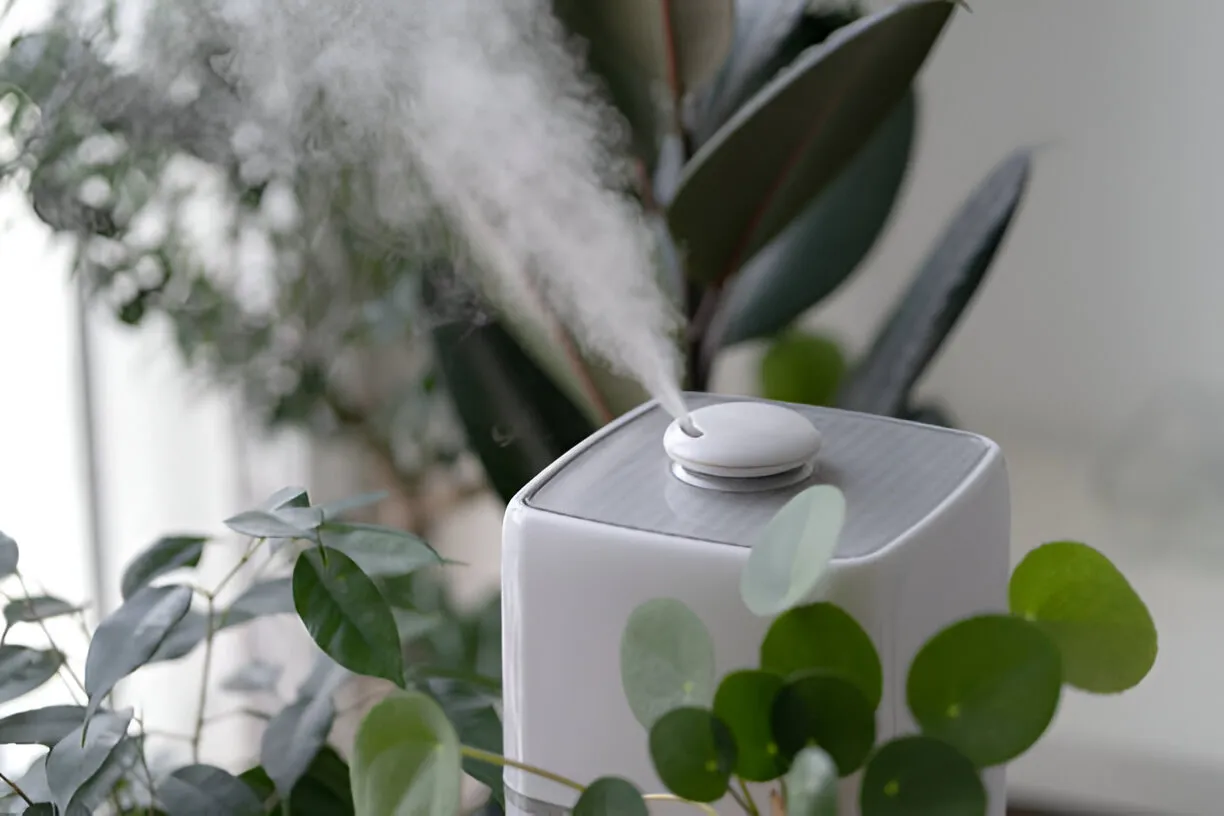
Why New Albany homes benefit from whole-house air purification
- Spring pollen from trees and grasses is common in Franklin County and can spike indoor allergen counts when windows are opened.
- Warm, humid summers create higher mold and dust mite activity in attics and basements.
- Newer construction and remodeling projects in the area can release VOCs from paints, flooring, and cabinetry.
- Whole-house systems treat air centrally, delivering consistent filtration to every room that shares the heating and cooling system.
Common whole-house air quality problems in New Albany, OH
- Seasonal allergy flare-ups and worsening asthma symptoms.
- Persistent cooking and pet odors trapped in an open-plan layout.
- Elevated fine particulate matter (PM2.5) during regional smoke events or neighborhood wood burning.
- Odors and VOCs after renovations or from household products.
- Recurring mold or mildew scent in basements and crawl spaces.
Types of whole-house air purification systems
Understanding differences helps match a system to the problem you need solved.
- HEPA (True HEPA)
- What it does: Mechanical filtration that captures particles down to 0.3 microns with very high efficiency.
- Performance: True HEPA captures roughly 99.97% of 0.3 μm particles; larger and smaller particles are captured at equal or better rates through diffusion and interception.
- Best for: Allergens, dust, pet dander, smoke and PM2.5.
- Activated carbon
- What it does: Adsorbs odors, smoke chemicals, and many VOCs from the air.
- Performance: Effectiveness depends on carbon bed depth and airflow; thicker beds capture more VOCs and odor molecules per pass.
- Best for: Cooking smells, tobacco/wood smoke, off-gassing from new materials.
- UV germicidal lamps
- What it does: Inactivates microorganisms (bacteria, mold spores, some viruses) passing through the HVAC airstream by damaging their DNA/RNA.
- Performance: Most effective when used alongside filtration and proper air-speed; UV primarily reduces microbial growth on coils and in ductwork and can reduce airborne microbial loads.
- Best for: Reducing mold growth on coils, supplemental microbial control in high-humidity homes.
- Bipolar ionization (ionizers)
- What it does: Releases charged ions that attach to particles and help them cluster and settle or be captured by filters.
- Performance: Can improve particle removal efficiency when paired with filtration; results vary by system and indoor conditions.
- Best for: Enhancing filtration performance and reducing fine particle counts.
- Electronic precipitators (electrostatic)
- What it does: Charge and collect particles on plates that must be cleaned regularly.
- Performance: High particle removal efficiency, with ongoing maintenance. Some older units can produce ozone; modern units meet safety standards.
- Best for: Homes prioritizing particle removal where routine cleaning is acceptable.
How whole-house systems integrate with your existing HVAC
- Duct-mounted solutions install in the return or supply plenum or in a dedicated in-duct housing near the air handler.
- HEPA-grade filtration often requires either a specially designed in-duct HEPA housing with a compatible fan or upgraded air handler to handle increased pressure drop.
- Activated carbon media can be combined with filters in layered housings to address particles and gases in one pass.
- UV lamps mount near the evaporator coil to prevent microbial growth and improve system efficiency.
- Ionizers and electronic units are typically installed in line with the return duct or inside the air handler.
Typical installation steps:
- On-site assessment of HVAC capacity, ductwork, and indoor air challenges.
- Selection of system type(s) and appropriate sizing based on home volume and furnace/air handler airflow (CFM).
- Professional installation into the return/supply or air handler with electrical connections as needed.
- System testing to verify airflow, pressure drop, and proper operation.
Understanding performance metrics
- CADR (Clean Air Delivery Rate): Common for portable units; whole-house performance is better described by airflow (CFM) and air changes per hour (ACH).
- ACH formula: ACH = (CFM × 60) / home volume (cu ft). Higher ACH means more frequent full-air turnover. Aim for multiple air exchanges per hour for allergy and smoke control.
- Particle capture rates: Expressed as a percentage for a given particle size (e.g., HEPA ~99.97% at 0.3 μm).
- MERV vs HEPA: MERV 13–16 filters capture most fine particles and are commonly used in residential central systems. True HEPA requires greater system compatibility due to higher pressure drop.
Example: A 2,500 sq ft home with 8 ft ceilings (~20,000 cu ft) and a system delivering 1,000 CFM yields about 3 ACH (1000 × 60 / 20,000 = 3). Adding higher-efficiency filtration or increasing airflow raises effective CADR and contaminant removal.
Maintenance and replacement intervals
- Pre-filters: Inspect monthly; replace or clean every 1–3 months depending on loading.
- HVAC filters: High-efficiency MERV 13 filters typically last 3–6 months; frequency depends on occupancy, pets, and pollen seasons in New Albany.
- HEPA filters in dedicated housings: Generally 12–36 months depending on system and contaminant load.
- Activated carbon cartridges: Replace every 6–12 months for strong odor/VOC environments; lighter use can extend life.
- UV lamps: Replace annually for consistent germicidal output.
- Electronic precipitator plates: Clean every 1–3 months, more often if there is heavy dust or cooking.
Routine professional inspections of the integrated system are recommended annually to confirm airflow and component operation.
Health and comfort benefits
- Reduces indoor allergens and particulate counts that trigger allergy and asthma symptoms.
- Controls persistent odors and VOCs to improve perceived air quality and comfort.
- Minimizes mold and microbial growth on HVAC components in New Albany’s humid months.
- Provides whole-home protection—no need to move portable units from room to room.
- Improves HVAC efficiency when coils and filters remain cleaner, which can help maintain consistent comfort.
Short case studies (anonymized)
- Suburban New Albany home: After installing an in-duct HEPA housing plus activated carbon media, indoor PM2.5 counts measured during spring pollen season dropped by ~85% in the first month and occupants reported fewer daytime allergy symptoms.
- Renovated townhouse near New Albany business park: Combining a carbon-packed media and UV lamp reduced renovation-related odors and mold odors in the basement within two weeks and prevented recurring microbial growth on the coil.
Frequently asked questions
- Which system is best for seasonal allergies?
- A high-efficiency mechanical filter (MERV 13 or True HEPA in a compatible housing) combined with proper airflow typically offers the best particle removal for allergy sufferers.
- Can a whole-house purifier remove VOCs from new construction?
- Activated carbon media is effective at adsorbing many VOCs. For high VOC loads, choose a deeper carbon bed and ensure regular replacement.
- Will adding a HEPA filter strain my HVAC?
- True HEPA has a higher pressure drop and may require a dedicated housing or an upgraded air handler. A qualified assessment will determine the right approach.
- How do I know the system is working?
- Professional installers can measure airflow, pressure drop, and particle counts. Homeowners can also notice reduced odors, fewer allergy symptoms, and less dust buildup.
- Are there ozone concerns with electronic systems?
- Older ionizing/ozone-producing units can emit ozone. Modern certified electronic precipitators and ionization systems are designed to meet indoor ozone limits; verify specifications before installation.
Hot Deals & Cool Savings

.webp)
New Service Agreement Membership
.webp)
Any New Client Service
Next Service for Referring a New Client
New Service Agreement Membership
Any New Client Service
Next Service for Referring a New Client
.webp)
.webp)

Service Areas
