
IAQ Products in Worthington, OH
IAQ products for Worthington, OH homes: whole-house purifiers, humidifiers, dehumidifiers, and ventilation. Learn installation options and maintenance to improve air quality.

AQ Products in Worthington, OH
Indoor air quality (IAQ) matters year-round in Worthington, OH. Seasonal pollen in spring, humid summers, cold dry winters, and the prevalence of older homes with basements all increase the likelihood of allergens, mold, dust, and elevated radon or VOC levels.
Why IAQ matters in Worthington homes
- Spring and early summer pollen from maples, oaks, and grasses cause seasonal allergies.
- High summer humidity and basement moisture create mold risk in older foundations.
- Cold winters dry indoor air, worsening respiratory irritation and static.
- Radon potential in Ohio means some homes will benefit from testing and mitigation.Improved IAQ reduces allergy and asthma symptoms, lowers airborne illness transmission, protects finishes and furnishings, and improves sleep and overall comfort.
Common indoor pollutants to target
- Particulate matter (PM2.5 and PM10): combustion particles, dust, wood smoke
- Allergens: pollen, pet dander, dust mite fragments
- Mold spores and microbial VOCs after water intrusion
- Volatile organic compounds (VOCs): paints, cleaners, building materials
- CO2 and stale air from inadequate ventilation
- Excess moisture or dryness (relative humidity extremes)
- Radon gas (sub-slab entry in some Ohio homes)
IAQ product categories — what each does and when to choose it
Whole-house air purifiers (in-duct)
- What they are: Filters and/or electronic cleaners installed in HVAC ducts to treat all circulated air.
- Best for: Homes with central HVAC that need whole-home filtration for allergies or particulate reduction.
- Key features: MERV rating, HEPA compatibility, pressure drop, integration with furnace/air handler.
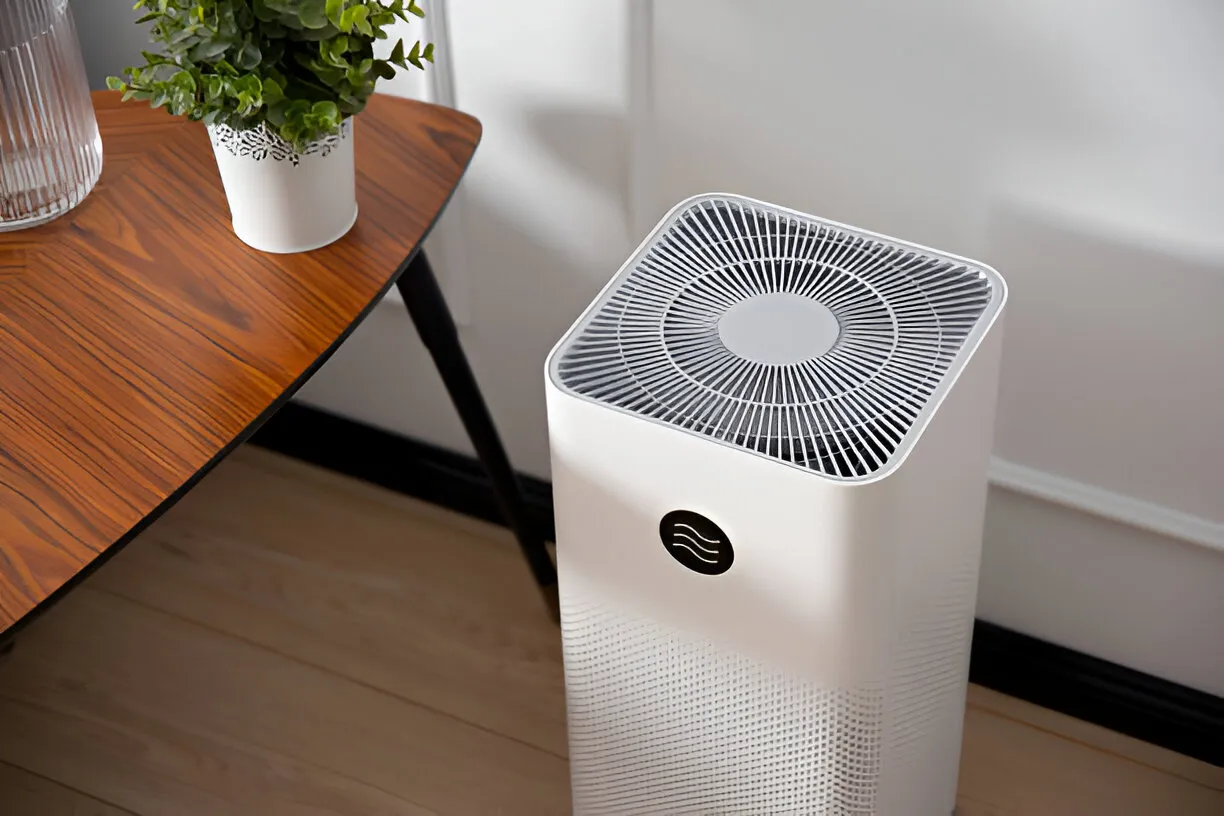
Standalone HEPA purifiers
- What they are: Portable units with true HEPA filters for room-by-room cleanup.
- Best for: Targeted use in bedrooms or living rooms, supplemental filtration during wildfire smoke events or when whole-house upgrade isn’t feasible.
- Metrics: CADR (Clean Air Delivery Rate), coverage area (sq ft), noise level (dB).
Humidifiers (whole-house or portable)
- What they do: Add moisture to dry indoor air.
- Best for: Cold Ohio winters to maintain 30–50% relative humidity, alleviate dry skin, sinus irritation, and static.
- Considerations: Whole-house units integrate with HVAC; steam vs. evaporative technologies, cleaning needs to avoid microbial growth.
Dehumidifiers (basement or whole-house)
- What they do: Remove excess moisture to prevent mold and musty odors.
- Best for: Basements, high-humidity summers, homes with crawlspaces or water intrusion history.
- Metrics: Pints removed per day, energy efficiency, condensate drainage options.
Ventilation solutions: ERV/HRV and upgraded mechanical ventilation
- What they are: Heat or energy recovery ventilators that exchange indoor and outdoor air efficiently.
- Best for: Tighter, well-sealed Worthington homes that need fresh-air exchange without energy loss.
- Benefits: Improved CO2 levels, reduced VOC buildup, balanced humidity with ERVs.
Advanced air cleaning technologies
- UV-C lamps (UVGI): Inactivate microbes on coils or in air streams; effective as an adjunct to filtration.
- Bipolar ionization and PCO: Emerging technologies with pros and cons; may reduce some airborne contaminants but require careful selection and independent performance data.
- Activated carbon filters: Effective for VOCs and odors when combined with particulate filtration.
Performance metrics and certifications to compare
- MERV rating: Higher MERV (13–16) removes smaller particles but may increase pressure drop; ensure HVAC can handle it.
- HEPA: True HEPA captures 99.97% of 0.3 micron particles — best for severe allergy or smoke concerns.
- CADR: Look for CADR values that match room size for portable units.
- CFM (cubic feet per minute): Relevant for whole-house devices and ERV/HRV sizing.
- Energy efficiency: Energy Star ratings or low-wattage operation reduce operational cost.
- Standards and certifications: AHRI for HVAC components, UL safety listings, AHAM (for CADR), NSF/ANSI for certain air treatment products.
Selection process — how professionals decide what’s right
- Discovery and symptom review: Occupant health complaints, odor, visible mold, or known radon concerns.
- Home inspection: HVAC capacity, duct layout, basement or crawlspace condition, and existing ventilation.
- IAQ testing: Short-term and/or long-term monitoring for PM2.5, VOCs, CO2, relative humidity, and targeted radon testing when indicated.
- Solution matching: Select products sized to home volume, HVAC airflow, and contaminant profile (e.g., HEPA + activated carbon for smoke and VOCs; dehumidifier for basement mold risk).
- System integration: Ensure upgrades don’t overburden equipment; plan for controls and zoning if needed.
Professional installation considerations
- Duct compatibility and static pressure: High-efficiency filters and in-duct purifiers must be matched to furnace or air handler capability to avoid reduced airflow.
- Proper placement: Return-side installs for in-duct purifiers, correct orientation for ERV/HRV to balance ventilation, and condensate management for humidifiers and dehumidifiers.
- Electrical and safety: UV lamps and electronic cleaners require safe wiring and access for maintenance.
- Airflow testing and balancing: Post-install verification of CFM and pressure to ensure systems perform as specified.
Maintenance schedules and long-term performance
- Filters: Replace based on type — disposable prefilters monthly to quarterly, high-MERV and HEPA elements typically 6–12 months depending on load.
- UV lamps: Commonly replaced annually; lamp output decreases over time.
- Humidifiers: Clean and disinfect seasonally; change cartridges or pads per manufacturer.
- Dehumidifiers: Clean coils and check condensate drains annually; compressor and fan inspections.
- ERV/HRV cores: Clean or replace per manufacturer, often every 6–12 months.
- Annual IAQ check: Re-test or monitor sensors after major HVAC service, seasonal changes, or remediation events.
Warranty and service options
Most IAQ products carry manufacturer limited warranties (commonly 1–5 years for parts, longer for certain components). Professional installers may offer service agreements for routine filter changes, annual inspections, and priority maintenance. When evaluating offers, review what each warranty covers (parts, labor, performance) and whether annual maintenance is required to keep warranty valid.
Indoor air testing guidance for Worthington homeowners
- Radon testing: Ohio has known radon zones — test any home with a basement or slab-on-grade, especially if you plan long-term occupancy.
- Seasonal monitoring: Test for pollen and PM2.5 during spring and for humidity/mold risk in late summer/fall.
- Short-term vs long-term: Use short-term tests for initial screening; long-term (90+ days) gives a more representative average for radon or seasonal particulates.
- Continuous monitors: Consider a continuous PM2.5/CO2/humidity monitor if occupants have asthma, allergies, or there are combustion appliances or wildfire smoke events.
- Use qualified professionals or accredited labs for formal testing; ensure sampling methods and reporting meet recognized standards.
Why timely IAQ upgrades matter in Worthington
Addressing IAQ proactively reduces health risks, prevents persistent mold or moisture damage in Ohio’s humid summers and cold winters, and improves comfort and sleep quality. Choosing the right mix of whole-house systems, spot solutions, and testing gives you measurable results and peace of mind tailored to Worthington’s climate and housing stock.
For decision-stage planning, focus on the contaminant profile from testing, HVAC compatibility for whole-house installs, and maintenance commitments to sustain performance over time.
Hot Deals & Cool Savings

.webp)
New Service Agreement Membership
.webp)
Any New Client Service
Next Service for Referring a New Client
New Service Agreement Membership
Any New Client Service
Next Service for Referring a New Client
.webp)
.webp)

Service Areas
