
Water Heater Replacement in Bexley, OH
Water Heater Replacement in Bexley, OH: Learn options, costs, and benefits with expert installation guidance. Schedule service today.

Water Heater Replacement in Bexley, OH
Replacing a failing water heater is a practical decision for many homeowners in Bexley, OH. Older homes in the area often have original plumbing and equipment exposed to hard water, seasonal cold, and basement installations that affect performance and lifespan.
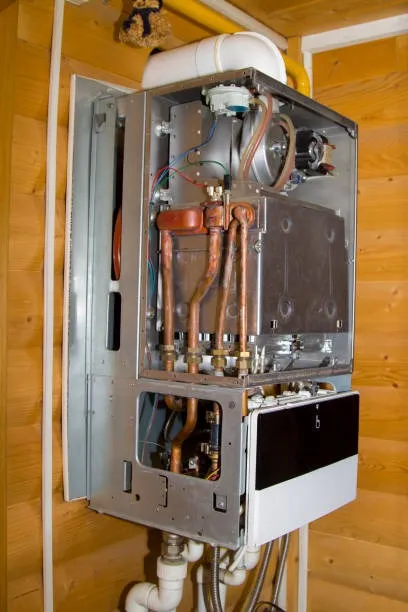
When replacement is recommended versus repair
Consider replacement when one or more of the following apply:
- The unit is near or past typical service life: 8 to 12 years for conventional gas or electric tanks; 15 to 20 years for tankless units.
- Recurrent problems occur shortly after repairs, or repair costs exceed about 50 percent of a comparable new unit.
- There is visible corrosion, rusting at the tank seams, or active leaking from the tank.
- Frequent sediment buildup has reduced capacity and efficiency despite regular flushing.
- Safety-related failures appear: nonfunctional temperature and pressure relief (TPR) valve, pilot or combustion problems on gas units, or electrical faults.
- You want significantly better efficiency, more hot water, or to switch fuel sources (for example, electric to gas or to a heat pump system).
Repair is reasonable for isolated issues on a newer unit with remaining expected life, such as a failing thermostat, heating element, or a replaceable valve. Replacement is preferred when the problem indicates systemic aging or when long-term energy and reliability gains matter to your household.
How technicians evaluate an existing system
Technicians use a structured assessment to decide repair versus replacement:
- Visual inspection for rust, leaks, and corrosion at fittings and tank seams.
- Review of age and maintenance history, including anode rod condition and sediment accumulation.
- Functional checks: pilot and ignition, heating elements, thermostat accuracy, TPR valve operation.
- Performance tests: recovery time, output volume under typical demand, and water temperature at fixtures.
- Combustion and venting inspection for gas units, including flue draft and vent corrosion.
- Electrical inspection for wiring, breakers, and grounding on electric or hybrid models.
- Water quality check for hardness and sediment that affect longevity.
Based on these findings, technicians estimate remaining service life, expected repair costs, and recommend system types that best match household hot water usage and local installation constraints.
Upgrade options for Bexley homes
Bexley homeowners can choose from several options depending on space, fuel availability, and efficiency goals:
- Conventional tank water heaters (gas or electric)
- Best for simple replacements and limited upfront cost.
- Choose appropriate tank size (40, 50, 75+ gallon) based on household size and peak usage.
- High-efficiency tank models
- Improved insulation and higher uniform energy factor (UEF) reduce standby losses.
- Good option when staying with tank-based setup but wanting better efficiency.
- Tankless (on-demand) water heaters
- Provide continuous hot water and reduce standby losses.
- Ideal for smaller households with staggered hot water use or homes seeking a compact unit.
- Requires correct GPM sizing and may need larger gas lines or electrical upgrades.
- Heat pump water heaters (hybrid)
- Highly efficient electric option that can cut water heating energy use substantially.
- Best installed in basements or conditioned spaces in Bexley where ambient air is available.
- Condensing gas water heaters
- Use heat recovery from exhaust for higher efficiency; require proper venting and condensate management.
When selecting an upgrade, consider fuel availability (natural gas in many Bexley homes), basement space, and whether you plan other home energy upgrades that complement a new water heater.
Disposal and removal of the old water heater
Proper removal follows local regulations and safe handling:
- Drain and neutralize the tank, disconnect gas or electric service safely, and cap utility lines.
- Recycle metal components and properly handle any refrigerant (for hybrids) or oil if present.
- Municipal disposal rules apply in the Columbus metro area; technicians typically transport units to authorized recycling centers.
- Permits and inspection documentation may be required by the local building department for replacement and disposal.
Technicians should document removal and provide proof of responsible disposal in compliance with local codes.
Comparison of long-term costs and energy savings
Energy savings depend on unit type, household usage, and fuel costs. Typical comparisons for residential settings:
- Upgrading from an older electric resistance tank to a heat pump water heater can cut water heating energy use by roughly 40 to 60 percent, especially in homes where the unit can be placed in a warm basement.
- Replacing an older gas tank with a condensing gas or properly sized tankless model can improve efficiency by 20 to 35 percent, depending on usage patterns.
- Tankless systems reduce standby losses but may be less efficient in homes with very high simultaneous demand unless multiple units or larger continuous flow models are installed.
- Factor in expected lifespan and maintenance: newer tank models typically offer warranties and improved insulation, while tankless units generally last longer but may need periodic descaling in hard water areas like Bexley.
When comparing long-term costs, include estimated annual energy use, likely maintenance, expected lifespan, and any local permit or retrofit costs. This yields a clearer picture of total cost of ownership over 10 to 20 years.
Installation coordination and timeline
Typical steps and timing for a residential replacement:
- Pre-installation assessment and sizing: 30 to 60 minutes.
- Permitting and scheduling: timeline depends on local permitting but often completed within days to a week.
- Installation for like-for-like replacements: usually completed in 4 to 8 hours.
- Conversions (for example electric to gas, or tank to tankless) or installations requiring venting or electrical upgrades: one to two days, sometimes longer if structural work or gas line upgrades are needed.
- Final inspection and commissioning: usually same day as installation or scheduled with the local building office.
Technicians coordinate removal, set up, utility connections, and testing, followed by a post-installation check to ensure proper operation and compliance with local codes.
Expected benefits for Bexley homeowners
- Improved reliability and reduced risk of unexpected leaks and water damage in older Bexley homes.
- Lower monthly energy bills and reduced greenhouse gas emissions with higher-efficiency models.
- Better hot water performance: faster recovery and consistent temperature for modern lifestyles.
- Increased home comfort and potential property value benefits when replacing outdated equipment.
- Reduced maintenance hassle with newer units and extended manufacturer warranties.
Regular maintenance, water softening for hard water areas, and correct sizing will maximize the service life and efficiency of a new system. Upgrading your water heater is a practical way to enhance reliability and comfort for homes in Bexley, OH while reducing long-term energy costs.
Hot Deals & Cool Savings

.webp)
New Service Agreement Membership
.webp)
Any New Client Service
Next Service for Referring a New Client
New Service Agreement Membership
Any New Client Service
Next Service for Referring a New Client
.webp)
.webp)

Service Areas
