
Tankless Water Heater in Bexley, OH
Tankless water heater installation in Bexley, OH: learn how on-demand hot water saves space and energy; schedule your upgrade today.

Tankless Water Heater in Bexley, OH
Upgrading to a tankless (on-demand) water heater can be one of the most effective long-term improvements for your Bexley, OH home. Tankless systems deliver hot water only when you need it, free up utility room or basement space, and often lower monthly energy use compared with conventional tank heaters.
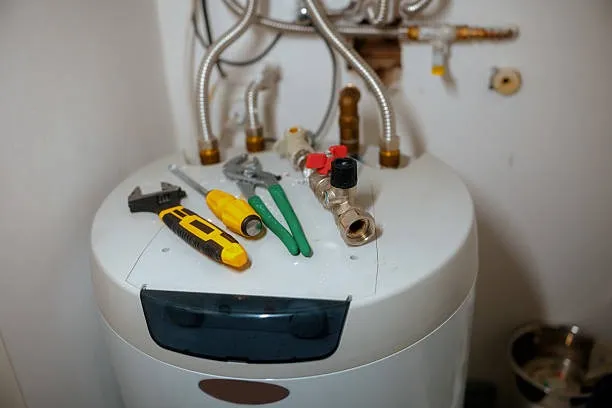
How tankless water heaters work and why they matter in Bexley
Tankless water heaters heat cold water as it passes through a compact heat exchanger, providing near-continuous hot water without a stored tank. For homeowners in Bexley, that means:
- Continuous hot water during long showers or simultaneous uses (when sized correctly).
- Space savings — wall-mounted units reclaim floor or closet space common in older Columbus-area homes.
- Improved energy efficiency for households that use less hot water or want to eliminate standby heat loss from a stored tank.
- Consideration of winter inlet temperatures — cold central Ohio winters reduce inlet water temperature, which affects sizing and fuel choice.
Common tankless system types and fuel considerations
- Gas (natural gas or propane) tankless: Typically delivers higher flow rates and higher temperature rises, making it easier to support multiple simultaneous fixtures in cold-weather climates. Natural gas is commonly available in the Bexley area and often preferred for larger households.
- Electric tankless: Compact and simpler to vent, but requires significant electrical capacity (multiple 240V circuits) and generally has lower maximum flow at high temperature rises. Electric may be right for smaller homes, point-of-use installations, or where gas service is not available.
When evaluating fuel type in Bexley, consider availability of natural gas, whether your electrical panel can support high-demand electric units, and your household’s peak hot-water demands during cold months.
Sizing — gallons per minute (GPM) and temperature rise
Proper sizing is critical. Two variables determine the right model:
- Peak flow rate (GPM): Add the GPM of fixtures that run simultaneously (e.g., shower 1.5–2.5 GPM, dishwasher ~1 GPM, washing machine ~1–2 GPM).
- Temperature rise: Desired output temperature (commonly 120°F) minus incoming ground/city water temperature. In central Ohio winters, incoming water can be substantially colder than summer — plan for lower inlet temps in the 40s°F for accurate sizing.
Example: If your peak simultaneous demand is 6 GPM and winter inlet temperature is 45°F, you need a unit that can deliver 6 GPM at an 75°F rise. Gas units handle high rises and higher GPM better than most electric models.
Installation and retrofitting considerations in Bexley homes
Switching to tankless often requires more than mounting a new unit. Typical installation steps and potential retrofits include:
- Site assessment: Verify space, ventilation route, clearances, and freeze risk. Exterior or garage-mounted units in Bexley must be frost-protected or located where pipes and unit are insulated.
- Venting and combustion air (gas units): Proper stainless-steel or special PVC venting for condensing models, clearances, termination locations, and local code compliance.
- Gas line sizing: Many existing gas lines feeding a tank need to be upsized for a high-demand tankless unit.
- Electrical capability (electric units): High-amp 240V circuits and possibly a service panel upgrade.
- Condensate drainage: Modern high-efficiency condensing units produce condensate that requires safe drainage.
- Water line and filter prep: Add isolation valves and filter screens; consider a softener or scale control if water hardness is an issue.
Older Bexley homes with limited utility room space will benefit from a compact wall-mounted unit, but gas venting and line work can be more intrusive than a simple tank replacement.
Maintenance recommendations for longevity and performance
Regular maintenance keeps a tankless system efficient and reliable, especially in central Ohio where water hardness and cold weather matter:
- Annual descaling/flush: Hard water in the Columbus region can cause scale buildup. Flush the heat exchanger yearly (or more often with hard water) to preserve efficiency.
- Install pre-filters or a water softener if hardness is moderate to high.
- Clean inlet screens and strainers routinely.
- Inspect venting, condensate drain, and exterior piping for freeze protection and integrity.
- For gas units, inspect burners and ignition components, and clear vent terminations.
- Follow manufacturer service intervals and retain documentation for warranty coverage.
Proper maintenance extends typical tankless lifespans well beyond most storage tanks and helps avoid costly heat-exchanger repairs.
Common issues in Bexley and straightforward solutions
- Reduced flow or inconsistent temperature: Often due to undersized unit or scale buildup. Solution: size for peak winter demands and maintain regular descaling.
- Freeze risk for outdoor installations: Insulate piping, choose a location with freeze protection, or opt for an indoor install.
- Electrical overloads (for electric units): May require service panel upgrades or multiple dedicated circuits.
- Venting or combustion problems (gas models): Ensure correct materials and clearances; address by professional vent inspection.
Cost, savings, and payback considerations
Tankless units have higher upfront purchase and installation costs than standard tank heaters because of venting, gas-line, or electrical upgrades. They typically offer:
- Lower operating costs over time due to reduced standby losses and improved efficiency.
- Longer expected service life and extended warranty coverage on heat exchangers.
- A payback period that depends on household hot-water use, local energy prices, and the extent of installation work required. For homes with moderate-to-high hot-water demand and access to natural gas, payback is often more favorable.
Avoid assuming immediate savings; calculate expected hot water usage patterns, fuel costs in Ohio, and any required retrofits when comparing total lifecycle costs.
Is a tankless water heater right for your Bexley home?
Consider a tankless system if any of these apply:
- Your family often runs simultaneous showers, laundry, and dishwasher and needs continuous hot water.
- You want to reclaim floor space in a smaller utility room or basement.
- You plan to stay in the home long enough to amortize the higher initial cost through reduced operating expenses.
- Natural gas is available and you prefer higher flow capacity in cold months.
- You are willing to invest in regular maintenance and, if needed, a water-treatment solution for hard water.
If your household has very low daily hot-water use, an electric point-of-use tankless or a high-efficiency tank may be more cost-effective.
Quick checklist to decide
- Determine peak simultaneous GPM required
- Estimate winter inlet temperature for your area
- Confirm natural gas availability or electrical panel capacity
- Check water hardness level and plan for descaling or softening
- Assess venting feasibility and freeze risk
- Consider long-term savings vs upfront retrofit complexity
A correctly chosen and installed tankless water heater can deliver reliable, space-saving hot water for Bexley homes, with meaningful efficiency gains when matched to household needs and local winter conditions.
Hot Deals & Cool Savings

.webp)
New Service Agreement Membership
.webp)
Any New Client Service
Next Service for Referring a New Client
New Service Agreement Membership
Any New Client Service
Next Service for Referring a New Client
.webp)
.webp)

Service Areas
