
Tankless Water Heater in Lewis Center, OH
Discover Tankless Water Heater Installation in Lewis Center, OH for on-demand hot water, energy efficiency, and long-term savings with expert guidance. Learn more.

Tankless Water Heater in Lewis Center, OH
A tankless water heater in Lewis Center, OH delivers on-demand hot water, higher efficiency, and a smaller footprint than a traditional storage tank system. For homeowners deciding whether to replace an aging heater or plan a new installation, understanding sizing, local climate effects, installation needs, maintenance, and long-term savings is essential.
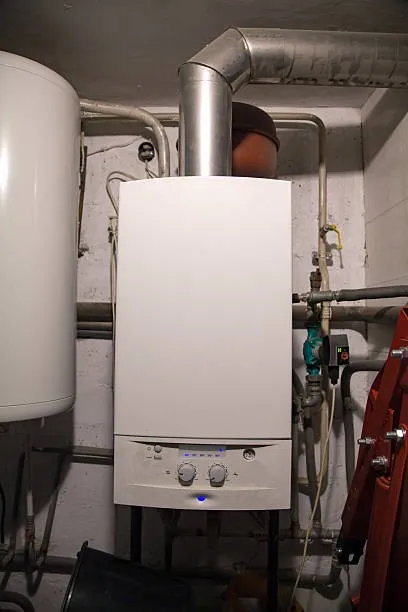
Why choose a tankless water heater in Lewis Center, OH
- Continuous hot water for showers, laundry, and dishwashing without a large storage tank.
- Lower standby energy losses, which can translate to reduced utility bills for many households.
- Compact units free up garage or basement space and offer longer expected life compared with tanks.
- Particularly effective in homes with intermittent hot water demand or where replacing an aging tank would require significant demolition.
Local relevance: Central Ohio winters mean colder incoming groundwater temperatures, which increases the required temperature rise for peak winter performance. Lewis Center homes should factor in higher temperature-rise needs when sizing to avoid reduced flow during cold months. Water in the Columbus region is also moderately hard, which influences maintenance frequency.
Common tankless water heater types and issues in Lewis Center
- Gas-fired condensing and non-condensing units: efficient but require adequate gas supply and proper venting.
- Propane units: common for homes not on a natural gas main.
- Electric units: simpler to vent but require significant electrical capacity for whole-house applications.Common local issues:
- Reduced flow or inability to reach set temperature during coldest months due to insufficient temperature rise capacity.
- Scale buildup from hard water causing reduced efficiency and component wear.
- Improper venting or undersized gas lines in retrofit installs.
- Cold water sandwich effect during intermittent use if recirculation is not configured correctly.
Sizing and flow-rate calculations for Lewis Center homes
Sizing correctly is the most important step. A proper load calculation includes two factors: required flow rate (gallons per minute) and required temperature rise.
- Determine expected simultaneous flow (typical flow rates):
- Shower: 1.5 to 2.5 gpm
- Kitchen sink: 1.0 to 1.5 gpm
- Bathroom sink: 0.5 to 1.0 gpm
- Dishwasher: 1.0 to 1.5 gpm
- Washing machine: 1.5 to 2.0 gpm
- Estimate peak simultaneous demand by adding flows of fixtures likely to run at once.
- Calculate temperature rise:
- Choose desired output temperature (120 F is common).
- Subtract expected inlet groundwater temperature. In Lewis Center winter groundwater can be around 40 F, so required rise may be ~80 F in winter versus ~60 F in summer.
- Match the required flow at that temperature rise to manufacturer performance charts. Higher required temperature rise reduces the available flow. When in doubt, choose a unit with higher flow capacity or consider parallel units for large households.
Example: Two simultaneous showers (2.0 gpm each) plus a kitchen sink (1.5 gpm) = 5.5 gpm. At a winter rise of 80 F, not every single tankless model can deliver 5.5 gpm—pick a model rated for that rise or use two units.
Fuel type and venting considerations
- Natural gas/propane units require appropriate gas line sizing and either direct venting or concentric/condensing venting. Condensing units are more efficient but produce condensate that needs proper drainage.
- Electric tankless units are easier to install where venting is a constraint, but whole-house electric units may require panel upgrades and high-current circuits.
- Venting routes and materials must comply with local codes and account for long, cold winters; improperly routed vents can reduce efficiency and shorten equipment life.
Installation and retrofit requirements
- Pre-installation assessment includes flow and load calculations, gas line capacity, venting path, and water quality evaluation.
- Retrofits may need gas-service upgrades, new venting, or electrical upgrades. Some older homes require re-piping or rerouting because of condensate lines or vent clearances.
- Permits and inspections are typically required; installations must meet Ohio and local code requirements.
- For homes with hard water, plan for scale mitigation: a water softener or scale-reduction device will reduce maintenance and extend unit life.
Expected lifespan and maintenance
- Typical lifespan: 15 to 25 years with proper maintenance, often longer than storage tanks.
- Routine maintenance:
- Descale or flush the heat exchanger annually in hard-water areas; in Lewis Center this could be every 6 to 12 months depending on hardness and usage.
- Clean inlet filters and air intakes.
- Inspect venting, condensate drains, and gas connections yearly.
- Check burner operation and electrical components as recommended by the manufacturer.
- Regular maintenance preserves efficiency and helps avoid common failures such as overheating or blocked heat exchangers.
Cost vs long-term savings
- Upfront cost is higher than a conventional tank, including potential gas or electrical upgrades and venting changes.
- Energy savings come from reduced standby losses; households with lower or intermittent hot-water use see the most immediate savings.
- Payback depends on family size, hot-water usage patterns, fuel rates, and maintenance costs. In many cases, longer lifespan and lower operating costs offset the higher initial investment over time.
Common FAQs for Lewis Center homeowners
Q: Can a tankless water heater supply an entire Lewis Center house?
A: Yes, if properly sized for your peak simultaneous demand and temperature rise. Large households may need a higher-capacity unit or multiple units in parallel.
Q: Do tankless units handle Ohio winters?
A: Yes, but sizing must account for the colder inlet water in winter. Undersized systems will struggle to maintain shower temperature in cold months.
Q: How often should I descale?
A: In Central Ohio, expect descaling every 6 to 12 months unless you have a water softener. Higher hardness levels require more frequent maintenance.
Q: Will I still have hot water during a power outage?
A: Gas-fired tankless units require electricity for controls and ignition; most will not operate during a power outage unless backed up by generator power.
Q: Can I retrofit a tankless into an older home?
A: Often yes, but expect potential upgrades to gas lines, venting, or the electrical panel. A pre-installation assessment will identify necessary changes.
Q: Is a recirculation system possible with tankless?
A: Yes. Dedicated on-demand recirculation or integrated recirculation modules can reduce wait time for hot water, but they affect overall system sizing and efficiency.
Q: How long does installation take?
A: Typical installations take one to two days for straightforward replacements; complex retrofits may take longer if gas, venting, or electrical upgrades are required.
Final considerations and maintenance tips
For Lewis Center homeowners, the best outcomes come from careful load calculation, attention to winter temperature-rise requirements, and a plan for water treatment to control scale. Regular maintenance preserves the extended lifespan and efficiency benefits of a tankless water heater. Properly specified and installed, an on-demand system offers reliable hot water, lower energy waste, and long-term value for many local homes.
Hot Deals & Cool Savings

.webp)
New Service Agreement Membership
.webp)
Any New Client Service
Next Service for Referring a New Client
New Service Agreement Membership
Any New Client Service
Next Service for Referring a New Client
.webp)
.webp)

Service Areas
