
Whole House Air Purifiers in Baltimore, OH
Whole House Air Purifiers in Baltimore, OH improve indoor air quality with HEPA, carbon, and UV options. Learn more about installation.

Whole House Air Purifiers in Baltimore, OH
Whole-house air purifiers provide continuous, whole-home protection from allergens, smoke, odors, and volatile organic compounds (VOCs). In Baltimore, OH, seasonal pollen, humid summers that encourage mold growth, and colder months with fireplace and furnace combustion byproducts make indoor air quality a year-round concern. A professionally specified and integrated whole-house system—combining in-duct filtration, HEPA-grade filtration, activated carbon, UV, or hybrid technologies—addresses those problems at the source and works with your HVAC to deliver cleaner, healthier air throughout your home.
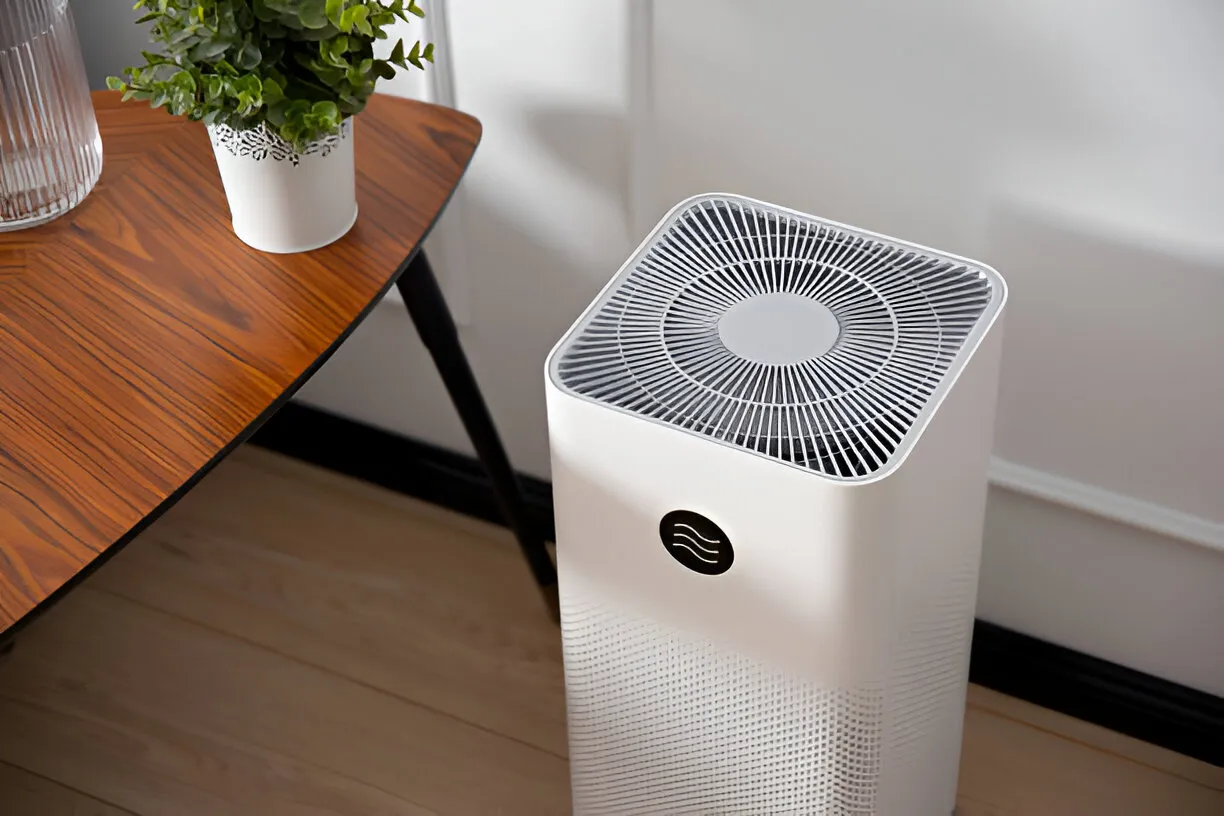
Common indoor air problems in Baltimore, OH homes
- Seasonal pollen and outdoor allergens that infiltrate during spring and fall.
- Elevated indoor humidity and mold spore growth in summer and basements.
- Smoke and odor infiltration from fireplaces, backyard burning, or nearby roads.
- VOCs released from new paint, cleaners, furniture, and building materials.
- Dust and pet dander accumulating in older ductwork or high-traffic homes.
Types of whole-house air purification systems
- In-duct filtration (high-MERV media filters): Installed in the return plenum, media filters with MERV 13–16 ratings capture a high percentage of fine particles and serve as a cost-effective baseline for whole-house protection.
- HEPA-grade systems: True HEPA (H13/H14) or HEPA-equivalent in-duct units remove ultrafine particles down to 0.3 microns with very high efficiency. Often used where allergy or asthma mitigation is a priority.
- Activated carbon filtration: Targets odors and many VOCs. Carbon beds are sized by weight and contact time to match home pollutant loads.
- UV-C and germicidal systems: Installed in the airstream or at the coil to reduce airborne bacteria, viruses, and mold growth on cooling coils.
- Hybrid technologies: Combine two or more approaches (for example, HEPA + activated carbon + UV) for comprehensive particle, gas, and biological control.
How whole-house systems work with your HVAC
- Assessment and sizing: A technician inspects your duct layout, airflow, and existing filtration, and measures static pressure and airflow to select a system that maintains HVAC performance.
- Location and integration: Common installation points include the return plenum, air handler, or dedicated bypass cabinet. Systems must be mounted so they do not restrict airflow beyond your HVAC’s capacity.
- Electrical and controls: UV and active systems require safe electrical connections and may integrate with the furnace/air handler control or a standalone timer/monitor.
- Sealing and balancing: Proper duct sealing and airflow balancing ensure the system treats the entire house evenly and prevents bypassing contaminated air.
- Commissioning and testing: After installation, technicians verify static pressure, airflow rates, and baseline indoor particle/VOC levels for later comparison.
What to expect in performance and testing
- Typical particle reductions for a properly sized in-duct HEPA or high-MERV system can range from 70% to 95% for PM2.5 over a short period, with most homes seeing measurable improvements within days to weeks.
- Activated carbon units can reduce many common household VOCs and odors by 40% to 80% depending on media mass and contact time.
- For biological contaminants, properly positioned UV systems can significantly reduce viable bacteria and mold growth on coils; quantified reductions vary by installation and exposure.
- Professional before/after testing uses particle counters (PM2.5, PM10), VOC meters, and sometimes mold spore sampling to document improvements and validate system selection.
Certifications and standards to look for
- HEPA H13/H14 classification for particle-capture performance.
- MERV ratings (13–16) for high-efficiency media filters.
- Safety certifications such as UL or ETL for electrical components.
- Independent performance verification (third-party lab or AHAM-style testing) for stand-alone units; request documented test methods used for whole-house claims.
- Where VOC abatement is a priority, look for carbon media specifications (type, weight, and expected service life) rather than proprietary claims.
Installation steps (typical)
- Detailed home assessment and indoor air quality baseline measurements.
- System selection (HEPA, activated carbon, UV, or hybrid) sized to your home’s airflow and pollutant profile.
- Prepare ductwork: sealing, framing or mounting cabinet, and creating access for media or HEPA modules.
- Mechanical installation: secure filter assemblies, carbon beds, UV fixtures, and any bypass dampers.
- Electrical hooking for powered components and setup of controls/timers or integration with thermostat if applicable.
- Airflow balancing and static pressure checks to ensure HVAC efficiency is not compromised.
- Final IAQ testing and customer documentation of baseline vs. post-installation numbers.
Maintenance and filter replacement schedules
- Pre-filters: Inspect monthly; clean or replace every 1–3 months depending on load.
- High-MERV/HEPA filters: Typically replaced every 12–24 months, though high-traffic, pet, or smoky homes may require more frequent changes.
- Activated carbon cartridges: Replace every 3–12 months depending on VOC load and media weight; high-odor or heavy-VOC homes should follow the shorter end of the range.
- UV lamps: Replace annually to maintain germicidal output; bulbs lose efficacy before they fail visibly.
- System inspection: Annual professional inspection recommended to check seals, electrical connections, and measure performance.
Typical outcomes from local installations (anonymized examples)
- Suburban Baltimore, OH home with spring pollen sensitivity: installation of in-duct HEPA + sealed returns yielded an 82% reduction in airborne PM2.5 within two weeks and a measurable drop in settled dust in high-use rooms within one month.
- Older farmhouse with basement humidity and occasional wood smoke: combined activated carbon bed and upgraded return filtration reduced odor complaints and VOC readings by roughly 60% after media replacement and duct sealing.
Long-term benefits and considerations
- Whole-house systems protect every room and do not rely on multiple portable units, offering consistent air quality and reduced allergen exposure.
- Proper system specification preserves HVAC efficiency; overspecifying filter efficiency without addressing fan capacity can increase static pressure and reduce system lifespan.
- Regular maintenance—timely filter and media changes, UV lamp replacement, and duct sealing—sustains performance and provides the best value over time.
- For Baltimore, OH homes dealing with seasonal pollen, humid summers, or winter combustion pollutants, a tailored hybrid solution (particle + carbon + targeted UV) often delivers the most balanced, year-round protection.
A professional assessment that measures your current indoor pollutant levels and evaluates duct and HVAC capacity is the first step to selecting the right whole-house air purifier for your Baltimore, OH home.
Hot Deals & Cool Savings

.webp)
New Service Agreement Membership
.webp)
Any New Client Service
Next Service for Referring a New Client
New Service Agreement Membership
Any New Client Service
Next Service for Referring a New Client
.webp)
.webp)

Service Areas
