
Whole House Air Filtration in Grove City, OH
Whole-house filtration in Grove City, OH improves indoor air quality. Explore installation options, maintenance tips, and results today.

Whole House Air Filtration in Grove City, OH
Keeping indoor air clean matters year-round in Grove City, OH. With hot, humid summers, cold winters that drive long heating cycles, and seasonal pollen from trees and grasses, many homes see increased indoor allergens, mold spores, and fine particles from nearby traffic. A properly designed whole house air filtration system reduces those contaminants across every room by working with your furnace or air handler to filter the air your family breathes.
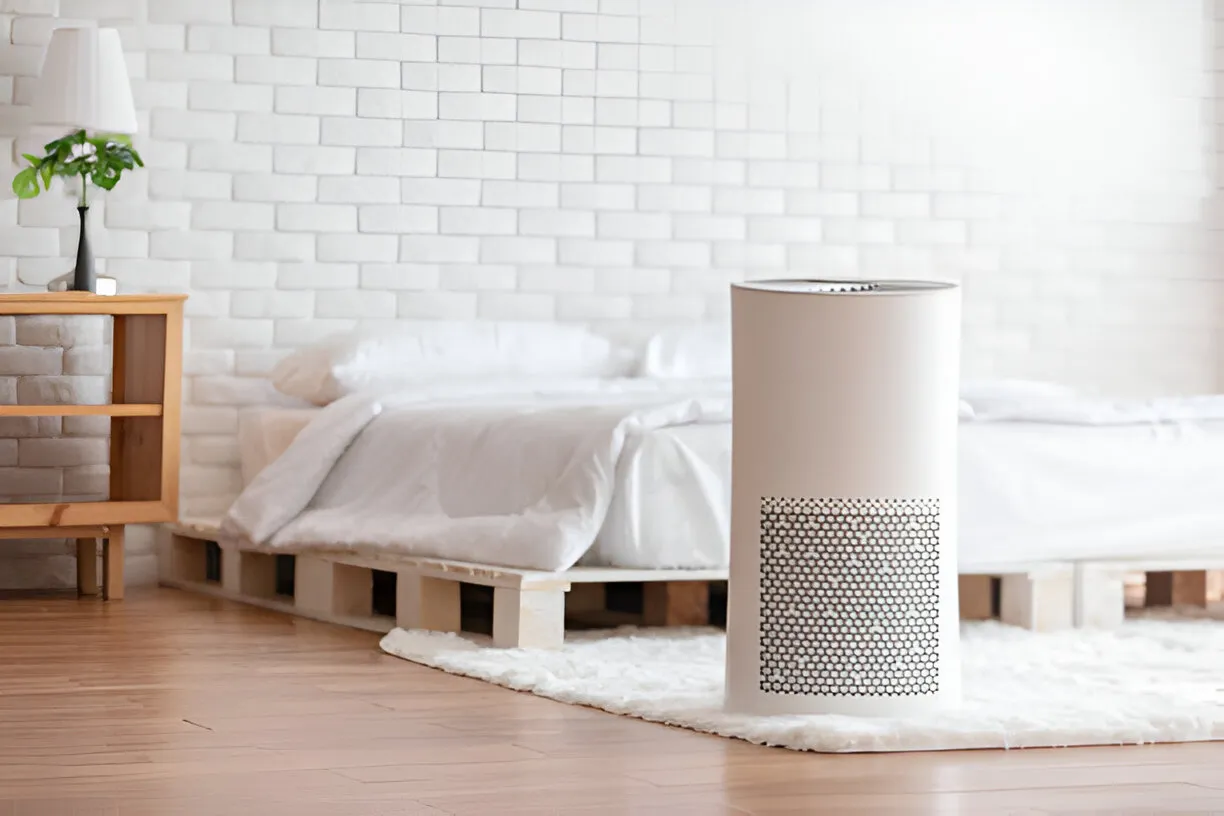
Why whole house filtration matters in Grove City, OH
- Seasonal pollen and tree/grass pollens peak in spring and early summer, raising indoor allergy symptoms.
- High summer humidity can encourage mold growth in ductwork and building cavities, releasing spores into living spaces.
- Winter heating recirculates indoor air for extended periods, making filtration more important when windows stay closed.
- Proximity to Columbus traffic and local roads can introduce fine particulates and vehicle emissions into suburban neighborhoods.
A whole house system treats air centrally, reducing allergens and particulates throughout the home without moving portable units from room to room.
Common whole house air filtration types and what they do
- Standard pleated filters - Basic protection for HVAC equipment and larger dust; low to moderate MERV ratings.
- High-efficiency pleated filters - Higher MERV ratings that capture smaller particles including pollen, mold spores, and some bacteria-sized particles.
- Electronic air cleaners - Active systems that use an electrostatic charge to capture smaller particulates.
- Whole-house HEPA-style systems - True HEPA captures 99.97 percent of particles 0.3 microns and larger, but may require modifications to your air handler to handle added airflow resistance.
- UV and combination systems - UV light addresses microbial growth on coils and in ducts; combined with filtration, it supports healthier indoor environments.
Understanding MERV ratings and choosing the right level
MERV (Minimum Efficiency Reporting Value) rates a filter's ability to capture particles. Common categories:
- MERV 1-4: Basic protection for HVAC equipment; captures large particles like dust and lint.
- MERV 5-8: Better for residential air cleaning; captures mold spores, dust mite debris, and pollen.
- MERV 9-12: High-efficiency residential option; captures finer particles including some bacteria and pet dander.
- MERV 13-16: Commercial-grade efficiency; captures very fine particles, including many viruses and smoke particulates. Some systems may need blower or cabinet changes to maintain airflow.
- True HEPA: Not rated by MERV, but typically outperforms MERV 16 for small particles.
For Grove City homes with allergy or asthma concerns, MERV 11 to 13 often provides an effective balance between filtration efficiency and HVAC performance. Homes with severe sensitivities, frequent wildfire smoke exposure, or medical requirements may need HEPA-level solutions integrated with system upgrades.
Tailored filtration strategies for allergy and asthma sufferers
- Use a higher-efficiency filter (MERV 11-13) at the central return to reduce pollen, pet dander, and mold spores across the home.
- Combine filtration with improved ventilation: controlled fresh air intake during low-pollen times helps dilute indoor contaminants.
- Address humidity: maintain relative humidity between 40 and 50 percent to reduce dust mite proliferation and mold growth.
- Pair filtration with targeted interventions: bedroom returns with upgraded filters, duct sealing to limit leak-driven contamination, and UV treatment on coils if recurring microbial odors are present.
Integration with furnaces and air handlers
- Filter fit and sizing: Whole-house filters sit at the central return or in a dedicated media cabinet positioned near the furnace or air handler. Proper sizing prevents bypass and preserves airflow.
- Pressure drop and blower capacity: Higher-efficiency filters increase resistance. An HVAC technician checks blower capacity and may recommend a media cabinet or ECM blower to maintain comfort and efficiency.
- Duct condition: Sealing and cleaning ducts improves filter effectiveness. Leaky ducts can bypass filtered air and reduce overall indoor air quality.
- Electrical and control integration: Electronic cleaners and UV systems require electrical connections and placement that avoid ozone-producing units.
Installation, replacement schedules, and performance verification
- Installation steps - Inspection of duct system and return locations, measurement for correct filter size or cabinet, installation of filter housing or high-efficiency filter, and system testing to verify airflow and pressure.
- Replacement intervals - Typical pleated filters: every 1 to 3 months depending on MERV level, household occupancy, pets, and local pollen levels. High-efficiency media filters in cabinets often last 6 to 12 months. Electronic cells need periodic cleaning per manufacturer guidance.
- Performance testing and verification - After installation, a qualified technician should measure static pressure, airflow, and confirm that the system maintains designed CFM without undue strain. Particle counting before and after installation provides objective verification of contaminant reduction.
- Seasonal checks - Inspect filters before peak pollen seasons and after prolonged construction or local smoke events.
Cost and long-term maintenance considerations
- Upfront vs lifecycle cost - Higher-efficiency systems and cabinets cost more initially but can deliver better long-term air quality and lower frequency of filter changes. Factor in replacement media, cell cleanings (for electronic cleanings), and potential blower upgrades.
- Energy impact - Properly designed systems minimize energy penalties. Overly restrictive filters on undersized blowers increase runtime and cost. Upgrading to variable speed blowers can offset filtration pressure drops.
- Maintenance tasks - Regular filter replacement, periodic duct inspections, coil cleaning, and testing of electronic cell performance or UV lamp function maintain system effectiveness.
Whole-house systems vs portable filtration units
- Coverage - Whole-house systems filter air throughout the home, while portable HEPA units clean air in a single room. Whole-house systems are better for consistent, homewide allergen control.
- Noise and convenience - Portable units can be noisy and require multiple devices for full coverage. Whole-house systems operate silently through the HVAC system.
- Energy and cost - Running multiple high-capacity portable units continuously can raise energy use. Whole-house integration spreads cost and energy over existing HVAC runtime.
- Flexibility - Portable units are useful for targeted relief in bedrooms or during short-term events (wildfire smoke episodes). They complement whole-house filtration rather than replace it, especially for immediate, room-specific needs.
Hot Deals & Cool Savings

.webp)
New Service Agreement Membership
.webp)
Any New Client Service
Next Service for Referring a New Client
New Service Agreement Membership
Any New Client Service
Next Service for Referring a New Client
.webp)
.webp)

Service Areas
