
IAQ Products in Gahanna, OH
IAQ products in Gahanna, OH offer whole-house purifiers, UV cleaners, HEPA and carbon systems with expert installation, maintenance guidance, and improved indoor air.

IAQ Products in Gahanna, OH
Indoor air quality matters year-round in Gahanna, OH. With humid summers that favor mold growth, tree-heavy spring pollen, and cold winters that keep homes sealed and recirculating indoor air, choosing the right indoor air quality (IAQ) products can meaningfully reduce allergens, odors, and airborne pathogens in your home.
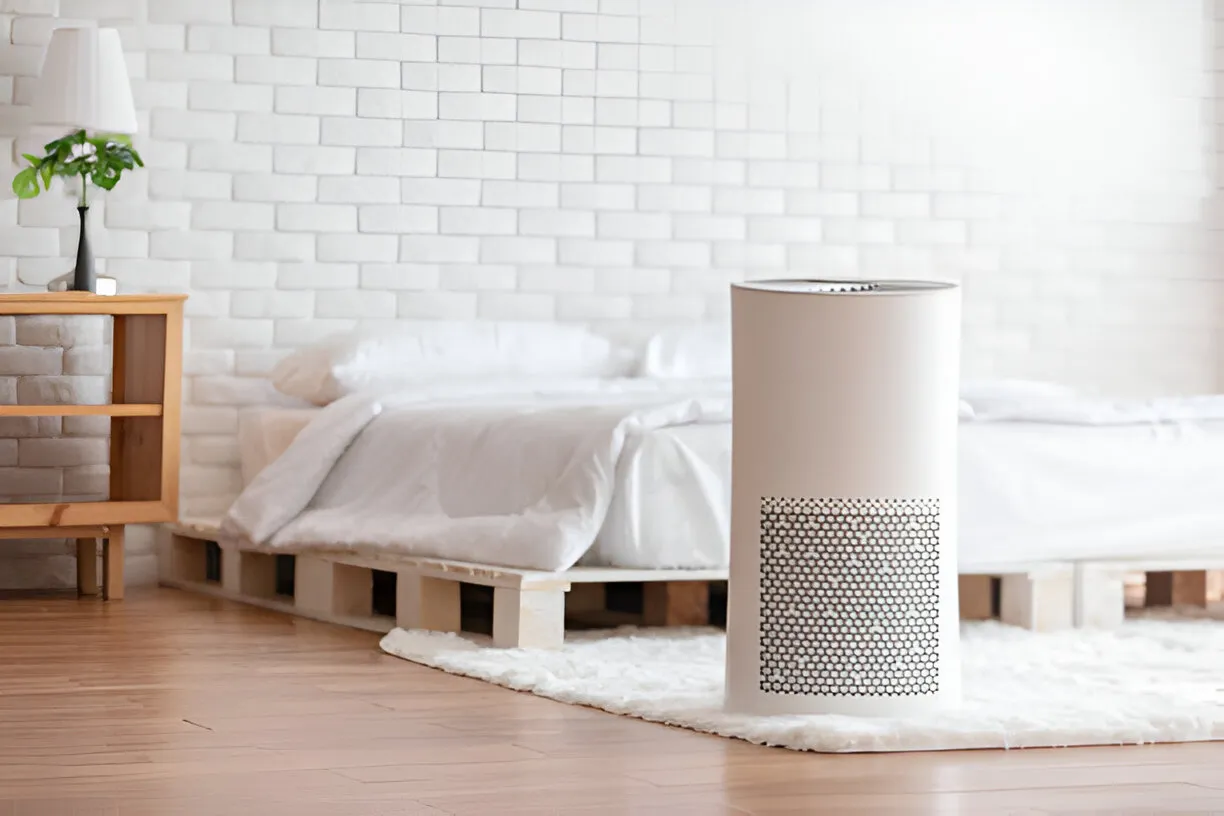
Why IAQ products matter in Gahanna, OH
- Seasonal pollen and tree allergens are common in central Ohio; mechanical filtration can reduce indoor allergen loads.
- Humid summers increase the risk of mold in basements and attics; UV and dehumidification strategies help control biological growth.
- Wintertime indoor air becomes more stagnant as homes are tightly sealed, making filtration and ventilation more important to reduce VOCs and CO2 buildup.
- Proximity to roadways and local construction can increase fine particulate (PM2.5) levels; effective filtration reduces these particles indoors.
Common IAQ problems in Gahanna homes
- Spring and summer allergy symptoms from tree and grass pollen
- Mold or musty odors in humid months, especially in basements
- Persistent cooking/chemical odors and VOCs from household products
- Dust and fine particulate accumulation from traffic and seasonal construction
- Recirculated indoor air leading to higher CO2 and lower perceived air freshness in winter
IAQ product types and what they do
- Whole-house air purifiers (in-duct)
- Installed into the HVAC return or supply air stream to treat air throughout the home.
- Common technologies: high-MERV mechanical filters, combined HEPA-compatible units, and electronic/PEC (photocatalytic) options.
- Best for whole-home coverage with minimal user interaction after installation.
- UV air cleaners (UV-C)
- Use ultraviolet light to inactivate bacteria, viruses, and reduce mold growth on coil surfaces and in ducts.
- Effective as a complement to filtration; they do not remove particles or odors by themselves.
- HEPA filtration systems
- True HEPA (H13/H14 or equivalent) removes 99.95–99.995% of particles down to 0.3 microns.
- Often implemented as standalone portable units or as part of dedicated whole-house systems; retrofitting HEPA into existing central systems requires attention to airflow and pressure.
- Activated carbon systems
- Adsorb VOCs, odors, and gaseous contaminants; measured by carbon bed thickness and surface area.
- Work best in combination with particle filtration (HEPA or MERV) because they do not remove particles.
- Smart air sensors and monitors
- Measure PM2.5, VOCs, CO2, humidity, and temperature; provide data to guide ventilation and filtration or connect to smart home systems.
- Allow evidence-based decisions about when to ventilate, run purifiers, or increase HVAC air changes.
Product comparison and specifications to consider
- Filtration efficiency: MERV 8–13 for standard HVAC compatibility; MERV 13+ or HEPA for high-allergy households.
- CADR (Clean Air Delivery Rate): higher CADR equals faster room cleaning; important for portable units.
- Static pressure impact: higher-efficiency filters and HEPA units may increase system resistance—verify compatibility with your furnace/air handler.
- UV lamp intensity and placement: coil-mounted UV reduces mold on AC coils; in-duct UV targets airborne microbes.
- Activated carbon bed depth (measured in mm or pounds): thicker beds provide longer-lasting odor/VOC control.
- Sensor accuracy and connectivity: choose sensors with calibration options and clear reporting on PM2.5, VOCs, and CO2.
Integration with existing HVAC systems
- In-duct installations
- Whole-house purifiers or UVs are commonly mounted in the return duct or at the air handler. Proper placement ensures treated air circulates through the living spaces.
- HVAC professionals evaluate airflow, static pressure, and blower capacity before installing higher-efficiency filters or HEPA modules.
- Return-duct vs plenum-mounted vs standalone
- Return-duct units treat all air before it reaches the furnace; plenum-mounted units treat conditioned air on the supply side.
- Portable units offer room-by-room treatment without ductwork changes—useful when retrofitting older systems or for targeted problem areas like bedrooms or basements.
- Compatibility notes
- Older furnaces and variable-speed blowers require a compatibility check; some HEPA retrofit options include a dedicated bypass fan to avoid overloading the HVAC blower.
- UV systems require electrical access and correct mounting angles for optimal lamp life.
Installation options and maintenance expectations
- Professional assessment and sizing
- A certified HVAC technician evaluates duct condition, air changes per hour (ACH), and appropriate filter sizes before recommending equipment.
- Typical installation types
- In-duct whole-home purifier: 1–3 hours for standard systems; more for complicated duct layouts.
- UV system at coil: typically installed during routine maintenance visits.
- Portable HEPA/activated carbon units: DIY placement with occasional filter changes.
- Ongoing maintenance
- HEPA and high-efficiency filters: replace every 6–12 months depending on use and household factors (pets, allergies, local particulate).
- Activated carbon cartridges: replace based on odor control decline—often 6–12 months.
- UV lamps: replace annually or as manufacturer recommends to maintain intensity.
- Smart sensors: keep clean and recalibrate per manufacturer guidance.
- Warranty considerations
- Typical manufacturer warranties range from 1–5 years for components; UV lamps and filters are usually consumables not covered indefinitely.
- Verify warranty coverage for in-duct components, labor, and whether routine maintenance is required to keep warranty valid.
Health and allergy benefits
- Reduced allergy symptoms by removing pollen, pet dander, and dust mites with HEPA or high-MERV filtration.
- Lower mold spore counts when UV and filtration are used together, especially useful in humid Ohio summers.
- Decreased exposure to VOCs and odors with activated carbon media, improving perceived air quality and comfort.
- Better sleep and fewer respiratory irritations by reducing fine particulate matter (PM2.5) that can penetrate deep into lungs.
Frequently asked questions (FAQs)
- Will a whole-house system remove pollen from my home?
- Yes. A properly sized in-duct purifier with MERV 13 or HEPA-level filtration will significantly reduce indoor pollen when the system runs regularly.
- Can UV systems replace filters?
- No. UV inactivates biological contaminants but does not remove particles or odors. UV is most effective when combined with mechanical filtration.
- Are HEPA systems safe for homes with pets and smokers?
- HEPA filters capture pet dander and most particulate from smoke, while activated carbon helps reduce smoke odors and VOCs. For heavy smoke, source control and ventilation are also important.
- How often should filters and lamps be changed?
- Typical guidance: HEPA/high-efficiency filters every 6–12 months, activated carbon per odor reduction timeline, UV lamps annually. Local conditions may require more frequent service.
- Will smart sensors control my HVAC?
- Many sensors can integrate with smart systems to trigger air purifiers or ventilation, but full HVAC control depends on compatibility and system setup.
Selecting IAQ products for your Gahanna home starts with understanding your seasonal challenges, household sensitivities, and existing HVAC capacity. The right combination—mechanical filtration, activated carbon for odors, UV for microbial control, and smart sensors for evidence-based operation—delivers measurable improvements in health, comfort, and indoor air cleanliness throughout the year.
Hot Deals & Cool Savings

.webp)
New Service Agreement Membership
.webp)
Any New Client Service
Next Service for Referring a New Client
New Service Agreement Membership
Any New Client Service
Next Service for Referring a New Client
.webp)
.webp)

Service Areas
