
Heat Pump Service in Lancaster, OH
Heat Pump Service in Lancaster, OH provides expert tune-ups and repairs—schedule now for reliable comfort and lower energy bills.

Heat Pump Service in Lancaster, OH
Well-maintained heat pumps keep Lancaster homes comfortable year-round and reduce utility bills. Whether you need a seasonal tune-up, a diagnostic for an underperforming unit, an emergency repair in deep winter, or system optimization for efficiency, professional Heat Pump Service in Lancaster, OH brings the technical knowledge and local understanding to solve problems quickly and reliably.
Why localized heat pump service matters in Lancaster, OH
Lancaster experiences hot, humid summers and cold winters with freeze-thaw cycles that stress outdoor equipment. Many homes here are a mix of older, historic construction and newer subdivisions—each presenting unique ductwork, insulation, and installation challenges. Local technicians know how pollen, road salt, snow buildup, and seasonal humidity affect refrigerant charge, defrost cycles, and airflow. That local insight helps diagnose recurring issues faster and choose solutions that last in our climate.
Common heat pump issues in Lancaster, OH
Homeowners most often call for these problems:
- Reduced heating or cooling capacity (unit runs but won’t reach setpoint)
- Frequent short cycling or constant running
- Frost or ice on the outdoor coil and failed defrost cycles
- Unusual noises from the compressor, fan motor, or reversing valve
- High energy bills after seasonal changes
- Refrigerant leaks or low refrigerant charge
- Electrical problems: tripped breakers, failed contactors, or capacitors
- Poor airflow caused by clogged filters, blocked returns, or duct leaks
- Thermostat errors or incorrect system settings
What a typical service appointment looks like
- Scheduling and intake: You provide the make/model, symptoms, and any recent changes. Appointments can include a pre-visit phone triage to prioritize urgent HVAC failures.
- Arrival and inspection: Technicians arrive in uniform, perform a visual inspection, and explain observed safety concerns before further work.
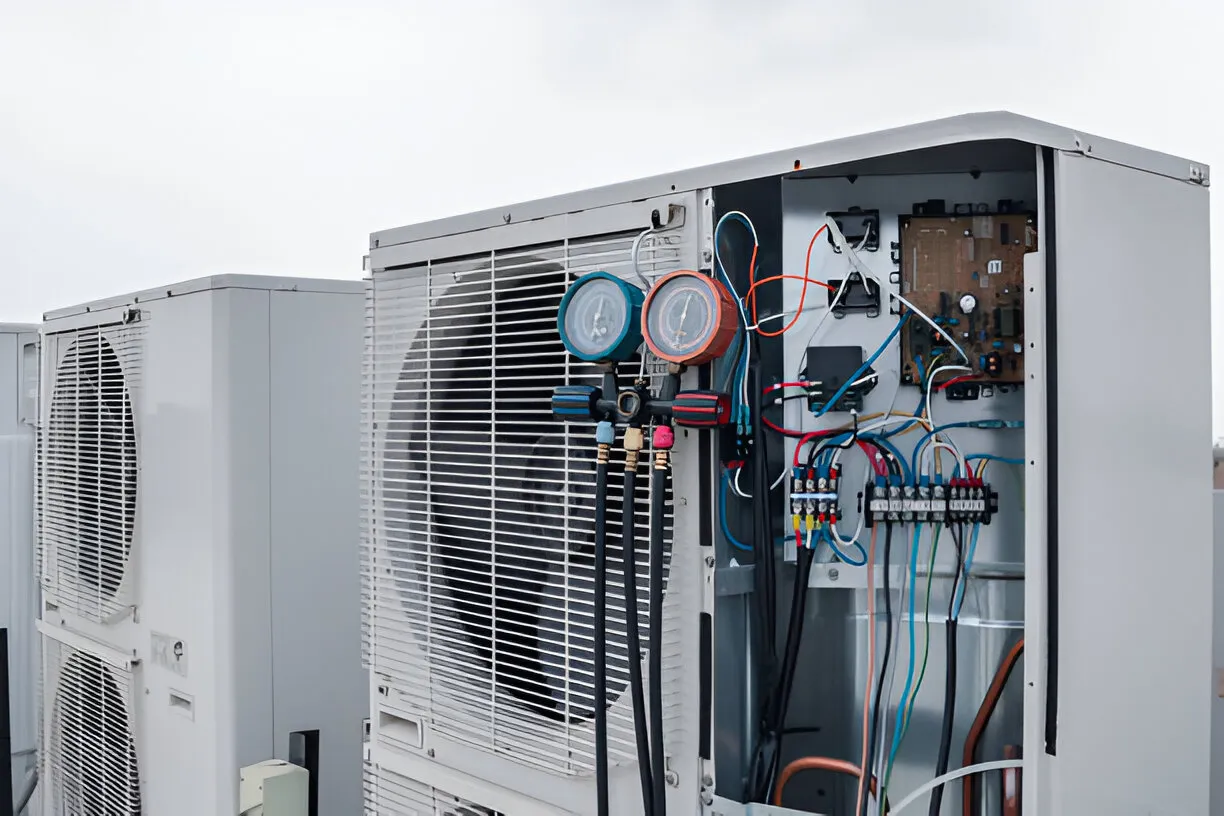
- Diagnostic testing: The tech tests electrical components, airflow, refrigerant pressures, and runs full-system checks (indoor and outdoor units). Diagnostics include thermostat calibration and a review of defrost cycle performance.
- Estimate and options: You receive a clear written estimate outlining recommended repairs, replacements, or optimization steps plus timeline and warranty information.
- Repair or maintenance: With approval, the technician completes repairs or maintenance and documents the work performed and parts used.
- Final review: The system is run through multiple cycles and the tech explains any user-facing changes or follow-up recommendations.
Diagnostics and repair methods explained simply
- Visual and electrical checks find loose connections, burnt wiring, and failing capacitors before they cause bigger failures.
- Refrigerant pressure checks reveal leaks or undercharge; technicians certified to handle refrigerants identify the source and repair the leak before recharging.
- Airflow testing and filter inspection determine if poor performance is due to ductwork or blower problems rather than the heat pump itself.
- Compressor and reversing valve diagnostics determine whether a major component needs repair or replacement.
- Defrost cycle analysis identifies sensors or control faults that cause icing in winter.
Maintenance tasks that prevent breakdowns
Regular seasonal maintenance extends equipment life and preserves efficiency:
- Replace or clean air filters and inspect return/grille locations
- Clean indoor evaporator and outdoor condenser coils
- Clear condensate drains and pans
- Tighten electrical connections and test safety controls
- Lubricate motors and check belt condition (if applicable)
- Verify proper refrigerant level and system pressures
- Test thermostat accuracy and programmable settings
System optimization and efficiency upgrades
Optimization can lower bills and improve comfort:
- Duct sealing and balancing to remove pressure losses and cold rooms
- Programmable or smart thermostats to match occupancy and reduce runtime
- Zoning or dampers where different parts of the home need separate control
- Upgrading to variable-speed compressors or higher-efficiency models for significant savings in Lancaster’s temperature extremes
- Assessing dual-fuel or hybrid setups where supplemental heat improves winter performance
Technicians often use simplified load assessments (explained in plain language rather than technical jargon) to recommend properly sized equipment rather than oversizing, which wastes energy.
Technician qualifications and standards
Technicians performing heat pump service typically hold:
- EPA 608 certification for handling refrigerants
- NATE or equivalent industry certification demonstrating tested HVAC knowledge
- Manufacturer-specific training for warranty-compliant repairs and modern inverter-driven systems
- Background checks, on-the-job safety training, and continuing education to stay current with new heat pump technology
Technicians also follow clear documentation practices so homeowners receive written service reports and warranty information for parts and labor.
Flat-rate vs. hourly pricing — what to expect
- Flat-rate pricing: Best for common, well-defined repairs (for example, replacing a capacitor or reversing valve). You get predictable costs and an itemized list of what’s included.
- Hourly pricing: Used for open-ended diagnostics, complex jobs with unknown conditions (such as extensive duct repairs or when accessing hard-to-reach equipment), or when parts are being researched.
Both options should come with a written estimate and clear explanation of labor, parts, and warranty coverage so you know what you’re paying for.
Emergency response and priority service
Emergency heat pump service protocols prioritize safety and rapid restoration of heating or cooling. In urgent situations (loss of heat in winter, refrigerant leaks, or electrical hazards), technicians perform triage, implement temporary safe fixes if needed, and provide a clear plan for permanent repair. Many services offer after-hours dispatching and priority scheduling for vulnerable households such as families with infants, elderly residents, or medical equipment needs.
Guarantees, warranties, and customer support
Quality service includes:
- Clear parts and labor warranties that are documented on the invoice
- Workmanship guarantees for a stated period after service
- Follow-up inspections for complex repairs
- Digital service records and scheduled maintenance reminders that help preserve warranties and resale value
Customer support typically includes transparent explanations of findings, documented invoices, and options for maintenance plans to reduce the likelihood of future failures.
Final notes: benefits of timely heat pump service
Prompt diagnostics and regular maintenance protect your investment, improve comfort, and reduce operating costs—especially important in Lancaster’s seasonal climate swings. Efficient, well-tuned heat pumps deliver reliable heat on cold nights and comfortable cooling on humid summer days. Routine attention also helps avoid emergency breakdowns and extends equipment life, making service not an expense but a smart, long-term saving strategy for your home.
Hot Deals & Cool Savings

.webp)
New Service Agreement Membership
.webp)
Any New Client Service
Next Service for Referring a New Client
New Service Agreement Membership
Any New Client Service
Next Service for Referring a New Client
.webp)
.webp)

Service Areas
