
Heat Pump Repair in New Albany, OH
Professional heat pump repair in New Albany, OH. Diagnostic expertise, transparent pricing, and after-hours options to restore comfort quickly.

Heat Pump Repair in New Albany, OH
When your heat pump struggles in New Albany, OH, it affects comfort, utility bills, and the safety of your home. Heat pumps are reliable, but the region’s cold winters, humid summers, and seasonal temperature swings contribute to wear that shows up as reduced heating performance, short cycling, or complete failure.
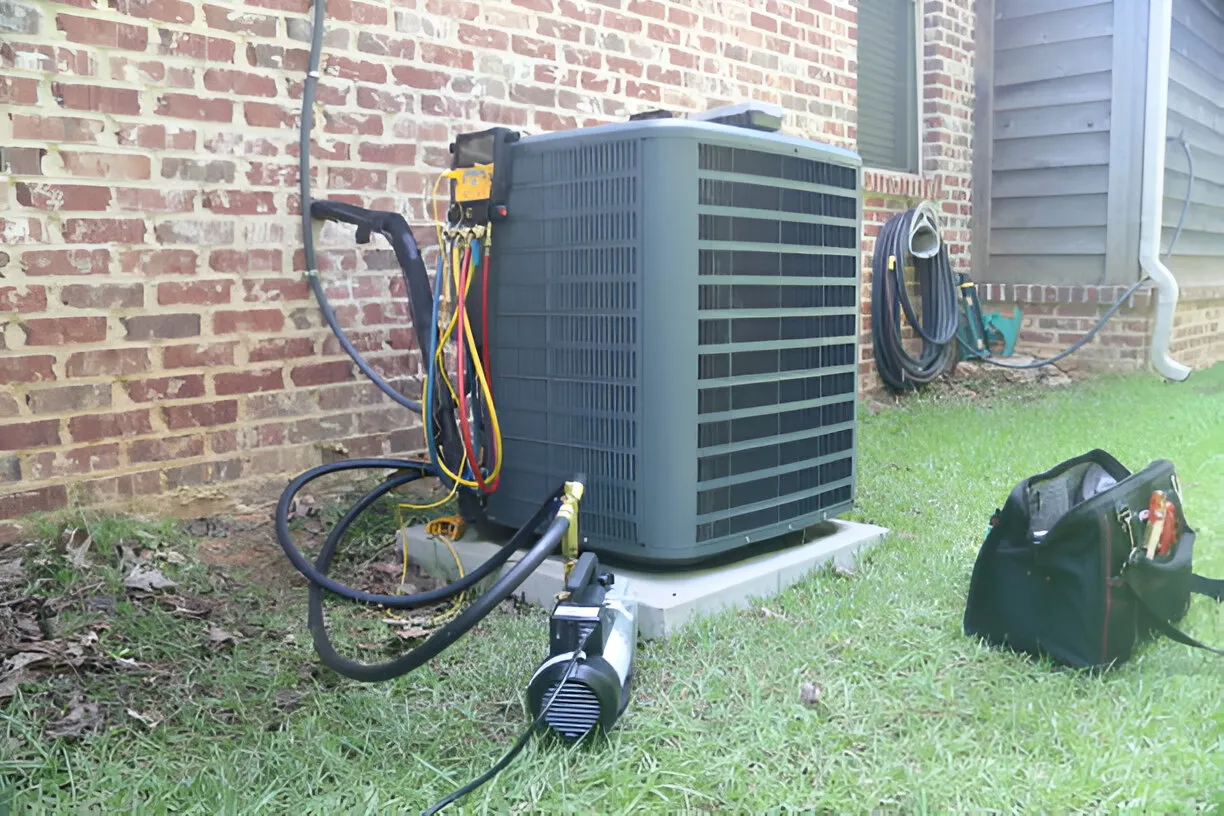
Why heat pump repair matters in New Albany, OH
New Albany experiences cold snaps that place heavy demand on heat pumps during winter, plus hot, humid summers that stress outdoor units and coils. Freeze-thaw cycles and road salt can increase corrosion on outdoor components. Addressing issues early preserves system efficiency and prevents more costly failures during the cold season when repairs are most urgent.
Common heat pump issues in New Albany homes
- Compressor failure or reduced capacity: Symptoms include weak airflow, warm air instead of heated air, or the system running constantly without reaching set temperature.
- Reversing valve problems: If the unit won’t switch between heating and cooling modes, the reversing valve or its control circuit may be faulty.
- Refrigerant leaks: Low refrigerant yields poor heating/cooling and can cause the unit to ice over. Outdoor corrosion and mechanical damage are typical local causes.
- Electrical issues: Faulty capacitors, contactors, breakers, or wiring can prevent the system from starting or cause intermittent operation.
- Defrost cycle failures: In cold, wet weather, a defective defrost control or sensor leads to heavy icing and reduced heat output.
- Fan motor and blower problems: Worn motors or debris from seasonal pollen and tree litter can reduce airflow and create noisy operation.
- Coil dirt and corrosion: Humidity and airborne particulates reduce heat transfer and increase run times.
- Thermostat and control faults: Incorrect settings, wiring issues, or failed thermostats mimic system faults.
Diagnostic and troubleshooting process
A professional repair begins with a systematic inspection to avoid unnecessary parts replacement and to identify root causes.
- Visual and safety checks
- Inspect outdoor unit, indoor coil, condensate drainage, and electrical panels for damage, corrosion, or tripped breakers.
2. Thermostat and control verification
- Confirm correct mode, setpoints, and proper communication between thermostat and system.
3. Airflow and filter assessment
- Check filters, vents, and blower motor for obstructions or restricted airflow.
4. Electrical testing
- Measure voltage, current, and continuity on capacitors, contactors, motors, and control boards.
5. Refrigerant and pressure testing
- Use gauges to compare system pressures to manufacturer specifications and look for pressure anomalies.
6. Leak detection and coil inspection
- Perform electronic or dye-based leak detection and examine coils for dirt, damage, or corrosion.
7. Operational checks
- Run the system through heating and cooling cycles, observe reversing valve operation, and verify defrost cycles.
8. Report and recommendation
- Provide a clear summary of findings, options for repair or replacement, and expected outcomes.
Typical repair procedures and parts replacement
Repairs are prioritized by safety and cost-effectiveness, starting with the smallest fixes that restore reliable operation.
- Refrigerant leak repair and recharge
- Locate and repair leak source, replace damaged fittings, evacuate and recharge refrigerant to specification, and perform a pressure and leak test.
- Compressor repair or replacement
- Replace compressors when sealed-up failures occur. This may require replacing drier/receiver, filter-driers, and validating electrical protections.
- Reversing valve repair
- Replace or repair the reversing valve and associated solenoid or control components when the unit fails to change modes.
- Electrical component replacement
- Replace capacitors, contactors, relays, breakers, or wiring as needed to restore safe operation.
- Fan motor and blower service
- Replace or lubricate motors, clean blades, and balance fans to restore proper airflow and reduce noise.
- Coil cleaning and corrosion treatment
- Clean coils with appropriate solutions, treat for corrosion where possible, and advise on preventive protective measures.
- Defrost control and sensor replacement
- Replace faulty defrost boards, sensors, or timers to restore defrost cycles and prevent icing.
- Control board and thermostat replacement
- Upgrade or replace failing control boards and thermostats, ensuring compatibility and proper configuration.
Estimates, transparency, and pricing approach
Estimates for heat pump repair in New Albany typically include:
- A clear breakdown of labor, parts, and diagnostic fees
- An explanation of why each repair is recommended and the relative urgency
- Options when multiple solutions exist (repair now, defer minor items, or consider replacement)
Technicians should present transparent, itemized quotes and discuss the expected life extension or efficiency gains from each repair option. For older systems, cost-effectiveness is assessed against likely remaining service life and seasonal reliability.
Emergency and after-hours options
Heat pump failures can arise outside normal business hours, especially during sudden freezes. After-hours and emergency repair services typically include:
- Priority diagnostic visits for no-heat emergencies during cold temperatures
- Temporary measures to restore partial function until a full repair can be completed
- Clear guidance on safety measures to protect pipes, occupants, and property while awaiting repair
Availability and response times vary; professionals usually triage emergencies based on safety risk and severity of system failure.
Warranty and workmanship information
Reliable repair work should be backed by:
- Parts warranties provided by manufacturers for replaced components
- Workmanship guarantees covering labor for a defined period after the repair
- Documentation of replaced parts and test results that support warranty claims
Ask for written details on warranty terms, what is excluded, and how follow-up service is handled for covered repairs. Proper documentation helps when filing warranty claims or arranging subsequent maintenance.
What to expect during a scheduled service visit
Scheduling typically involves setting an appointment window and providing basic system information. A typical service visit proceeds as follows:
- Technician arrival with credentials and safety gear
- Review of symptoms you observed and system history
- Priority safety checks and diagnosis using industry-standard tools
- Presentation of findings and repair options in plain language
- Completion of agreed repairs, testing, and demonstration of system operation
- Written summary of work performed and any recommendations for future maintenance
Technicians often advise on simple homeowner checks you can perform between professional maintenance visits to preserve performance.
Preventive maintenance and long-term benefits
Regular maintenance reduces emergency repairs and extends equipment life. In New Albany, seasonal tune-ups before winter and summer peaks help prevent icing, refrigerant losses, and electrical failures. Benefits of timely repair and maintenance include:
- Improved heating and cooling efficiency
- Lower energy bills
- Fewer mid-season breakdowns
- Longer equipment life and better indoor comfort
Addressing faults early is particularly important in New Albany’s climate, where prolonged cold or humid conditions can quickly worsen minor issues.
If you rely on a heat pump for year-round comfort, accurate diagnosis and quality repair are essential to restore reliable operation and protect your home through Ohio’s seasonal extremes.
Hot Deals & Cool Savings

.webp)
New Service Agreement Membership
.webp)
Any New Client Service
Next Service for Referring a New Client
New Service Agreement Membership
Any New Client Service
Next Service for Referring a New Client
.webp)
.webp)

Service Areas
