
Heat Pump Installation in New Albany, OH
Heat pump installation in New Albany, OH delivers year-round comfort and energy efficiency. Learn more about assessment, sizing, permits, and post-installation support.

Heat Pump Installation in New Albany, OH
Heat pump installation in New Albany, OH offers a high-efficiency, year-round solution for homes that face cold Ohio winters and humid summers. For homeowners ready to replace aging furnaces, improve comfort, or reduce energy bills, a properly designed and installed heat pump delivers reliable heating, cooling, and dehumidification while qualifying for modern incentives.
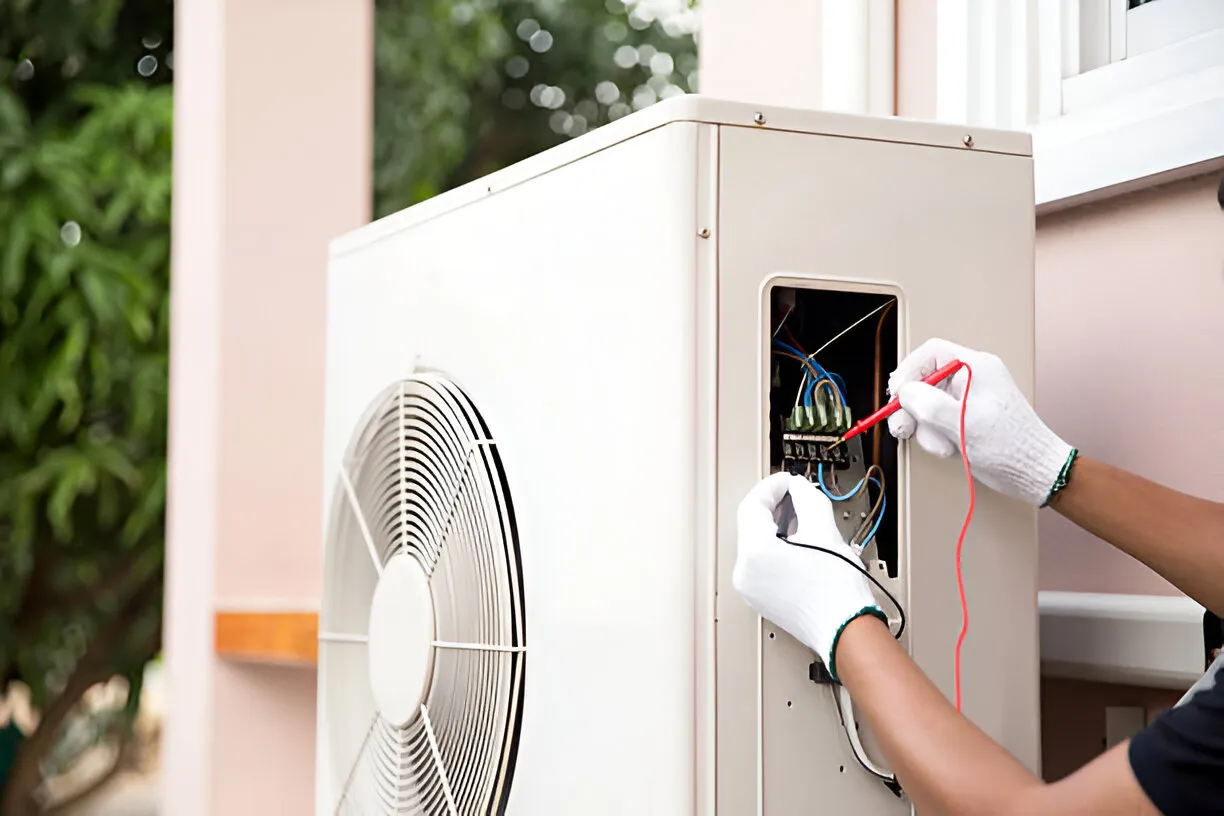
Why a heat pump makes sense for New Albany homes
- Ohio’s climate: Cold winter nights and warm, humid summers make heating efficiency and humidity control priorities. Modern cold-climate heat pumps maintain good output even at low temperatures and can outperform older electric or oil systems.
- Newer construction and high-performance building stock in New Albany often benefit most from right-sized heat pumps and advanced controls.
- Replacing aging systems can reduce energy use, improve comfort, and simplify service when a single system covers both heating and cooling.
Common heat pump scenarios we see in New Albany
- Replacing a gas furnace or electric resistance heat with a ducted or ductless heat pump.
- Converting older split systems to variable-speed inverter heat pumps for better comfort.
- Adding mini-split zones in finished basements, additions, or attic conversions where extending ducts is impractical.
- Upgrading electrical service or panel capacity in older homes to accommodate new heat pump loads.
Site assessment — what we inspect first
A thorough initial assessment determines feasibility and optimal equipment:
- Home layout, insulation levels, window types, and attic/ basement conditions.
- Existing ductwork condition, size, and leakiness for ducted installations.
- Electrical panel capacity and location for outdoor unit power supply.
- Outdoor space, noise considerations, and clearances for the compressor/condenser.
- Any obstacles for refrigerant routing or indoor unit placement in ductless installations.
Load calculations and equipment selection
Accurate sizing is critical; bigger is not better.
- We use industry-standard load calculations (Manual J-style) to determine heating and cooling loads specific to the New Albany climate and your home’s envelope.
- Choose models with appropriate capacity, seasonal efficiency ratings (HSPF, SEER2), and low-temperature performance for Ohio winters.
- Consider variable-speed compressors and multi-stage equipment to improve comfort and reduce cycling.
- For homes with limited ductwork, select ductless mini-splits or hybrid systems that integrate with existing ducts.
Permit and code considerations in New Albany
Local and state compliance keeps installations safe and warrantable.
- Obtain required mechanical and electrical permits from the local building department and follow Ohio building codes and local amendments.
- Electrical upgrades must comply with the National Electrical Code as adopted locally; some installations require service panel or meter upgrades.
- Refrigerant handling performed by EPA-certified technicians (Section 608) to meet federal regulations.
- Meet manufacturer installation requirements to preserve warranties and local inspection standards.
Step-by-step installation workflow
A typical installation follows a clear, professional sequence:
- Pre-install planning: finalize equipment, obtain permits, and schedule inspections.
- Site preparation: protect flooring, access points, and landscaping; prepare pad or mounting for outdoor unit.
- Electrical work: install circuit breakers, disconnects, wiring, and any panel upgrades.
- Outdoor unit placement: set condenser on a level pad with proper clearances for airflow and maintenance.
- Indoor unit(s) and duct work: install air handlers, indoor heads, or integrate with existing ducts; seal and insulate ducts as needed.
- Refrigerant and piping: run refrigerant lines, suction and liquid lines, and install condensate drains with proper slope and insulation.
- Controls and thermostat: install and configure smart or programmable thermostats and zoning controls if applicable.
- Final connections and system evacuation: evacuate lines, charge refrigerant per manufacturer specs, and secure all penetrations.
- Clean-up: remove debris, restore work areas, and ensure outdoor unit landscaping is preserved.
Testing, commissioning, and handover
Thorough testing ensures peak performance from day one:
- Measure and verify refrigerant charge, system pressures, and superheat/subcooling according to manufacturer guidelines.
- Test electrical connections, amp draws, and safety controls.
- Verify airflow, temperature splits, and thermostat communication.
- Run system through heating and cooling cycles to confirm consistent operation and proper defrost function in cold conditions.
- Provide documentation of settings, warranty registrations, and recommended maintenance schedules.
Energy-efficiency tips for New Albany homeowners
- Right-size insulation and air sealing: a well-sealed envelope reduces system capacity needs and operational costs.
- Use programmable or smart thermostats to adjust schedules based on occupancy and temperature swings.
- Consider zoning for larger or multi-level homes to prioritize comfort where needed and save energy elsewhere.
- Keep outdoor unit clear of debris, snow, and ice in winter; install a raised pad or protective placement if yard flooding or snow drift is a concern.
Warranty and post-installation support
- Manufacturer warranties typically cover compressors and major components; extended parts and labor protection may be available.
- Proper installation documentation and permit compliance are often required to preserve warranty coverage.
- Routine maintenance (annual checks of refrigerant levels, coil cleaning, filter replacement, and control calibration) extends equipment life and keeps efficiency high.
- Post-installation support includes commissioning reports, operating instructions, and scheduling for seasonal tune-ups.
Incentives and rebates for New Albany, OH properties
- Many homeowners qualify for federal tax credits for high-efficiency heat pumps when equipment meets energy-efficiency thresholds.
- State-level incentives and local utility rebates may be available for qualifying systems; check with your electric utility and Ohio energy programs for current offerings.
- Energy efficiency financing or performance programs may further reduce net installation cost for eligible upgrades.
Final considerations
A successful heat pump installation in New Albany balances accurate load calculations, quality equipment selection for Ohio’s climate, code-compliant permitting, and meticulous commissioning. Properly installed heat pumps improve year-round comfort, lower operating costs, and integrate with modern controls while qualifying for incentives that can improve return on investment. When evaluating installation options, prioritize certified technicians, documented commissioning, and a clear plan for ongoing maintenance to protect performance and warranties in your New Albany home.
Hot Deals & Cool Savings

.webp)
New Service Agreement Membership
.webp)
Any New Client Service
Next Service for Referring a New Client
New Service Agreement Membership
Any New Client Service
Next Service for Referring a New Client
.webp)
.webp)

Service Areas
