
Heat Pump Installation in Hebron, OH
Heat pump installation in Hebron, OH delivers efficient heating and humidity control. Learn the installation steps, permit requirements, and what to expect from a job.

Heat Pump Installation in Hebron, OH
Installing a heat pump is one of the most effective ways to upgrade comfort and energy efficiency in Hebron, OH homes. With cold Ohio winters and humid summers, a properly designed heat pump provides consistent heating, efficient cooling, and improved dehumidification compared with older systems.
Why install a heat pump in Hebron, OH
Hebron’s climate makes a high-performance heat pump an attractive choice:
- Winters require dependable heating down to occasional subzero temperatures — modern cold-climate heat pumps maintain capacity at low temperatures.
- Hot, humid summers benefit from a system that both cools and dehumidifies efficiently.
- Consolidating heating and cooling into a single system simplifies maintenance and often reduces utility bills compared with aging fossil fuel or resistive electric heat systems.
- Ductless options are ideal for older Hebron homes without existing ductwork or for room-by-room comfort upgrades.
Common heat pump types and common heat pump installation issues in Hebron, OH
- Ducted split systems: outdoor compressor paired with an indoor air handler or furnace coil. Best for whole-house replacement when ducts are present.
- Ductless mini-split systems: wall-mounted or ceiling cassettes that require no ducts. Good for additions, basements, or homes with poor ductwork.
- Hybrid (dual-fuel) systems: heat pump paired with a gas furnace for extreme-cold backup.
- Geothermal (ground-source) systems: highly efficient but require more site work and upfront cost.
Common issues installers address in Hebron homes:
- Undersized or leaky ductwork that reduces efficiency and comfort.
- Improper sizing: oversized units short-cycle, undersized units struggle in cold snaps.
- Poor refrigerant charge or line sizing leading to reduced heating capacity.
- Lack of permits or noncompliance with local electrical/mechanical codes.
- Inadequate condensate drainage or indoor unit placement that creates noise or airflow problems.
On-site assessment and load calculations
A professional installation begins with a thorough on-site assessment:
- Inspect the building envelope: insulation levels in walls, attic, and crawlspace; window types and orientation; and air leakage.
- Evaluate existing ductwork condition, layout, and static pressure.
- Identify installation locations for outdoor and indoor units, considering setbacks, noise, and airflow clearance.
- Perform Manual J load calculations (or equivalent) to determine accurate heating and cooling loads for the home. This is essential to select the right capacity and avoid comfort problems common with rule-of-thumb sizing.
Unit selection: efficiency, capacity, and refrigerant
Choosing the correct heat pump for Hebron homes involves multiple factors:
- Capacity (tons) based on load calculations, not square footage alone.
- Efficiency ratings: SEER for cooling, HSPF or HSPF2 for heating performance; look for higher ratings to reduce operating costs.
- Cold-climate performance: look for models rated to maintain heating capacity at lower outdoor temperatures common in Ohio.
- Refrigerant type: modern systems use R-410A or newer low-GWP refrigerants; certified technicians must handle refrigerant per EPA 608 requirements.
- Ducted vs ductless: ductless offers zoning flexibility and minimal disruption, ducted systems provide even whole-house airflow when ducts are in good condition.
Permits, codes, and local considerations
Heat pump installations in Hebron must comply with state and local regulations:
- Obtain mechanical and electrical permits as required by the local building department (Hebron falls within Licking County jurisdictions; confirm with your township for specifics).
- Work performed by licensed HVAC technicians ensures code compliance and may be required for permit sign-offs.
- Refrigerant handling must comply with EPA regulations; technicians must have appropriate certification.
- Ohio energy codes and local amendments may influence equipment efficiency minimums and installation practices.
- Utility rebates and local incentives may be available for high-efficiency installations; verify eligibility before finalizing equipment selection.
Step-by-step installation overview
A typical heat pump installation follows these stages:
- Pre-installation preparation: site protection, safety plan, and confirming permits.
- Remove old equipment (if applicable) and prepare mounting pads or wall supports.
- Install outdoor unit on a level pad or brackets with proper clearance for airflow and service access.
- Install indoor air handler or indoor units (wall cassettes, floor consoles, or coil in ducted systems).
- Run refrigerant lines, condensate drain lines, and required electrical wiring; properly insulate refrigerant lines to prevent heat loss and condensation.
- Modify or seal ductwork as needed; install new return/grille locations or zoning dampers for improved distribution.
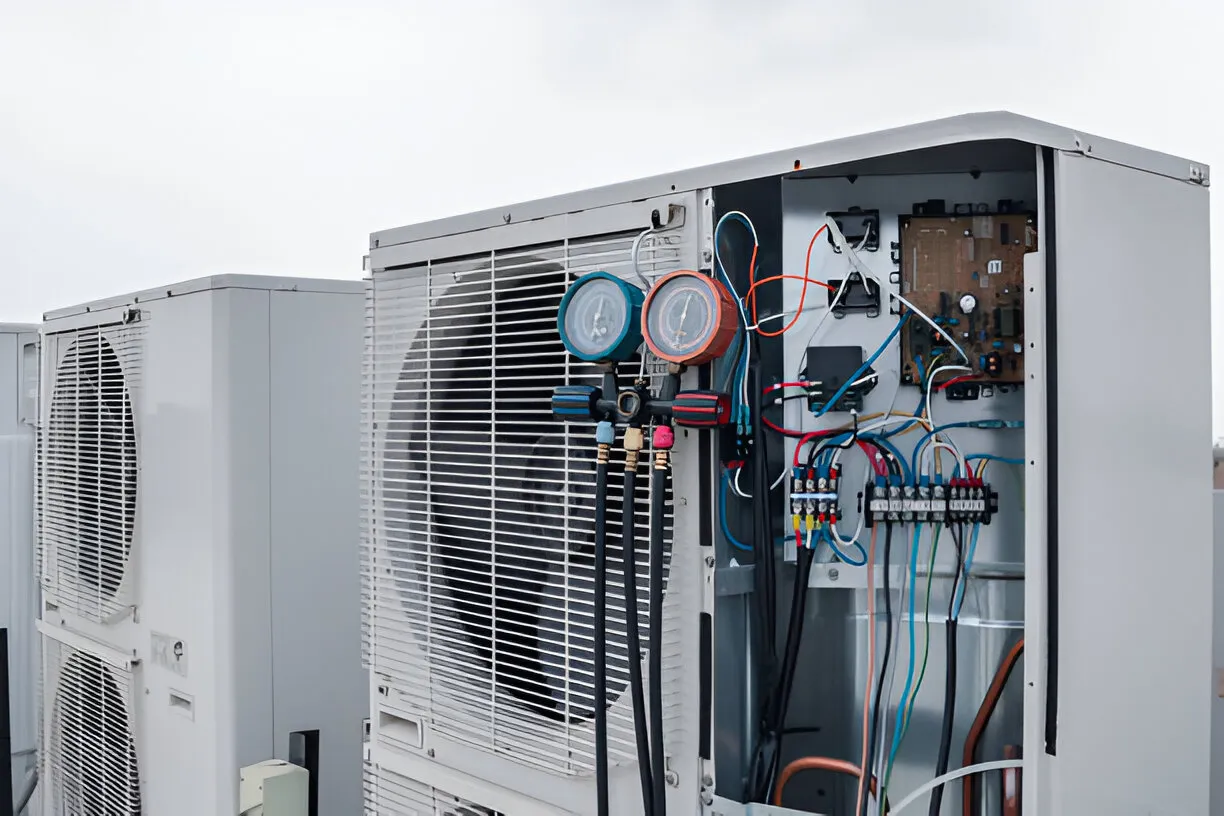
- Evacuate the refrigerant lines to remove moisture and air, and charge the system per manufacturer specifications.
- Connect controls and thermostat, integrating smart or zoning controls if included.
- Final safety checks, electrical tie-ins, and system startup.
Commissioning and performance testing
Professional commissioning ensures the system operates to design:
- Leak testing and vacuuming the refrigerant circuit before charging.
- Verify correct refrigerant charge with superheat/subcooling measurements.
- Measure airflow (CFM), static pressures, and duct leakage to confirm proper distribution.
- Test electrical loads, starting currents, and verify compressor operation across modes.
- Confirm defrost cycle operation for cold-weather heating and assess noise/vibration levels.
- Calibrate thermostats and verify temperature rise/drop and humidity control.
- Provide documented performance readings for warranty and future maintenance.
Warranty, maintenance, and long-term reliability
A reliable installation includes clear guidance on warranties and care:
- Manufacturer warranties cover parts and compressors; labor warranties vary and should be confirmed at installation.
- Recommended maintenance: annual professional tune-up before the heating season and once before peak cooling season for high-use systems.
- Routine homeowner tasks: change/clean filters every 1–3 months, keep the outdoor unit free of debris and snow, ensure condensate drains remain clear.
- Inspect and seal ducts every few years, especially in older Hebron homes with crawlspaces or attics.
- Watch for signs of trouble: reduced capacity, unusual noises, higher-than-normal energy bills, or frequent cycling.
Benefits for Hebron homeowners
A correctly specified and professionally commissioned heat pump delivers:
- Year-round comfort with efficient heating and cooling and improved humidity control.
- Reduced operating costs with high-efficiency models and potential utility rebates in Ohio.
- Flexible installation options for homes with or without existing ductwork.
- Lower carbon footprint compared with fossil fuel heating, especially when paired with efficient electricity sources.
When a heat pump installation in Hebron, OH is done with careful assessment, proper sizing, code-compliant practices, and thorough commissioning, it becomes a dependable, efficient solution tailored to the region’s seasonal demands. Regular maintenance and attention to airflow and refrigerant charge ensure peak performance and long-term reliability.
Hot Deals & Cool Savings

.webp)
New Service Agreement Membership
.webp)
Any New Client Service
Next Service for Referring a New Client
New Service Agreement Membership
Any New Client Service
Next Service for Referring a New Client
.webp)
.webp)

Service Areas
