
Boiler Replacement in Gahanna, OH
Boiler replacement in Gahanna, OH delivers reliable heat with high-efficiency options. Learn more today about permits, financing, and energy savings.

Boiler Replacement in Gahanna, OH
Replacing a failing or inefficient boiler is one of the most effective ways to restore reliable heat, lower winter fuel bills, and improve comfort in Gahanna, OH homes. With cold, humid winters and many older houses that still have original equipment, homeowners here commonly face rising repair costs, inconsistent heat, and outdated venting or combustion systems.
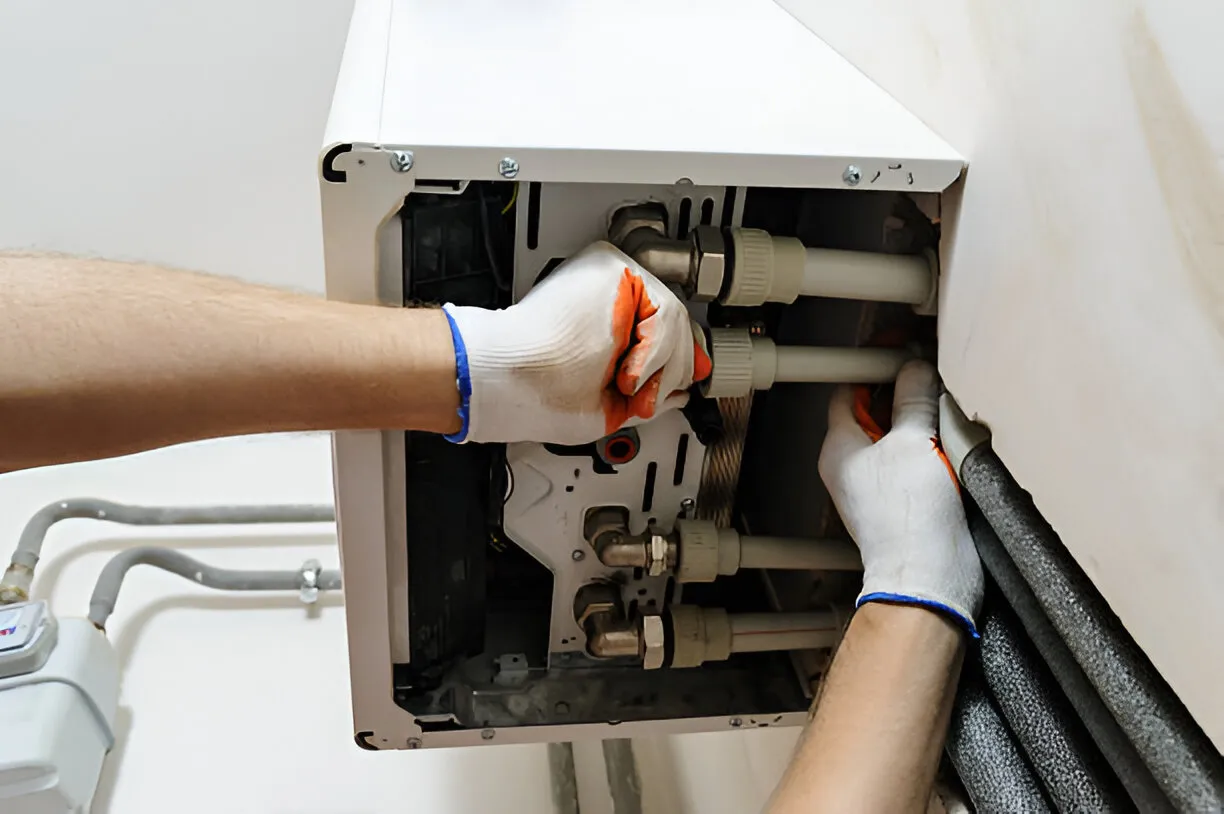
Why replacement may be the right choice
Homeowners in Gahanna typically consider boiler replacement when they see one or more of these signs:
- System age over 15 to 20 years with increasing repair frequency
- Rising gas or heating fuel bills despite regular use
- Intermittent or uneven heating, frequent short-cycling, or loud operation
- Repeated leaks, corrosion, or parts no longer available
- Safety concerns: cracked heat exchanger, pilot or ignition problems, or carbon monoxide issues
- Inability of the boiler to keep up during Gahanna’s colder months
When multiple issues exist or repair costs start to approach the value of a new unit, replacement is usually the more cost-effective long-term solution.
Types of boilers: high-efficiency and condensing options
Primary choices for boiler replacement include:
- High-efficiency non-condensing boilers: Improved combustion and controls over older units, typically higher AFUE than legacy models.
- Condensing boilers: Capture additional heat from exhaust gases for very high AFUE (often 90%+), especially efficient in low-temperature distribution systems.
- Modulating-condensing models: Adjust output to match demand, reducing cycling and improving comfort.
- Combi boilers: Provide space heating and domestic hot water in a single compact unit for homes with appropriate plumbing and demand.
- Fuel options: natural gas, propane, oil, or electric. Fuel availability and local utility rates in the Gahanna/Columbus area will influence the best choice.
Technicians will explain AFUE ratings, benefits of condensing technology, control upgrades, and how each option performs in local climate conditions.
How technicians assess system condition
A thorough assessment typically includes:
- Visual inspection of the boiler, vents, flue/chimney, and nearby piping
- Combustion analysis to check efficiency and safe combustion
- Pressure and leak testing of the hydronic system
- Evaluation of distribution: radiators, baseboard, or in-floor piping
- Inspection of safety devices, expansion tanks, and controls
- Review of energy usage and past repair history
This diagnostic establishes whether repair or replacement best meets your home’s needs and what upgrades—controls, zoning, or new thermostats—will maximize savings and comfort.
Sizing and load calculations
Correct sizing is critical. Technicians perform a heat loss calculation specific to your Gahanna home rather than relying on boiler nameplate capacity. That typically includes:
- Room-by-room heat loss (walls, windows, roof, foundation)
- Construction type, insulation levels, and window performance
- Infiltration and air leakage
- Desired indoor temperature and hot water demand
Proper sizing avoids oversizing (which causes short cycling and reduced efficiency) and undersizing (which fails to meet peak demand). For condensing boilers, distribution water temperatures and system design are also reviewed to ensure condensing conditions are achieved when beneficial.
Removal of old equipment and installation timeline
Typical steps during a boiler replacement:
- Prepare site, shut off utilities, and drain the system
- Disconnect and remove the old boiler and associated piping or venting as needed
- Update gas or fuel connections, flue or venting, and electrical wiring to code
- Set and secure the new boiler, connect distribution piping and controls
- Refill, purge air, adjust system balancing and zone controls
- Perform combustion testing, safety checks, and initial tuning
A simple like-for-like swap often takes 1 to 2 days. More complex replacements—system conversions, adding indirect hot water tanks, or relocating venting—can take 2 to 4 days or more. Weather, access, and required permit inspections in Gahanna may affect the schedule.
Permits, inspections, and compliance
Boiler replacement in Gahanna requires compliance with local and state codes. Expect:
- Building and mechanical permits from Franklin County or the City of Gahanna as applicable
- Gas line and fuel appliance permits and inspections
- Compliance with manufacturer installation requirements and clearance rules
- Final inspection by a local authority to verify safe venting, combustion, and installation practices
Technicians should handle permit submission and coordinate inspections or clearly explain homeowner responsibilities for approvals.
Financing and rebate information
Replacement projects often qualify for financing and incentives that reduce upfront cost:
- Financing options may include payment plans, HVAC-specific loans, and lender programs to spread cost over time
- Federal tax credits and efficiency incentives have existed for high-efficiency heating equipment; check current eligibility
- Local utility rebates and energy-efficiency programs in the Columbus/Gahanna service area can offset some costs
- Energy audits or incentive pre-approvals may be required before equipment purchase
Rebate amounts and financing terms vary; discussing current programs with your technician or local utility will identify applicable savings.
Expected energy savings and long-term benefits
Replacing an older boiler with a high-efficiency or condensing model typically yields:
- Energy savings commonly in the range of 10% to 30% or higher compared with older non-condensing units
- Larger savings (20% to 40%) when replacing very old low-AFUE boilers with modern condensing systems, depending on usage patterns and controls
- Improved comfort through more consistent temperatures and better zoning
- Lower maintenance and repair costs over the life of the system
- Reduced emissions and environmental impact
Actual savings depend on fuel prices, home envelope improvements, thermostat behavior, and system controls.
Final considerations for Gahanna homeowners
Boiler Replacement in Gahanna, OH is a meaningful investment for households facing frequent breakdowns, high heating costs, or comfort issues. Choosing the right equipment—matched to correctly calculated heat loss, properly installed and permitted, and paired with modern controls—delivers reliable heat, improved efficiency, and lower lifetime costs. When evaluating replacement, prioritize a full diagnostic assessment, accurate sizing, compliance with local code, and exploration of available financing and rebates to maximize long-term value.
Hot Deals & Cool Savings

.webp)
New Service Agreement Membership
.webp)
Any New Client Service
Next Service for Referring a New Client
New Service Agreement Membership
Any New Client Service
Next Service for Referring a New Client
.webp)
.webp)

Service Areas
