
AC Repair in Linden, OH
Air Conditioning Repair in Linden, OH offers expert diagnostics, on-site repairs, and rapid estimates with clear guarantees. Schedule service today.

Air Conditioning Repair in Linden, OH
A failing air conditioner in Linden, OH is more than an inconvenience — during hot, humid central Ohio summers it can affect health, sleep and daily life.
Why timely AC repair matters in Linden, OH
Linden is part of Columbus with hot, humid summers and occasional summer storms. High humidity increases run times and stress on compressors and fans, while power surges from storms can damage controls. Many Linden homes have older systems or compact mechanical spaces that make small problems escalate quickly. Prompt repair:
- Restores comfort and indoor air quality
- Prevents compressor failure (the most expensive fault)
- Saves energy by returning the system to efficient operation
- Extends equipment life and avoids premature replacement
Common AC failure symptoms in Linden homes
Recognizing symptoms early helps prioritize repairs. Common signs include:
- Weak or warm airflow from vents — often caused by clogged air filters, failing blower motors, blocked ducts or low refrigerant.
- Short cycling (turning on and off frequently) — usually from a failing capacitor, thermostat issues, or refrigerant problems.
- System won’t start at all — could be a tripped breaker, bad contactor, failed control board or failed compressor.
- Unusual noises (grinding, hissing, rattling) — bearings, fan blade issues, refrigerant leaks or debris in the outdoor unit.
- High energy bills after a previously stable period — reduced efficiency from dirty coils, low refrigerant or failing components.
- Water pooling or continuous condensation — blocked condensate drain, coil freeze from low refrigerant, or improper drain pan slope.
- Foul or musty odors when running — microbial growth in the coil or ductwork, or a failing electrical component emitting burning smells.
Typical diagnostic procedures used on-site
A structured diagnosis is essential to avoid unnecessary parts replacement. A typical professional diagnostic sequence includes:
- Visual inspection of indoor and outdoor units for debris, corrosion and wiring damage.
- Airflow checks at return and supply registers and measurement of static pressure when needed.
- Electrical testing of capacitors, contactors, motors and safety switches with a multimeter.
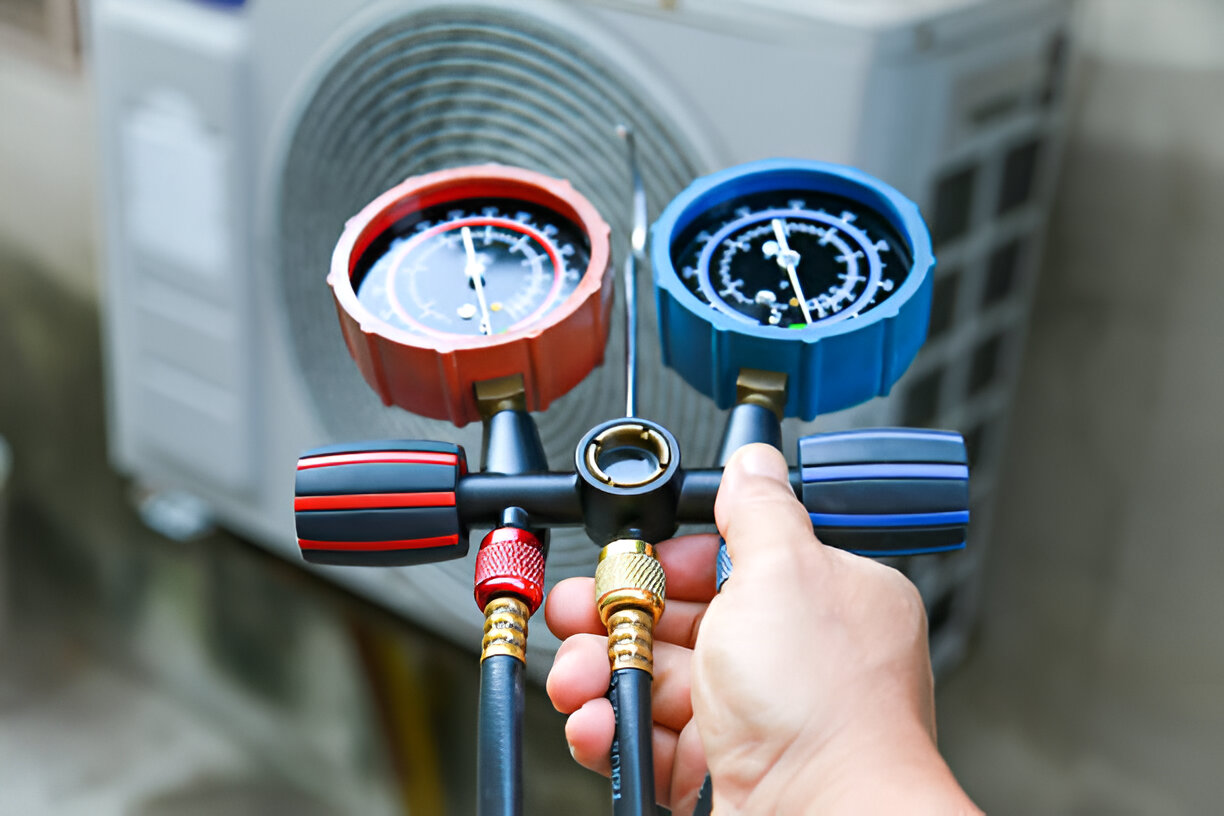
- Refrigerant system checks: pressure readings, temperature split across the evaporator, and leak detection if pressures are abnormal.
- Thermostat calibration and control verification.
- Condensate and drain line inspection for clogs or microbial growth.
- System performance evaluation — run the system through a full cooling cycle to observe behavior and failure modes.
Diagnostics result in an itemized report explaining cause, urgency, recommended repairs, and replacement options when repair is not cost-effective.
On-site repairs and parts replacement
Many repairs can be completed on the first visit if technicians carry common parts. Typical on-site repairs include:
- Replacing capacitors and contactors (common causes of start failures)
- Replacing fan or blower motors and belts
- Cleaning or straightening condenser fins and cleaning evaporator coils
- Clearing condensate drains and treating microbial growth
- Refrigerant leak detection and repair, followed by refrigerant recharge (note: older systems using R-22 require specific handling and may need retrofit or replacement)
- Thermostat replacement or recalibration
- Replacing control boards, relays or safety switches
- Duct repairs or sealing to restore airflow efficiency
When major components such as compressors or evaporator coils fail, technicians will explain repair vs replacement options and the expected timeline to obtain OEM or approved replacement parts.
Expected response times for urgent calls
During heat events urgent calls are prioritized. Typical response expectations in urban Linden neighborhoods are:
- Urgent or emergency calls: prioritized same-day response, often within 2 to 6 hours depending on time of day and technician availability.
- Non-emergency service calls: scheduled within 24 to 48 hours, with next-business-day appointments common.
- After-hours emergency coverage: many providers offer 24-hour emergency dispatch for life-safety or immediate comfort failures, though response windows may vary.
Always ask for the estimated arrival window and how the provider handles urgent calls during heat waves or storms.
Pricing and the estimate process
A transparent estimate process is essential at the decision stage:
- Diagnostic fee: many technicians charge a diagnostic or trip fee to cover time and testing; that fee is often credited toward repairs if approved.
- Itemized written estimate: after diagnosis, expect a clear, written estimate listing parts, labor, applicable taxes and warranty details. Estimates should present repair options and replacement recommendations when applicable.
- Repair authorization: technicians typically perform repairs after you authorize the estimate. If parts are not in stock, they will explain lead time and interim measures to keep your home safe and as comfortable as possible.
- Replacement vs repair guidance: professionals can provide a cost comparison and lifecycle view—repair cost relative to system age, recent maintenance history, and expected remaining life—to help you decide.
Guarantees and technician credentials
Trustworthy AC repair includes both qualified technicians and clear guarantees:
- Technician credentials: look for licensed HVAC technicians with EPA 608 certification for refrigerant handling, continuing education, and background checks. Certifications such as NATE indicate additional industry-standard training.
- Parts and labor guarantees: reputable providers issue warranties on installed parts and labor. Typical workmanship guarantees range from 30 to 90 days or longer for specific repairs; manufacturer parts carry their own warranties.
- Safety and compliance: technicians follow local codes, handle refrigerants per federal and state regulations, and use proper safety practices for electrical and pressure systems.
Preventive tips and the benefits of timely repair
Small maintenance steps between professional visits reduce emergency repairs:
- Replace or clean air filters monthly during heavy use months.
- Keep outdoor units clear of leaves, grass and debris and maintain 2 feet of clearance.
- Schedule spring preventive inspections to catch refrigerant leaks, electrical wear, and airflow problems before summer.
- Consider a seasonal maintenance plan to lower long-term costs, improve efficiency and prioritize service during high-demand periods.
Timely repair restores comfort quickly, reduces energy waste, prevents secondary damage like frozen coils or compressor burnout, and keeps older Linden home systems operating safely.
Hot Deals & Cool Savings

.webp)
New Service Agreement Membership
.webp)
Any New Client Service
Next Service for Referring a New Client
New Service Agreement Membership
Any New Client Service
Next Service for Referring a New Client
.webp)
.webp)

Service Areas
