
Tankless Water Heater in Worthington, OH
Tankless water heater installation in Worthington, OH delivers energy savings and continuous hot water. Learn more and schedule installation today.

Tankless Water Heater in Worthington, OH
Tankless water heater (on-demand) services in Worthington, OH provide an efficient, space-saving alternative to traditional storage tanks for homeowners who want continuous hot water, lower operating costs, and a longer-lasting system. Worthington homes face cold Midwest winters and moderately hard groundwater; those factors make proper sizing, fuel choice, and maintenance particularly important to get reliable year-round performance from a tankless system.
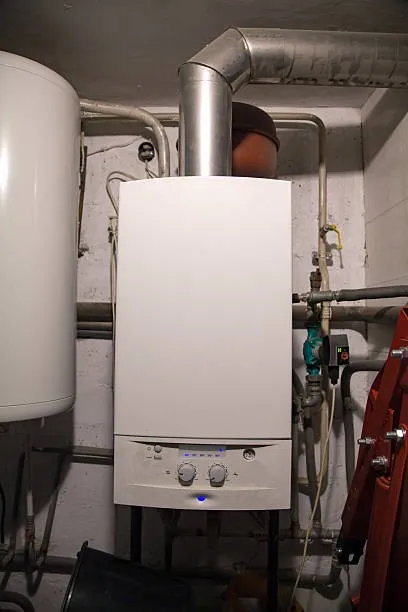
Why choose a tankless water heater in Worthington, OH
- Energy savings: Tankless units avoid standby heat loss associated with tanks. For typical households, on-demand systems commonly reduce water-heating energy use by 20 to 30 percent, depending on hot water habits and local energy prices.
- Continuous hot water: Multiple showers, dishwashing, and laundry can run with fewer limits when the system is sized correctly.
- Space savings: Compact wall-mounted units free up basement or closet space, an advantage for older Worthington homes with limited mechanical rooms.
- Longer lifespan: Expect 15 to 25 years for a well-maintained tankless unit versus about 10 to 15 years for traditional tanks.
- Lower environmental impact: Higher efficiency units use less fuel overall, reducing greenhouse gas emissions over the life of the appliance.
Common tankless water heater issues in Worthington and how to avoid them
- Mineral scaling from hard water: Central Ohio tends to have moderately hard water that accelerates scaling in heat exchangers. Preventive steps include installing a water softener or scheduling regular descaling maintenance.
- Cold water sandwich: Short bursts of cold water between hot cycles can occur with instant systems. Buffer tanks or adjusting usage patterns can reduce this effect.
- Insufficient gas supply or electrical capacity: Older homes may need gas line upgrades or electrical panel changes to support high-demand units.
- Low flow or fluctuating temperatures: Undersized units or clogged inlet filters cause poor performance. Proper flow calculation and routine filter cleaning prevent most problems.
- Venting and combustion issues: Improper venting can cause reduced efficiency or safety concerns. High-efficiency condensing units require a condensate drain and correct vent materials.
Sizing and flow-rate calculations
Accurate sizing is the most important factor for reliable hot water delivery. Use these steps to estimate the right tankless capacity for a Worthington home:
- Determine peak simultaneous flow rate in gallons per minute (GPM). Typical fixture flow rates:
- Shower (low-flow): 1.5 to 2.5 GPM
- Kitchen sink: 1.5 to 2.2 GPM
- Dishwasher: 1.0 to 2.0 GPM
- Washing machine: 1.5 to 2.5 GPMExample: two showers (2.0 GPM each) plus a kitchen sink (1.8 GPM) = 5.8 GPM peak.
- Calculate required temperature rise. Estimate incoming groundwater temperatures for Worthington: roughly 40 F in winter and 55 to 60 F in summer. If desired outlet temperature is 120 F and winter inlet is 40 F, temperature rise = 80 F.
- Match required GPM at that temperature rise to manufacturer performance charts. A unit rated for 6 GPM at an 80 F rise is appropriate for the example above.
Always factor in simultaneous appliance use and seasonal inlet temperature changes. When in doubt, choose a slightly larger unit or plan for a dual system to cover high-demand scenarios.
Gas versus electric tankless options
- Gas tankless (natural gas or propane)
- Pros: Higher GPM capacity and better for simultaneous, high-demand use; typically lower operating cost where natural gas is available.
- Cons: Requires appropriate venting, combustion air, and possibly a gas line upgrade in older Worthington homes.
- Many Worthington residences have natural gas access, which makes gas units a common choice.
- Electric tankless
- Pros: Simpler installation for venting, smaller footprint, and zero onsite combustion emissions.
- Cons: May require major electrical upgrades such as new 240V circuits or panel changes to meet high amp draw for whole-house units; operating cost depends on local electricity rates.
- Hybrid approaches
- Pairing a point-of-use electric unit for a single bathroom and a gas whole-house unit can address retrofits or phased upgrades.
Installation and retrofit considerations in Worthington, OH
- Permits and code: Local building codes and permits are required for gas and electrical changes. Worthington inspectors check venting, combustion air, gas line sizing, and electrical work.
- Venting and placement: Gas-condensing units need PVC condensate drainage and correct vent routing. Non-condensing units use stainless steel flue materials and require more clearance.
- Gas line and panel upgrades: Many older central Ohio homes may need gas pipe upsizing or electrical panel capacity increases to support a new tankless system.
- Space and mounting: Wall-mounted units free floor space but require access for maintenance and proper clearance per code.
- Retrofit tip: For homes with very hard water or heavy sediment, installing a whole-house water softener or pre-filter before a tankless unit significantly extends service life.
Maintenance and lifespan expectations
- Regular maintenance is essential in Worthington due to seasonal temperature swings and hard water. Recommended schedule:
- Annual inspection and service: Descale or flush the heat exchanger annually if water is hard; every 2 to 3 years if a softener is installed.
- Clean inlet filters and screens every 6 to 12 months.
- Check venting, pressure relief valves, and condensate drains during each service visit.
- Lifespan: With proper maintenance, tankless systems commonly last 15 to 25 years. Heat exchanger warranties and manufacturer care instructions influence longevity.
Cost comparison to traditional tanks
- Upfront vs long term: Tankless water heaters typically cost more upfront for equipment and installation, but they offer lower operating costs, longer lifespans, and space savings. Many households reach payback within several years depending on hot water usage and local fuel prices.
- Value drivers: Reduced replacement frequency, lower energy consumption, and the ability to serve multiple outlets more reliably are primary financial benefits over a 10 to 20 year horizon.
Recommended brands and warranty considerations
- Widely used and respected manufacturers: Rinnai, Navien, Noritz, Bosch, Rheem, Takagi.
- Typical warranty structure: Heat exchanger warranties commonly range from 10 to 15 years on premium models; parts and labor warranties vary from 1 to 5 years. Coverage depends on proper installation and adherence to maintenance schedules.
- Warranty tip: Keep proof of professional installation and service records to preserve warranty eligibility, especially for heat exchanger coverage.
Final notes on choosing a tankless water heater in Worthington
Choosing the right tankless water heater in Worthington, OH starts with realistic sizing for winter inlet temperatures, planning for local water hardness, and confirming fuel and electrical capacity. Proper installation, annual descaling when needed, and attention to venting or condensate requirements will deliver reliable hot water, energy savings, and a long service life suited to Worthington homes and climates.
Hot Deals & Cool Savings

.webp)
New Service Agreement Membership
.webp)
Any New Client Service
Next Service for Referring a New Client
New Service Agreement Membership
Any New Client Service
Next Service for Referring a New Client
.webp)
.webp)

Service Areas
