
Tankless Water Heater in German Village, OH
Tankless water heater installation in German Village, OH delivers energy savings and endless hot water. Learn more about sizing, installation, and permits.

Tankless Water Heater in German Village, OH
Upgrading to a tankless (on-demand) water heater is a common decision for homeowners in German Village, OH who want continuous hot water, space savings, and better long-term efficiency. Older, historic homes in this neighborhood often have compact mechanical spaces and unique venting limitations, so understanding how tankless systems operate, what installation involves, and how they perform in central Ohio’s climate is critical before making a final choice.
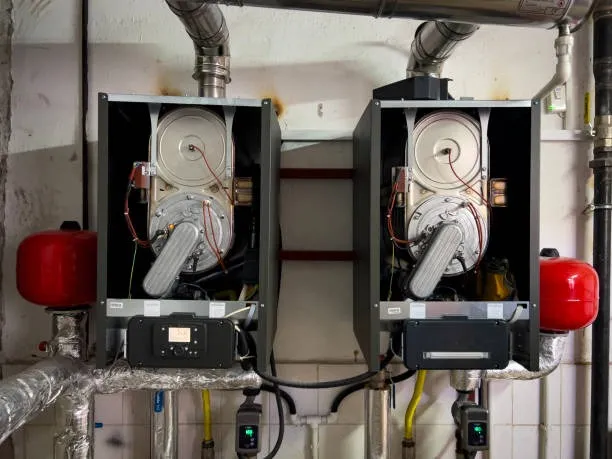
Why choose a tankless water heater in German Village, OH
- Energy savings: Tankless units heat water only when you need it, reducing standby losses common with storage tanks. Over time this can lower energy use in many households.
- Continuous hot water: On-demand systems supply hot water as long as fuel and capacity allow, eliminating long recovery waits during high-demand periods.
- Space savings: Wall-mounted units free up basement or closet space in tightly built German Village homes where square footage is at a premium.
- Longer service life: With routine care, tankless systems typically last longer than conventional tanks, which is especially appealing in homes where major replacement is disruptive.
How tankless systems work
Tankless heaters heat water directly as it passes through a heat exchanger. When a hot water tap opens, a flow sensor triggers the burner or electric elements. The system adjusts to meet the temperature setpoint, producing hot water on demand. Main components to note: the heat exchanger, ignition/controls, flow sensor, and venting for gas models.
Sizing guidance for German Village homes
Correct sizing is the most important step to avoid disappointment:
- Determine peak simultaneous demand: Add flow rates (GPM) for fixtures likely to run at once — for example, shower (1.5–2.5 GPM for low-flow fixtures), washing machine (1.5–2.5 GPM), dishwasher (1–1.5 GPM), and kitchen sink (1–2 GPM). Older fixtures may use more.
- Calculate required temperature rise: Subtract incoming groundwater temperature from desired outlet temperature. Central Ohio winters mean incoming water is colder, increasing the required temperature rise and reducing GPM capacity for a given unit.
- Match unit capacity: Choose a model whose GPM at the needed temperature rise meets or exceeds your peak simultaneous demand. When in doubt, select a slightly larger model or consider a dual-point installation to cover heavy simultaneous loads.
Professional load calculation is recommended for German Village homes because of winter temperature swings and the wide variety of fixture ages and flow rates in historic properties.
Installation requirements and considerations
- Fuel source and service upgrades: Gas-fired tankless units require adequate natural gas supply and piping; many older German Village homes may need gas line upgrades. Electric models need sufficient electrical service and dedicated circuits, which can be a limiting factor in homes with older electrical panels.
- Venting and historic preservation: Gas units require venting. Condensing units use PVC for direct venting and are more efficient but careful planning is required to meet historic district guidelines and avoid visual impacts on façades. Non-condensing units may use metal chimney venting but may be more complicated in homes without existing flues.
- Condensate management: High-efficiency condensing units produce acidic condensate that must be neutralized and drained properly; freezing of condensate lines in winter is possible without correct routing and insulation.
- Space and mounting: Wall-mounted units free floor space but need accessible service clearances and a mounting surface that meets structural requirements.
- Permits and inspections: Installations in German Village must comply with Columbus plumbing and mechanical codes and often require permits and inspections, particularly in historic structures.
Maintenance expectations and longevity
- Annual servicing: Flush and descale heat exchanger annually in areas with hard water. Replace or clean inlet filters/strainors and inspect venting, pressure relief, and combustion components.
- Hard water mitigation: Columbus-area water tends to be moderately hard; installing a whole-house water softener or a scale reduction device can significantly reduce scaling and extend service intervals.
- Typical lifespan: With proper maintenance tankless units commonly last 15–25 years, longer than conventional tanks, and many manufacturers offer extended warranties on heat exchangers and parts.
Cost versus traditional tanks and expected ROI
Tankless systems typically have higher up-front equipment and installation costs compared with storage tanks, especially when upgrades (gas piping, electrical service, venting) are needed for older German Village homes. Over time, the reduced energy consumption, lower operating costs, and longer lifespan can produce a favorable return on investment for many homeowners. Evaluate total lifecycle costs — including maintenance, potential fuel upgrades, and expected service life — rather than equipment price alone when choosing between tankless and tank systems.
Common troubleshooting and repair scenarios in German Village
- No ignition or failure to light: Often due to gas supply issues, ignition module faults, or blocked air intake.
- Reduced hot water flow: Can stem from scale buildup in the heat exchanger, clogged inlet screens, or insufficient GPM for the temperature rise.
- Cold water sandwich or inconsistent temperatures: Usually related to system sizing, flow sensor issues, or control board problems.
- Error codes and lockouts: Modern units display codes for diagnostic use. Regularly documenting codes helps technicians identify recurring issues.
- Frozen condensate or venting problems: Winter freezes can block condensate lines or vents, especially in externally routed pipes without proper insulation.
- Heat exchanger leaks: Rare but serious; may require major repair or replacement depending on extent and warranty coverage.
Routine preventative maintenance (annual flush, filters, and visual inspections) prevents many common repairs and keeps warranties valid.
Recommended brands for German Village homeowners
- Gas condensing: Navien, Rinnai, Noritz — known for efficiency and sustained performance in colder climates.
- Non-condensing gas: Rinnai, Noritz — robust where venting options are limited.
- Electric: Stiebel Eltron, Rheem, Bosch — suitable for homes without viable gas service but require adequate electrical capacity.
- High-efficiency condensing: Navien and Bosch condensing models offer superior efficiency and are often a good match for colder incoming water temperatures experienced in Ohio.
When choosing a brand, consider local service support, parts availability, and warranty terms. Units designed to resist scaling or with easier access for descaling are advantageous in areas with hard water.
Final considerations and maintenance tips
In German Village, careful pre-installation planning is essential: assess fuel availability, venting routes, and historic-preservation constraints. Prioritize correct sizing for winter temperature rises and consider water treatment if hard water is present. With appropriate installation and annual maintenance, a tankless water heater can provide reliable, efficient hot water and free up valuable space in your home for many years.
Hot Deals & Cool Savings

.webp)
New Service Agreement Membership
.webp)
Any New Client Service
Next Service for Referring a New Client
New Service Agreement Membership
Any New Client Service
Next Service for Referring a New Client
.webp)
.webp)

Service Areas
