
Whole House Air Purifiers in Hilliard, OH
Discover whole-house air purifier installation in Hilliard, OH. Optimize indoor air quality with centralized filtration—schedule an expert assessment today.

Whole House Air Purifiers in Hilliard, OH
Why whole-home air purification matters for Hilliard homes
Your HVAC system moves air through your house every day. When that air contains pollen, mold spores, smoke, pet dander, volatile organic compounds (VOCs), or viruses, those pollutants circulate through living spaces and reduce indoor air quality. In Hilliard, OH, seasonal pollen (spring and fall), humid summer months that encourage mold growth, colder winters with heating system recirculation, and occasional smoke or combustion particles make whole-home air purification an effective step to protect respiratory health and indoor comfort.
Whole house air purifiers treat the air centrally through your existing ductwork instead of relying on separate room units. That provides consistent filtration for every room, lowers overall particle counts, and addresses gases and microbes when the right technologies are combined.
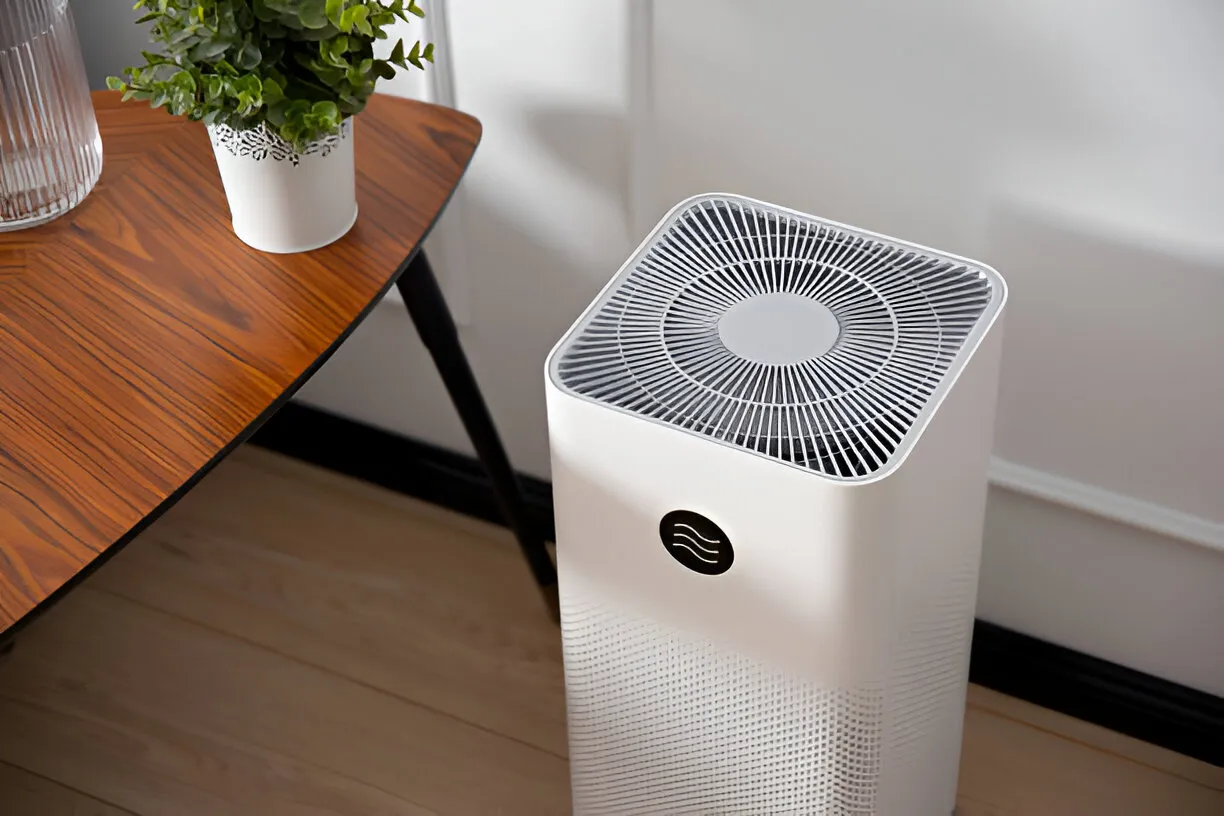
Common whole-house air purifier issues in Hilliard, OH
- Persistent seasonal allergy symptoms despite cleaning and portable purifiers
- Musty odors and visible mold growth on windowsills or in basements during humid months
- Lingering cooking or pet odors throughout open-plan homes
- Smoke intrusion during distant wildfires or from wood-burning fireplaces
- Uneven air quality between rooms caused by poor filtration or inadequate airflow
Understanding these issues helps determine the right system type and sizing for your home.
Whole-home purification technologies (what they do and when to use them)
- HEPA filtration: Removes 99.97% of airborne particles down to 0.3 microns when operated at rated conditions. Best for pollen, dust, pet dander, and many aerosols. For in-duct use, HEPA requires a blower capable of overcoming added pressure.
- Activated carbon: Adsorbs odors, VOCs, and many gaseous pollutants. Useful where odor control or chemical off-gassing (new paint, cleaning products) is a concern.
- UV germicidal lamps: Inactivate bacteria, viruses, and mold spores on coil surfaces and passing air. Most effective as part of a multi-layer strategy, especially when combined with filtration.
- Electronic/ionization cleaners: Capture particles via charged plates or ion generation. Effective for fine particles but require regular cleaning of collector cells and careful selection to avoid ozone-producing devices.
Combining technologies (for example, a pre-filter + HEPA + activated carbon + UV) addresses a broad range of contaminants for Hilliard homes facing both seasonal allergens and occasional VOC/odor problems.
Coverage, CADR, ACH and performance metrics explained
- CADR (Clean Air Delivery Rate) is commonly used for portable purifiers; with whole-house systems, performance is better expressed by airflow (CFM), filter removal efficiency, and air changes per hour (ACH).
- ACH = (CFM x 60) / Room or house volume. For allergy reduction in a whole house, targeting 4 to 6 ACH is common; for infection risk reduction or high-particle events, 6 to 12 ACH may be desired.
- Effective whole-house CADR = system airflow (CFM) x particle removal efficiency. For example, a 1,200 CFM system with 90% efficiency on relevant particle sizes gives an effective CADR useful for whole-home comparisons.
- Pressure drop matters: higher-efficiency filters add resistance to airflow. Your furnace or air handler must have the capacity to maintain adequate CFM without reducing system longevity.
A professional assessment determines realistic ACH targets and verifies whether your existing blower can handle upgraded filtration.
Integration with existing HVAC and installation process
- Assessment: Measure square footage, ceiling height, duct layout, current blower CFM, and occupant health concerns. Check for duct leaks and existing filtration levels.
- System selection: Decide between in-duct HEPA units, bypass HEPA housings, carbon canisters in the return plenum, UV lamps at the coil, or high-efficiency electronic collectors. Match the solution to contaminant priorities and the HVAC system capacity.
- Installation steps: install the purifier hardware (in return plenum, main trunk, or adjacent to the air handler), add pre-filters and carbon modules as needed, mount UV lamps on coils or in ducts, and verify secure electrical connections. Commissioning includes airflow measurements and static pressure checks.
- Testing and balancing: After installation, measure CFM and ACH, confirm filter seals, and run a particle count or smoke test if objective verification is desired.
Proper placement (typically near the main return) and professional balancing ensure whole-house distribution and optimum performance.
Maintenance and filter replacement schedules
- Pre-filters: inspect every 1 to 3 months; replace as needed to protect downstream filters and maintain airflow.
- HEPA or high-efficiency media filters: typically replaced every 9 to 18 months depending on loading, home occupancy, and local pollutant levels.
- Activated carbon cartridges: replace every 6 to 12 months; heavy VOC or odor conditions may shorten life.
- UV lamps: replace annually (output declines over time).
- Electronic collector cells: clean per manufacturer guidance, commonly monthly to quarterly.
Regular maintenance prevents pressure drop increases, preserves energy efficiency, and maintains designed contaminant removal rates.
Health, allergy, and indoor comfort benefits for Hilliard residents
- Reduce airborne pollen and particulate matter that triggers seasonal allergies common in Franklin County.
- Lower exposure to mold spores during humid months, reducing musty odors and respiratory irritation.
- Better control of VOCs from household products, renovations, and garage/farm-related fumes in suburban neighborhoods.
- Improved comfort through consistent air quality across rooms with central purification versus single-room units.
When systems are sized and maintained properly, whole-home purification can significantly lower indoor PM2.5 levels and decrease symptom frequency for many allergy and asthma sufferers.
Energy considerations and system trade-offs
- Higher-efficiency filters increase static pressure; this can raise fan energy use or reduce airflow if the blower is not designed for the load.
- Choosing filters with high particle efficiency and low resistance (optimized media) helps balance filtration and energy.
- Upgrading to a variable-speed blower or higher-capacity air handler improves performance and often reduces operating cost while maintaining higher filtration.
- In-duct whole-house solutions often use less total energy than running multiple high-power portable purifiers to cover the same area.
A load and airflow assessment reveals the best balance between energy efficiency and filtration performance for your specific Hilliard home.
Example outcomes from a typical installation
- Before: single-family home shows indoor PM2.5 spikes above outdoor levels during spring pollen and after cooking; occupants report nightly congestion.
- After installing a whole-house HEPA + activated carbon module sized for 5 ACH: measurable PM2.5 reduction of 70 to 90% during peak events, marked reduction in odors, and occupants report fewer allergy symptoms and improved sleep quality.
- Note: actual results vary by house tightness, occupant behavior, and pollutant sources.
Seasonal use and practical tips for Hilliard homeowners
- Run higher fan speeds during spring and fall pollen seasons and after activities that produce particles (cooking, renovations).
- Use the HVAC fan to circulate and filter air continuously during high pollen days or smoke events.
- Keep humidity in check (40 to 50%) to reduce mold growth—purification plus dehumidification is a strong combination.
Whole house air purifiers in Hilliard, OH provide targeted, centralized air cleaning that addresses local seasonal allergens, humidity-driven mold, odors, and particulates. With proper assessment, correct technology selection, and routine maintenance, whole-home systems offer measurable improvements in indoor air quality and occupant comfort.
Hot Deals & Cool Savings

.webp)
New Service Agreement Membership
.webp)
Any New Client Service
Next Service for Referring a New Client
New Service Agreement Membership
Any New Client Service
Next Service for Referring a New Client
.webp)
.webp)

Service Areas
