
Whole House Air Filtration in Lewis Center, OH
Whole House Air Filtration services in Lewis Center, OH improve indoor air quality by reducing pollen and dust. Schedule install today.

Whole House Air Filtration in Lewis Center, OH
Whole-house air filtration upgrades are a practical, long-term way to improve indoor air quality for Lewis Center, OH homes. With seasonal pollen, humid summers that encourage mold, and cold winters that keep windows closed, residents face year-round exposure to allergens, dust, pet dander, and occasional smoke or vehicle exhaust. A properly selected and installed whole-house system reduces airborne particles throughout your home, protects HVAC equipment, and supports better breathing for people with allergies or respiratory sensitivities.
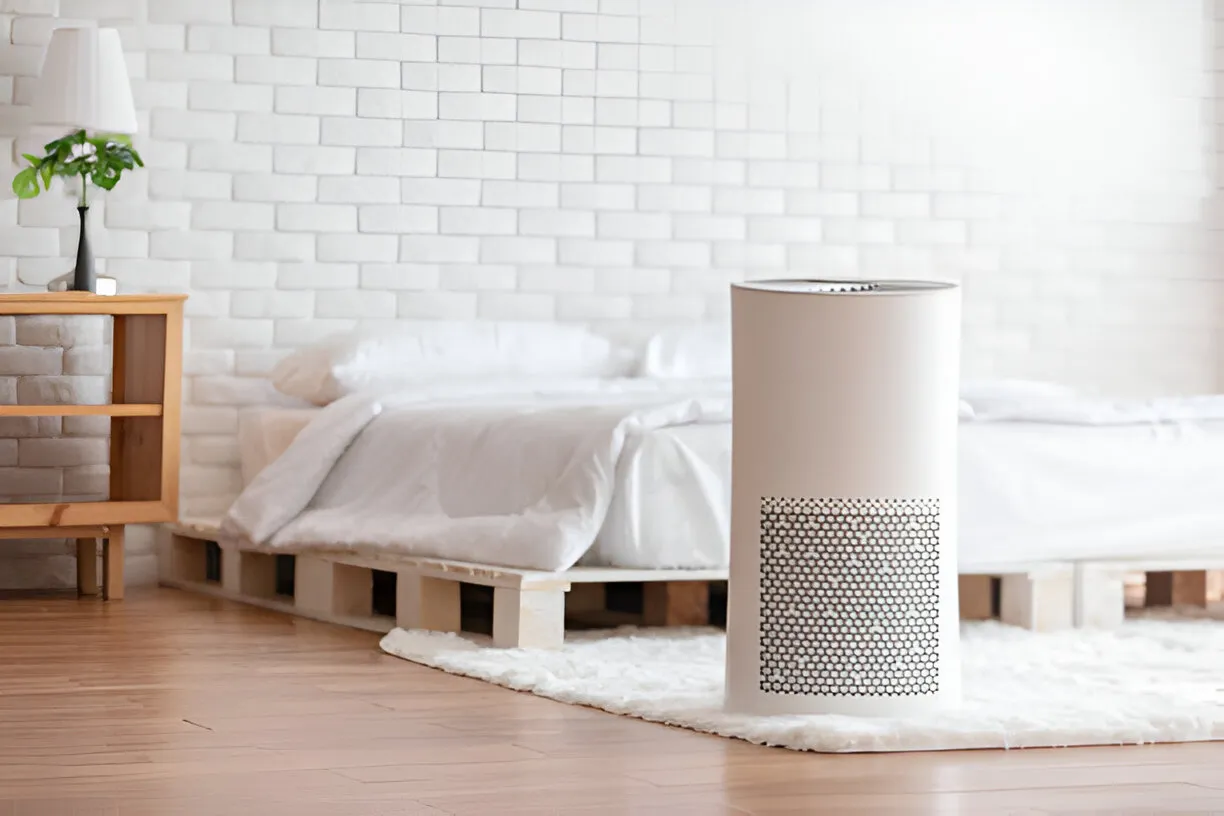
Common indoor air concerns in Lewis Center, OH
- Seasonal pollen from trees, grasses, and ragweed during spring and fall is a primary irritant for residents.
- High summer humidity can promote mold and mildew in crawlspaces and ducts, which releases spores into airflow.
- Wintertime closed homes increase indoor sources such as cooking, cleaning products, and pet dander.
- Occasional regional smoke or road dust can elevate fine particle (PM2.5) concentrations.
Understanding these local patterns helps when choosing filter efficiency and service frequency.
Types of whole-house air filtration and MERV explained
Choosing the right filtration starts with understanding filter efficiency ratings and technologies.
- MERV ratings: The Minimum Efficiency Reporting Value (MERV) ranges from 1 to 16 for common residential filters. Higher MERV removes smaller particles.
- MERV 6-8: Basic protection against large dust, lint, and pollen. Good as pre-filters.
- MERV 9-12: Effective for finer pollen, mold spores, and some pet dander. Common upgrade for allergy relief.
- MERV 13-16: High-efficiency residential options approaching medical-grade particle capture, effective against smoke and many bacteria-sized particles. Requires careful HVAC compatibility checks.
- Media filters (pleated): Thick, high-surface-area filters installed in the furnace/air handler cabinet. They offer long service life and better capture than thin disposable filters. Good balance of efficiency and airflow when properly sized.
- High-efficiency options: In-duct HEPA or true HEPA systems capture 99.97% of particles 0.3 microns in size. Installing true HEPA in standard residential ductwork usually requires a dedicated bypass or a system designed for higher static pressure.
- Electronic and electrostatic air cleaners: Use charged plates to capture particles and can be effective for very small particulates. They are reusable but require regular cleaning and occasional maintenance.
How installation in ductwork works
Whole-house filtration is typically installed at the return side of your HVAC system so all air passing through the furnace or air handler is filtered. Options include:
- Cabinet media filter: Replaces the standard filter with a larger media panel inside the air handler cabinet. This is compact and low-visibility.
- Return plenum filter housing: A dedicated housing at the main return collects larger surface area filters.
- In-duct HEPA or bypass: For true HEPA performance, an inline or bypass unit may be mounted in the duct run; these designs handle higher pressure drops and may require modifications to the system.
Professional installation ensures the filter fits the system, avoids bypass leaks, and accounts for static pressure so the HVAC fan can maintain airflow without undue strain.
Effectiveness against particles and allergens
- Pollen and mold spores: MERV 8 to 12 filters capture most pollen and spores; MERV 13 performs better for finer allergens.
- Pet dander and dust: Pleated media filters and MERV 9-12 ratings catch much of pet dander and household dust.
- Fine particles and smoke: For PM2.5 and wildfire or vehicle smoke, choose MERV 13+ or HEPA-level solutions. Electronic cleaners also help reduce ultrafine particles.
Remember that filtration reduces airborne particles but does not remove gases, VOCs, or odors. Those require activated carbon or separate ventilation solutions.
Impact on HVAC performance and airflow
Higher efficiency filters typically create more resistance to airflow (higher static pressure). That has three implications:
- Increased fan energy use: The blower works harder to push air through a denser filter.
- Reduced airflow if the system is not sized for the filter: Lower airflow can reduce comfort, heat or cool delivery, and humidity control.
- Potential equipment stress: Long-term use of overly restrictive filters on undersized systems can shorten blower life.
Mitigation strategies:
- Use media or high-efficiency filters with low pressure-drop designs.
- Upgrade blower motor to variable-speed or higher-capacity units when moving to MERV 13+ options.
- Maintain proper filter seat and seals to prevent airflow bypass.
A professional assessment of your furnace/air handler and ductwork is recommended before upgrading to high-MERV or HEPA in-duct solutions.
Recommended maintenance schedule
Maintenance keeps filtration effective and prevents unnecessary strain on HVAC systems:
- Basic pleated filters (MERV 8-11): Replace every 3 months in typical homes; more often with pets or heavy pollen.
- High-efficiency media filters: Replace every 6 to 12 months depending on load and manufacturer guidance.
- Electronic/electrostatic units: Clean collection plates or cells every 1 to 3 months; perform periodic deep cleaning per manufacturer instructions.
- In-duct HEPA units: Follow the unit schedule, often with pre-filter changes every 3 months and HEPA module replacement per manufacturer intervals.
Inspect filters visually during seasonal transitions (spring and fall) in Lewis Center to catch heavy pollen buildup or winter dust accumulation.
Choosing the right system for health or allergy concerns
- Mild allergies or general dust control: Upgrade to MERV 9-11 or a high-quality pleated media filter. This balances particle capture and system compatibility.
- Moderate to severe allergies or asthma: Aim for MERV 13 or a properly installed in-duct HEPA system. Verify HVAC compatibility or add a dedicated bypass/HEPA module. Consider adding activated carbon stages for odors or chemical sensitivities.
- Smoke sensitivity or wildfire events: Use MERV 13+ or HEPA, and consider portable HEPA units for localized rapid response in occupied rooms.
When health is a primary driver, prioritize certified filter performance, predictable maintenance, and professional system evaluation to avoid unintended airflow or comfort issues.
Cost vs benefit considerations for Lewis Center homeowners
- Upfront vs ongoing cost: Higher-efficiency filters and in-duct HEPA units are more expensive initially but can lower allergen exposure and reduce cleaning frequency. Factor in replacement filter cost and any needed HVAC upgrades.
- Energy trade-offs: Slight increases in fan energy may occur with higher-MERV filters; this can be offset by proper sizing, variable-speed blowers, and seasonal system tune-ups.
- Health and comfort benefits: Reduced allergy symptoms, fewer airborne irritants, and less dust on surfaces often translate to tangible quality-of-life improvements that many homeowners find outweigh incremental costs.
- Home value and resale: Improved indoor air systems are increasingly valued in markets where buyers prioritize health and energy efficiency.
Hot Deals & Cool Savings

.webp)
New Service Agreement Membership
.webp)
Any New Client Service
Next Service for Referring a New Client
New Service Agreement Membership
Any New Client Service
Next Service for Referring a New Client
.webp)
.webp)

Service Areas
