
HVAC Tune-up in Clintonville, OH
HVAC tune-up in Clintonville, OH improves efficiency and comfort. Schedule your tune-up today for safety checks, performance evaluation, and expert recommendations.

An HVAC tune-up is one of the most cost effective steps you can take to keep your home comfortable and safe year round. In Clintonville, OH, where hot humid summers and cold winters place heavy demands on heating and cooling systems, a thorough tune-up reduces the chance of unexpected breakdowns and keeps equipment running efficiently. Best Service Heating & Cooling provides professional HVAC tune-up services tailored to Clintonville homes, following a clear, industry-standard checklist so you know exactly what to expect from inspection to system performance assessment.
Why a tune-up matters in Clintonville, OH
Clintonville sits within central Ohio’s variable climate. Summers bring high humidity that stresses air conditioners and encourages mold and biological growth in cooling systems. Winters are often prolonged and cold, putting furnaces and heat pumps through sustained heavy use. Local characteristics that make regular tune-ups especially important include:
- Older housing stock with varied duct layouts that can hide airflow problems.
- Heavy tree cover in some neighborhoods, increasing debris and pollen around outdoor condensers.
- Seasonal pollen and leaf fall that clog filters and outdoor coils.
- Energy cost sensitivity that makes improving system efficiency directly valuable to homeowners.
A tune-up addresses these local challenges by restoring airflow, verifying safe operation, and optimizing system settings for the season ahead.
Standard HVAC tune-up checklist
A complete tune-up follows a systematic checklist designed to catch small issues before they become major repairs. Best Service Heating & Cooling performs the following key items as part of our standard tune-up in Clintonville, OH:
- Thermostat calibration and control check
Verify the thermostat reads and responds accurately, confirm temperature setpoints, and check for proper cycling. Calibration prevents short cycling and overheating or overcooling. - Refrigerant level check and leak inspection
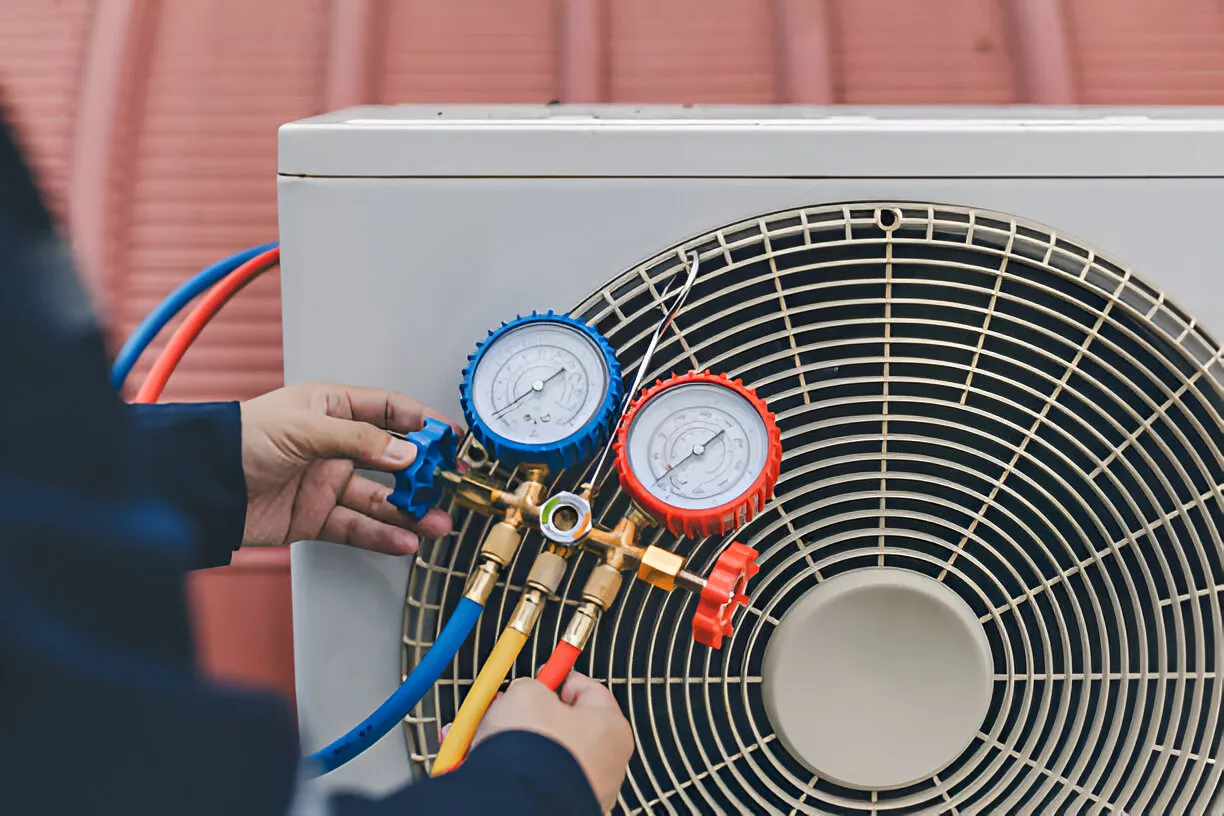
Measure refrigerant pressures and temperature split to confirm correct refrigerant charge. Low refrigerant often indicates a leak that needs repair. - Safety control tests
Test high and low pressure switches, limit switches on furnaces, and other safety interlocks to ensure the system shuts down safely if a fault appears. - Lubrication of moving parts
Lubricate bearings and motors where applicable to reduce friction, noise, and premature wear. - Airflow and filter inspection
Inspect filter condition, verify proper filter size and type, measure airflow if needed, and check for blocked return and supply vents. Replace or recommend filters as appropriate. - Electrical inspection and tightening
Check contactors, relays, capacitors, wiring connections, and breakers. Tighten loose connections and flag any electrical components failing to meet safety standards. - Condenser and evaporator coil cleaning
Clean condenser coils outdoors and inspect the indoor evaporator coil for buildup that reduces heat transfer and efficiency. - Condensate drain and pan check
Clear drain lines and verify proper condensate flow to prevent water damage and microbial growth. - System performance assessment
Measure temperatures, electrical loads, and system run times to produce a performance profile. Evaluate heat/cool balance, temperature split, and expected efficiency. - Combustion and venting inspection for gas systems
Inspect burners, pilot or ignition systems, heat exchanger condition, and venting to ensure efficient combustion and safe venting of flue gases. - Documentation and recommendations
Provide a written report of findings including any recommended repairs, estimated impact on efficiency, and suggested timing for the next check.
These items are performed according to manufacturer guidelines and industry best practices, and the technician documents results so you have a clear record of system health.
Typical service duration and what influences time on site
Most standard tune-ups take between 60 and 90 minutes for a single split system (one furnace and one AC), when no repairs are needed. Systems with additional components or complex ductwork can require longer:
- Typical central air conditioning tune-up: 60 to 90 minutes.
- Typical gas furnace tune-up: 60 to 90 minutes.
- Heat pump tune-up: 75 to 120 minutes due to reversing valve and defrost inspection.
- Older homes or systems with significant dirt, restricted access, or required minor repairs: add 30 to 60 minutes.
If the technician identifies needed repairs or parts, the appointment may extend or a follow-up visit may be scheduled. Technicians carry diagnostic tools to complete performance tests on site and will provide a clear summary of findings.
Common issues found during tune-ups in Clintonville homes
Tune-ups commonly reveal issues that are easy to correct if caught early. Typical findings in Clintonville include:
- Dirty condenser and evaporator coils that reduce heat transfer and efficiency.
- Clogged filters and blocked returns from pollen and seasonal debris, increasing pressure drop.
- Low refrigerant levels due to slow leaks, leading to poor cooling and compressor strain.
- Worn capacitors or failing contactors that cause hard starts or intermittent operation.
- Restricted condensate drains that create water backing up into pans and risk overflow.
- Thermostat miscalibration or placement issues causing inaccurate room temperatures.
- Duct leakage or poorly balanced airflow that causes hot and cold spots.
- Ignition or flame sensor issues on furnaces that cause cycling or shutdowns.
- Electrical connection degradation that increases heat and fire risk.
Early identification through a tune-up reduces the likelihood of emergency service calls on the first hot or cold day of the season.
Diagnostic process explained in plain terms
Technicians follow a steady, documented process to diagnose and evaluate systems. Steps include:
- Visual inspection of components and filters to spot obvious issues.
- Check thermostat settings and confirm correct mode and schedule.
- Measure electrical currents and voltages to ensure motors and compressors draw acceptable amperage.
- Record temperature differences across coils to determine heat transfer efficiency and refrigerant condition.
- Test safety controls by simulating fault conditions where safe and appropriate.
- Inspect flue and combustion components for gas systems to ensure safe exhaust.
- Perform airflow testing when necessary to locate duct restrictions or imbalances.
- Clean condenser fins and check fan motor operation.
- Clear condensate drain and test drainage.
- Provide a written report with measured values, explanation of what was tested, and recommended next steps.
Technicians will explain findings in plain language and prioritize safety-related repairs. The goal of diagnostics is transparency so homeowners understand system condition and required work.
How tune-ups improve efficiency, comfort, and reliability
Routine maintenance yields measurable benefits that align with homeowner priorities:
- Improved energy efficiency: Clean coils, correct refrigerant charge, and unrestricted airflow can improve system efficiency, reducing wasted energy.
- Lower risk of breakdowns: Addressing worn parts and loose connections prevents many emergency failures.
- Longer equipment life: Routine lubrication and timely replacement of stress-prone parts reduces premature failure.
- Consistent comfort: Proper airflow and calibration reduce hot and cold spots and maintain steady indoor temperatures.
- Health and safety: Clean condensate drains, filter checks, and combustion testing lower biological growth and combustion-related risks.
- Warranty compliance: Many manufacturers require regular maintenance for warranty eligibility; documented tune-ups protect warranty coverage.
While exact energy savings vary with system age and condition, homeowners typically see better performance and fewer service calls after regular maintenance.
Seasonal timing recommendations for Clintonville homeowners
To align with local weather patterns and contractor availability, plan tune-ups around these windows:
- Cooling system tune-up: schedule in April or May
Perform an AC tune-up before the humid summer rush. Early spring service avoids peak demand and catches pollen-related issues before heavy use. - Heating system tune-up: schedule in September or October
Prepare furnaces and heat pumps for sustained winter use. A fall tune-up helps ensure safe operation and avoids the highest demand period on the coldest days. - Heat pump homes: consider both seasonal checks
Heat pumps that handle both heating and cooling benefit from biannual attention in spring and fall.
Scheduling early also increases the likelihood of same-week appointments and reduces chances of emergency repairs during peak weather events.
Recurring tune-up plans and what they include
Maintenance agreements provide predictable service and priority access. Typical features of recurring plans include:
- Annual or biannual scheduled tune-ups tailored to your system type.
- Priority service scheduling during peak seasons for enrolled homes.
- Detailed maintenance records to satisfy warranty and insurance requirements.
- Discounts on diagnosed repairs (terms vary), ensuring predictable cost management.
- Reminder service so seasonal checks are not missed.
- Customized plans for older equipment or multi-system homes.
For Clintonville households with older systems, fluctuating occupancy, or multi-system setups, a recurring plan reduces hassle and ensures consistent upkeep.
What happens if the tune-up identifies repairs
During a tune-up, technicians will clearly separate maintenance actions from repair needs:
- Maintenance items are completed on the spot whenever feasible, such as cleaning coils, lubricating motors, and clearing drains.
- If the technician finds worn parts, refrigerant leaks, or safety issues, they will document the problem, explain why the repair is needed, and provide a written estimate.
- Some repairs require parts not typically carried on a maintenance truck; in those cases the technician will recommend a follow-up appointment with parts on hand.
- Safety concerns, such as cracked heat exchangers or severe electrical hazards, are flagged as priorities and will be explained fully so homeowners can make informed decisions.
This transparent approach lets homeowners balance urgency, budget, and long-term system health.
Simple homeowner maintenance between professional tune-ups
Homeowners can take inexpensive steps to protect HVAC performance between professional visits:
- Replace or check filters monthly during high-use seasons, and use the correct MERV rating for your system.
- Keep at least two feet of clearance around the outdoor condenser unit; remove leaves, grass clippings, and debris.
- Check thermostat batteries and settings seasonally.
- Ensure vents and returns are not blocked by furniture or curtains.
- Monitor energy bills and system runtimes for sudden changes that may indicate emerging issues.
- Test carbon monoxide detectors and ensure proper venting for gas appliances.
These small actions extend the benefits of professional tune-ups and reduce service issues.
Why professional tune-ups provide better value than DIY
Certain tasks require specialized tools, safety training, and refrigerant certification. Professionals provide:
- Certified refrigerant handling and leak diagnosis.
- Electrical testing and secure wiring repairs.
- Combustion analysis for safe furnace operation.
- Accurate performance measurement using calibrated instruments.
- Industry knowledge of manufacturer specifications and warranty requirements.
Best Service Heating & Cooling uses trained technicians who document findings and explain tradeoffs between immediate repairs and long-term system investments, helping homeowners make informed choices.
Hot Deals & Cool Savings

.webp)
New Service Agreement Membership
.webp)
Any New Client Service
Next Service for Referring a New Client
New Service Agreement Membership
Any New Client Service
Next Service for Referring a New Client
.webp)
.webp)

Service Areas
