
Heat Pump Installation in Downtown Columbus, OH
Heat pump installation in Downtown Columbus, OH: full on-site assessment, sizing, installation steps, commissioning, warranties, and maintenance. Learn more.

Heat Pump Installation in Downtown Columbus, OH
Installing a heat pump is one of the most effective ways to improve year round comfort and reduce energy costs in Downtown Columbus, OH homes and buildings. With hot, humid summers and cold winters, a properly sized and installed heat pump delivers efficient cooling and reliable heating while often qualifying for federal and local incentives.
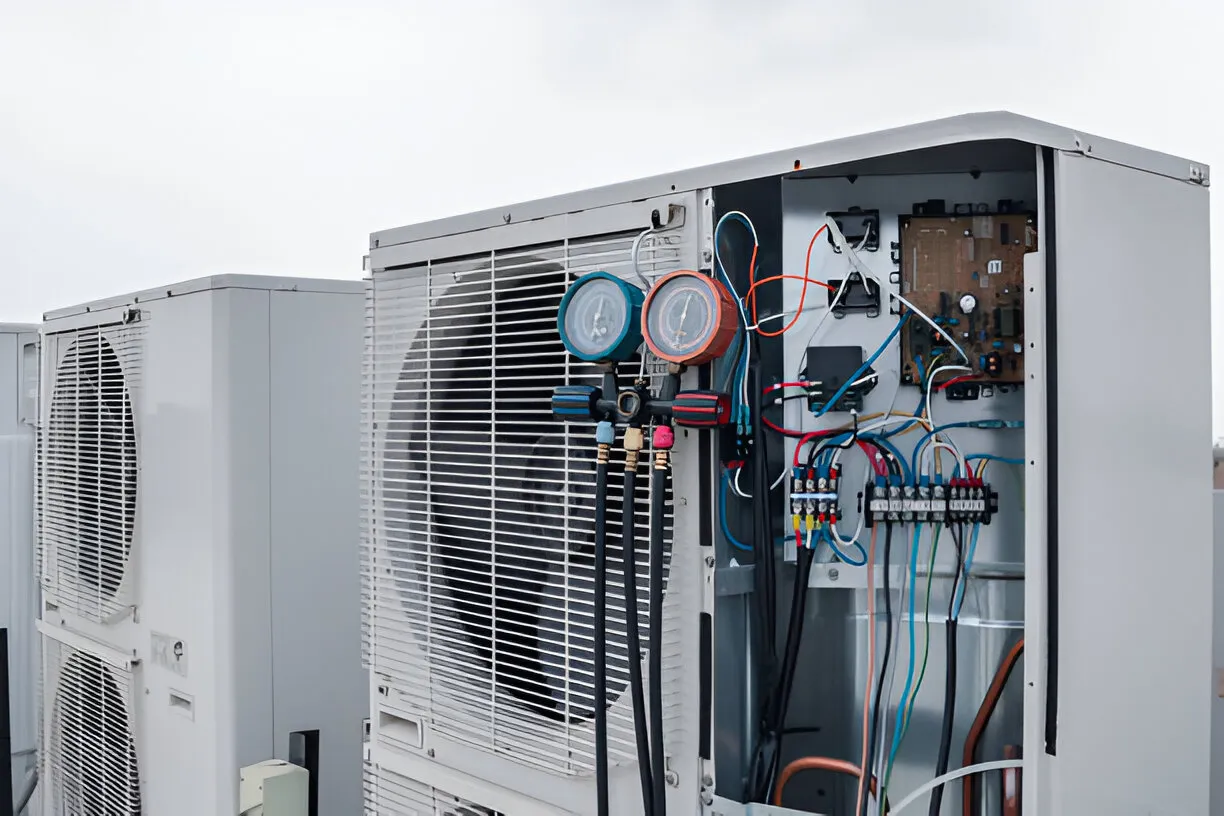
Why choose a heat pump in Downtown Columbus, OH
- Efficient performance for both heating and cooling in climates with temperature swings like Columbus.
- Better humidity control during hot months and more consistent warmth in winter compared with older electric-resistance systems.
- Flexibility: central ducted systems for whole-home comfort, or ductless mini-splits for apartments, additions, and historic buildings where ductwork is limited.
- Potential eligibility for federal tax credits, state incentives, and utility rebates that help offset installation costs.
Common heat pump installation types and common issues in Downtown Columbus, OH
- Central ducted heat pump systems for single-family homes with existing ductwork.
- Ductless mini-split systems for condos, historic homes, townhouses, and rooms without ducts.
- Hybrid systems pairing a heat pump with a gas furnace for very cold spells or electrical considerations.
- Rooftop or packaged units for multi-family and commercial downtown buildings.
Common challenges in Downtown Columbus properties:
- Older homes with undersized or leaky ducts requiring repair or redirection.
- Limited outdoor unit placement in historic districts or tight lots; noise and aesthetic constraints.
- Electrical service limitations in older properties that may require panel upgrades.
- Permitting and building code requirements for downtown and historic neighborhoods.
On-site assessment: what to expect
A professional installation begins with a thorough on-site assessment tailored to Downtown Columbus conditions. Key elements include:
- Detailed conversation about comfort goals, occupancy patterns, and any building restrictions in downtown or historic districts.
- A Manual J load calculation to determine accurate heating and cooling requirements based on home orientation, insulation, window type, and local climate factors.
- Duct evaluation (leakage, sizing, layout) or assessment for mini-split placement where ductwork is not present or practical.
- Electrical inspection to confirm service capacity and determine need for panel upgrades or dedicated breakers.
- Outdoor unit siting review considering noise limits, rooftop access, and municipal regulations common in downtown areas.
System selection and sizing
Correct sizing is critical. Oversized or undersized equipment reduces comfort, increases operating costs, and shortens equipment life.
- Sizing: Use Manual J outcomes to select capacity. In downtown properties with multiple exposures, consider zoned systems.
- Efficiency considerations: Compare SEER and HSPF ratings. Higher efficiency often yields greater long-term savings in Columbus climate.
- Ducted vs mini-split: Choose ducted systems when existing ductwork can be sealed and balanced. Choose mini-splits for room additions, condos, or where duct modification would be invasive.
- Noise and aesthetics: In dense downtown neighborhoods select low-noise outdoor compressors and consider screening or rooftop placement consistent with local rules.
Ductwork or mini-split considerations
- Ductwork: Inspect for leaks and insulation. Plan for sealing, adding insulation, or resizing as part of the installation if necessary.
- Mini-splits: Plan head locations to avoid obstructed airflow. Multiple indoor heads create zones for precise temperature control and energy savings.
- Indoor air quality: Consider upgraded filtration or UV options during installation to address urban pollen and air quality concerns.
Step-by-step installation procedures
Typical installation steps for a residential heat pump in Downtown Columbus:
- Preparation: Secure necessary permits and confirm utility incentive eligibility. Protect floors and finishes inside the property.
- Existing system removal: Carefully remove old equipment if present, reclaim refrigerant according to regulations, and dispose of materials responsibly.
- Outdoor unit placement: Mount the compressor on a vibration-isolating pad or rooftop supports, following local setback and noise rules.
- Indoor unit installation: For ducted systems, connect to the ductwork and ensure proper plenum sizing. For mini-splits, mount indoor heads and run refrigerant lines, condensate drain, and control wiring.
- Refrigerant line, electrical, and condensate connections: Run and secure lines, make electrical connections to code, and install a properly sized condensate drain.
- System evacuation and charging: Evacuate lines to remove moisture and air, then charge refrigerant to manufacturer specifications.
- Controls and thermostat integration: Install and program controls, including zoning thermostats if applicable.
- Duct sealing and airflow balancing: Seal joints and test for correct airflow and temperature differentials.
Post-install commissioning and testing
A thorough commissioning process verifies system performance:
- Leak detection and pressure testing of refrigerant circuits.
- Verify correct refrigerant charge, measure superheat and subcooling.
- Confirm airflow, temperature split, and control response.
- Test safety and electrical components and confirm proper defrost cycles in cold weather.
- Walk-through with occupants explaining system operation, filter changes, and thermostat programming.
Expected timeline for Downtown Columbus installations
- Ductless mini-split for a single zone: typically 4 to 8 hours.
- Multi-zone mini-split or straightforward ducted replacement: 1 to 2 days.
- Full ducted replacement with duct repairs, electrical upgrades, or permit work: 2 to 4 days, sometimes longer if structural or electrical upgrades are required.Timeline can extend if permit processing, historic district approvals, or complex rooftop rigging are involved.
Warranty and maintenance recommendations
- Manufacturer warranties: Most heat pumps include limited warranties on compressors and parts. Confirm model-specific terms and register the system.
- Installation warranty: Verify workmanship coverage for mechanical, electrical, and refrigerant work.
- Recommended maintenance:
- Change or clean filters every 1 to 3 months depending on use and urban dust levels.
- Annual HVAC tune-up before cooling season to check refrigerant, electrical connections, and coil cleanliness.
- Inspect condensate drains and outdoor unit clearance seasonally.
- Seal and test ductwork every few years in older downtown homes.
Incentives and rebates in Columbus, OH
Homeowners in Columbus may qualify for multiple incentive streams:
- Federal energy tax credits and energy efficiency programs that support high-efficiency heat pump installations.
- Utility rebates or low-interest financing programs through local electric providers and energy efficiency programs serving Columbus.
- State or local weatherization and retrofit incentives for qualifying income levels or historic preservation programs that assist with upgrades in downtown neighborhoods.Always verify current eligibility and documentation requirements before installation, as program details can change.
Long-term benefits for Downtown Columbus properties
A properly designed and installed heat pump delivers:
- Lower year-round energy costs and improved comfort in Columbus climate.
- Better humidity control and more even temperature distribution.
- Reduced carbon footprint compared with older fossil fuel based systems.
- Increased property value and modern comfort amenities for downtown living spaces.
By addressing site-specific issues common in Downtown Columbus, OH—such as limited outdoor space, older building electrical capacity, and municipal permitting—an informed installation approach ensures reliable, efficient performance and lasting comfort. Regular maintenance and proper commissioning preserve system efficiency and protect warranty coverage for years of dependable operation.
Hot Deals & Cool Savings

.webp)
New Service Agreement Membership
.webp)
Any New Client Service
Next Service for Referring a New Client
New Service Agreement Membership
Any New Client Service
Next Service for Referring a New Client
.webp)
.webp)

Service Areas
