
Whole House Air Filtration in Columbus, OH
Whole House Air Filtration in Columbus, OH improves home air quality; explore media options, sizing, maintenance, and installation details to plan your system.

Whole House Air Filtration in Columbus, OH
Improving your home’s air quality in Columbus, OH matters year-round. Humid summers, high spring pollen, wintertime confinement, and urban dust from road traffic all increase indoor particle loads and allergen exposure. A properly engineered whole house air filtration system removes particulate matter, protects your HVAC equipment, and lowers the ongoing cost and inconvenience of room-by-room filtration.
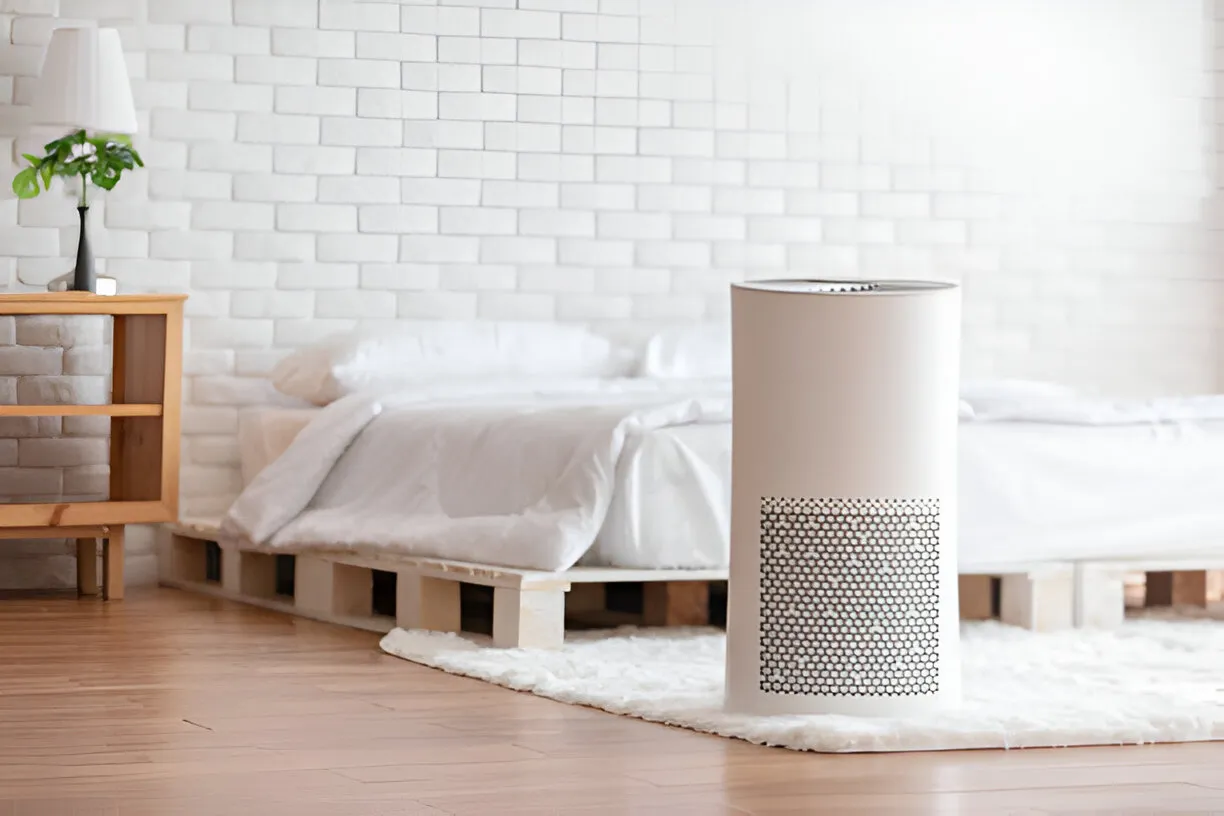
Why whole house filtration matters in Columbus, OH
- Spring pollen and tree allergens spike seasonally across central Ohio, increasing allergy symptoms when infiltration is uncontrolled.
- Summer humidity promotes biological growth (mold and dust mite amplification) inside ductwork and attics, raising particulate and allergen loads.
- Winter months bring closed homes and elevated indoor sources (cooking, cleaners, pet dander) that concentrate fine particles (PM2.5).
- Urban traffic, construction, and occasional long-range smoke events contribute fine dust and soot that settle into homes and HVAC systems.
A whole-home system treats air at the source: the furnace or air handler. That delivers cleaner air to every room while reducing airborne deposits on HVAC coils and duct surfaces.
Common whole house air filtration issues in Columbus homes
- Inadequate filtration for seasonal pollen and PM2.5 during spring and wildfire smoke events.
- Filters selected only for dust control but not for allergens or fine particles.
- High-efficiency filters causing excessive static pressure on older furnaces without proper sizing.
- Neglected filter replacement leading to reduced airflow and higher heating/cooling costs.
- Expectations mismatch: filtration reduces particulates but does not eliminate gases, radon, or all VOCs without appropriate media.
Filter media and MERV ratings explained
- Fiberglass (low MERV): inexpensive, captures large particles but not effective for pollen, pet dander, or fine dust.
- Pleated synthetic filters (MERV 7-13): common for whole-home use; balance between particle capture and airflow. MERV 8-11 good for general allergy reduction; MERV 12-13 approaches hospital outpatient levels for fine particles.
- High-efficiency media and HEPA-equivalent systems: true HEPA (99.97% at 0.3 micron) typically requires a dedicated central unit or bypass configuration because HEPA-grade filters create significant pressure drop.
- Electrostatic and washable electrostatic: variable performance; washable units lose efficiency over time unless professionally maintained.
- Activated carbon / sorbent media: used in combination for odor and VOC reduction; does not address radon effectively.
Key point: MERV is a trade-off between capture efficiency and pressure drop. In Columbus homes, a MERV 8-13 pleated solution often provides the best balance for seasonal allergens and PM2.5 without overloading older HVAC systems.
System configurations
- Furnace-mounted (throwaway filter or media cabinet): easiest and most common. Filter sits at the return plenum and treats return air before it reaches the blower. Ideal for retrofit in most Columbus single-family homes.
- In-duct media filters: larger media pads mounted inside duct runs or filter housings; higher dust-holding capacity and longer replacement intervals. Better for homes with higher seasonal loads from pollen or smoke.
- Central whole-house filtration units (HEPA-capable): standalone cabinet installed on the return side or parallel to the air handler. These provide near-HEPA performance with a bypass blower or dedicated fan to manage static pressure. Recommended when true HEPA-level particulate removal is required.
- Electronic air cleaners / ionizers: can achieve high capture rates but require careful maintenance and may produce ozone if not properly designed. Best used as a complement, not a sole solution.
- Supplemental UV: addresses biological growth on coils and in ducts but does not remove particulates; use alongside filtration for mold control in humid Columbus summers.
Selection and sizing guidance
- Match filter choice to airflow (CFM) and furnace/air handler static pressure limits. Check manufacturer specs for allowable pressure drop at rated airflow.
- Determine target air changes per hour (ACH) for your home size and occupant sensitivity. Typical guidance: 4-6 ACH for allergy-prone households; higher ACH for acute smoke/PM2.5 events.
- Use CADR (clean air delivery rate) or manufacturer efficiency curves to estimate removal times for PM2.5 and pollen. For true HEPA performance, select a central unit sized to your HVAC blower or add a dedicated circulation fan.
- For older Columbus homes with original furnaces, consult HVAC specifications before installing high-MERV media to avoid voiding equipment warranties or causing blower strain.
Maintenance schedule and cost of ownership
- Pleated filters (MERV 8-11): replace every 3-6 months in normal conditions; every 1-3 months during high pollen or smoke events.
- Higher MERV or carbon media: replacement or media change every 3-12 months depending on loading.
- In-duct media units: reusable frames with replaceable media; typical service every 6-12 months.
- Electronic cleaners and HEPA units: periodic cleaning (monthly to quarterly) and professional servicing annually.
- Cost considerations: initial equipment and installation are the largest expense. Ongoing costs include filter media, energy impact from added static pressure, and periodic professional maintenance. Proper sizing minimizes additional energy use and protects HVAC efficiency, often offsetting costs through extended equipment life and reduced service needs.
Indoor air quality testing and performance metrics
- Useful metrics: PM2.5 and PM10 concentrations, relative humidity, airborne allergen counts, CO2 for ventilation assessment, and pressure drop across the filter.
- Professional before-and-after testing provides particle count reductions (%) and validates system performance under real conditions — especially important during pollen season or after installing a HEPA-capable central unit.
- Home monitors (PM2.5 sensors) offer continuous feedback to adjust filtration settings during high-pollution events in Columbus, such as spring pollen spikes or distant wildfire smoke.
Installation and warranty considerations
- Proper installation ensures correct airflow direction, secure seals around housings, and minimal bypass around filters — all critical for performance and for maintaining HVAC warranties.
- Equipment warranties vary by manufacturer; common terms cover defects for a set period, but improper installation or using filters that exceed rated pressure can void parts of the HVAC warranty. Keep installation documentation and verify compatibility with your existing furnace or air handler.
- Ask about performance guarantees or testing procedures included with installation to confirm expected particulate reductions for Columbus seasonal needs.
Final considerations
Whole house air filtration in Columbus, OH is a practical investment to reduce allergens, protect HVAC equipment from particulate build-up, and improve year-round comfort. Choose filtration based on seasonal pollutant profiles, home HVAC capacity, and occupant sensitivity. Regular maintenance and periodic IAQ testing ensure your system continues to deliver measurable improvements in indoor air quality without compromising system performance.
Hot Deals & Cool Savings

.webp)
New Service Agreement Membership
.webp)
Any New Client Service
Next Service for Referring a New Client
New Service Agreement Membership
Any New Client Service
Next Service for Referring a New Client
.webp)
.webp)

Service Areas
