
Heat Pump Installation in Westerville, OH
Heat pump installation in Westerville OH: expert site assessment, efficient setup, and full warranty support. Learn more about your options

Heat Pump Installation in Westerville, OH
Installing a modern heat pump is one of the most effective ways to cut energy costs and improve year-round comfort in Westerville, OH homes. With hot, humid summers and cold winters, selecting and installing the right heat pump system requires careful planning, accurate sizing, and attention to local climate factors.
Why choose a heat pump in Westerville, OH
Westerville experiences both high summer humidity and winter temperatures that routinely drop below freezing. A correctly specified heat pump provides efficient cooling in summer and efficient heating in mild to moderate winter conditions. For colder periods, a cold-climate air-source heat pump or a dual-fuel system paired with a fossil fuel backup can maintain comfort while maximizing electrical efficiency. Heat pump systems also reduce greenhouse gas emissions and may qualify for federal, state, and local incentives.
Common heat pump types and which suit Westerville homes
- Air-source heat pumps: Most common for retrofit and new construction. Modern cold-climate models sustain heating performance at lower outdoor temperatures.
- Ductless mini-splits: Ideal for homes without ductwork, additions, or zone-based comfort control.
- Ducted heat pumps: Best when existing ducts are in good condition and the goal is whole-house replacement of an existing furnace and central air conditioner.
- Ground-source (geothermal) heat pumps: Highly efficient long-term option for properties with available land and higher upfront investment.
Typical issues Westerville homeowners face
- Older homes with undersized or leaky ductwork result in reduced efficiency.
- Homes with limited attic or crawlspace access complicate indoor unit placement.
- Cold snaps that push older heat pumps beyond their effective heating range.
- Confusion about available rebates and how to secure tax credits or utility incentives.
Site assessment and load calculation
A professional installation begins with a thorough site assessment. Technicians will inspect:
- Home layout, insulation levels, window types, and air sealing.
- Existing HVAC equipment and duct condition.
- Electrical capacity and panel location.
- Outdoor space for the condenser and accessibility for service.
Accurate load calculation is essential. The Manual J load calculation determines heating and cooling requirements based on Westerville-specific variables such as square footage, insulation, orientation, and typical seasonal temperatures. Correct sizing avoids short-cycling and energy waste; oversizing reduces humidity control and comfort.
Unit selection and energy-efficiency options
When selecting a unit, homeowners should consider:
- Heating performance ratings including HSPF and cold-climate ratings for winter reliability.
- SEER and SEER2 ratings for cooling season efficiency.
- Variable-speed compressors and inverter technology for improved comfort and reduced cycling.
- Noise ratings and placement options to minimize outdoor unit disturbance for neighboring homes.
- Compatibility with existing ductwork or whether a ductless approach is preferable.
Energy-efficiency options include high-efficiency air handlers, advanced thermostats for zoning and scheduling, and supplemental heat sources for extreme cold. Consideration of long-term operating costs and available rebates should guide equipment choices.
Ductwork and indoor unit considerations
Ductwork integrity directly affects system performance. Common duct-related tasks during installation:
- Duct leakage testing and sealing if leakage exceeds recommended thresholds.
- Right-sizing ducts or adding returns to balance airflow and reduce noise.
- Reconfiguring duct runs in older Westerville homes with unconventional floor plans.For ductless systems, proper indoor unit placement minimizes drafts and provides effective zone control while preserving interior aesthetics.
Step-by-step installation process
- Final design and permitting: Complete the load calculation, select equipment, and secure any required local permits.
- Site preparation: Clear outdoor unit location, protect landscaping, and prepare electrical connections.
- Removing old equipment: Safely disconnect and remove existing furnace, AC, or heat pump components if applicable.
- Installing indoor components: Mount indoor air handler or indoor heads for ductless systems; connect to existing ducts where applicable.
- Placing outdoor unit: Level and secure the condenser, ensuring proper clearance for airflow and maintenance.
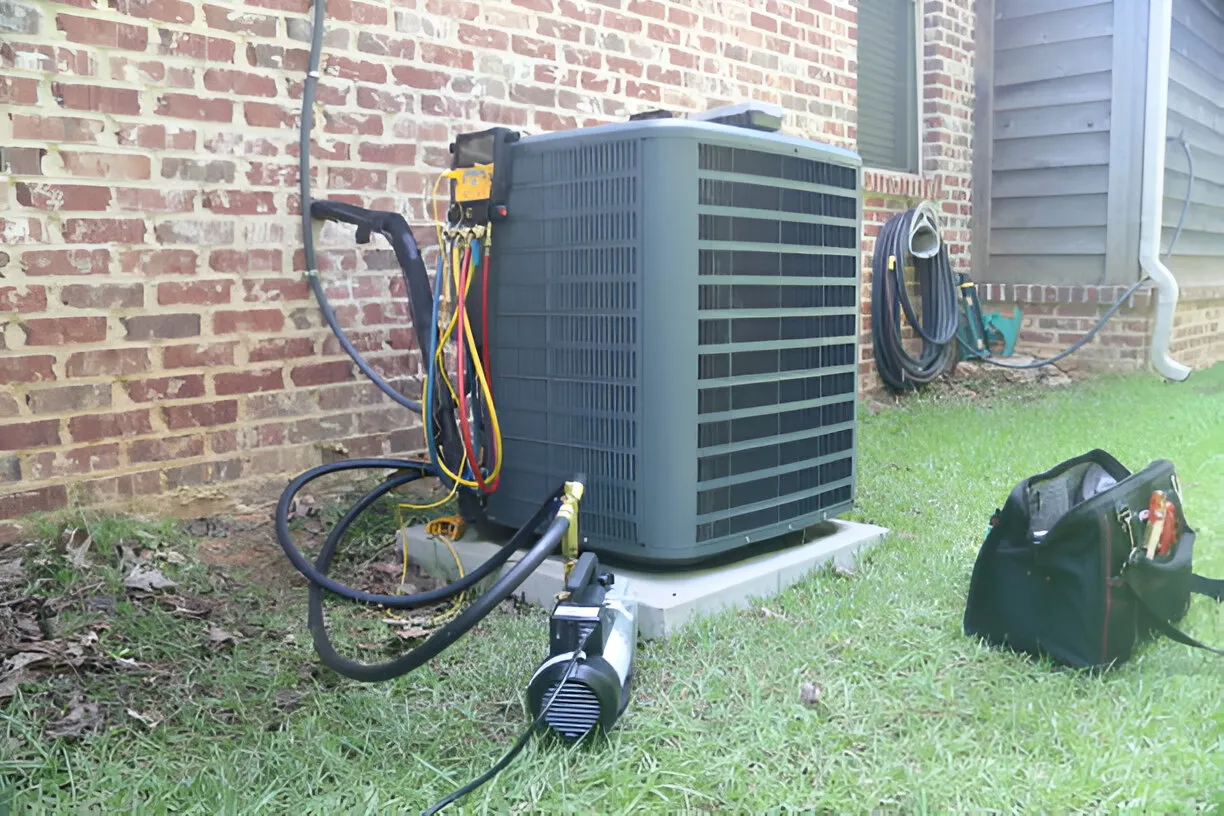
- Refrigerant and electrical connections: Run refrigerant lines, vacuum the system, charge per manufacturer specifications, and connect electrical circuits.
- Duct sealing and insulation: Repair or upgrade ductwork where necessary to meet efficiency targets.
- Controls and thermostat setup: Install and program smart thermostats or zoning controls to match system operation.
- Start-up and system balancing: Verify pressures, airflow, and temperatures; adjust settings for optimal performance.
Typical installation timelines
- Ductless mini-split: 1 day for a single zone, 1-3 days for multiple zones.
- Air-source split system for a typical single-family home: 1-3 days depending on ductwork condition.
- Full system replacement with ductwork repair or replacement: 2-5 days.
- Geothermal systems: several weeks due to ground loop installation and site-specific excavation.
Timelines vary with home complexity, permit turnaround, and parts availability.
Post-installation testing and commissioning
A complete commissioning sequence confirms the system meets design specifications. This includes:
- Verifying correct refrigerant charge and pressures.
- Measuring supply and return temperatures and airflow at registers.
- Confirming balanced zoning and thermostat operation.
- Performing safety checks on electrical connections and controls.
- Demonstrating system operation and maintenance basics with the homeowner.
Comprehensive documentation should be provided, including any warranty registration steps and system specifications.
Warranties and rebate assistance
Most new heat pump systems come with a manufacturer warranty for compressors and coils and a limited parts warranty for other components. Installers often offer labor warranties for a specified period. Proper registration and documented commissioning can be required to maintain full warranty coverage.
Rebates and incentives are frequently available at the federal, state, and local level, and utilities may offer additional programs for high-efficiency equipment. In Westerville, installers can assist with identifying eligible incentives, completing rebate paperwork, and ensuring you meet documentation requirements such as efficiency ratings and contractor certifications.
Maintenance and long-term benefits
Routine maintenance maximizes efficiency and lifespan. Recommended tasks include seasonal filter changes, annual professional inspections, refrigerant and electrical checks, and periodic duct cleaning or sealing. Regular maintenance improves performance in Westerville’s variable climate, reduces repair risks, and helps sustain manufacturer warranty coverage.
Long-term benefits of a properly installed heat pump include lower operating costs, improved indoor comfort year-round, reduced carbon footprint, and potential increased property value. Choosing the right system and following a thorough installation and commissioning process ensures reliable performance tailored to Westerville, OH homes and climate conditions.
Hot Deals & Cool Savings

.webp)
New Service Agreement Membership
.webp)
Any New Client Service
Next Service for Referring a New Client
New Service Agreement Membership
Any New Client Service
Next Service for Referring a New Client
.webp)
.webp)

Service Areas
