
HVAC Tune-up in Pickerington, OH
Schedule a seasonal HVAC tune-up in Pickerington, OH to improve efficiency, extend equipment life, and reduce emergency repairs. Learn more today.

Keeping your home comfortable year round in Pickerington, OH depends on a well-maintained HVAC system. Seasonal HVAC tune-ups are the most effective way to prevent breakdowns during hot, humid Ohio summers and cold, unpredictable winters. Best Service Heating & Cooling has provided preventative maintenance guidance across central Ohio since 1992.
Why a seasonal HVAC tune-up matters in Pickerington, OH
Pickerington experiences wide seasonal swings: humid summers that push air conditioners hard, pollen and dust in spring that clog filters and coils, and freezing winters that test furnaces and heat pumps. Those conditions increase wear on system components, reduce efficiency, and raise the likelihood of unexpected failures.
A professional tune-up addresses issues before they cause a breakdown. Regular maintenance restores system efficiency, reduces energy use, improves indoor air quality, and helps protect components from premature failure. For many homeowners in Pickerington, a properly tuned HVAC system translates to more consistent comfort, fewer emergency repairs, and extended equipment life.
Recommended frequency and timing
- Air conditioning tune-up: annually in early spring (before cooling season begins).
- Heating tune-up: annually in fall (before heating season begins).
- For homes with combined systems or heavy use, consider twice-yearly checks so each major mode receives a dedicated inspection before the season of heavy use.
- Homes with high indoor contaminants, pets, or older equipment may benefit from more frequent inspections.
Annual or twice-annual service aligns with manufacturer recommendations and helps preserve warranty coverage on many units.
Common signs your Pickerington home needs a tune-up
- Rising energy bills with no change in thermostat settings
- Weak or uneven airflow from vents
- Strange sounds: rattles, grinding, or loud hums
- Systems cycling on and off more frequently than normal
- Odors (musty or burning) when the system starts
- Visible ice on outdoor units or evaporator coils
- Water leaks around indoor equipment or clogged condensate drain
- Inconsistent indoor temperatures between rooms
- Increased dust or poor indoor air quality
If any of these signs appear, scheduling a professional tune-up can identify the cause and prevent a small problem from becoming a costly repair.
What a professional HVAC tune-up includes
A comprehensive tune-up is a methodical inspection and service process covering both safety and efficiency items. The following list outlines the typical tasks performed on air conditioners, furnaces, and heat pumps as part of seasonal maintenance.
Core inspection and maintenance tasks
- Visual system inspection for obvious damage, leaks, rust, and component wear
- Replace or recommend replacement for air filters; confirm filter size and type
- Clean and inspect evaporator and condenser coils to restore heat transfer
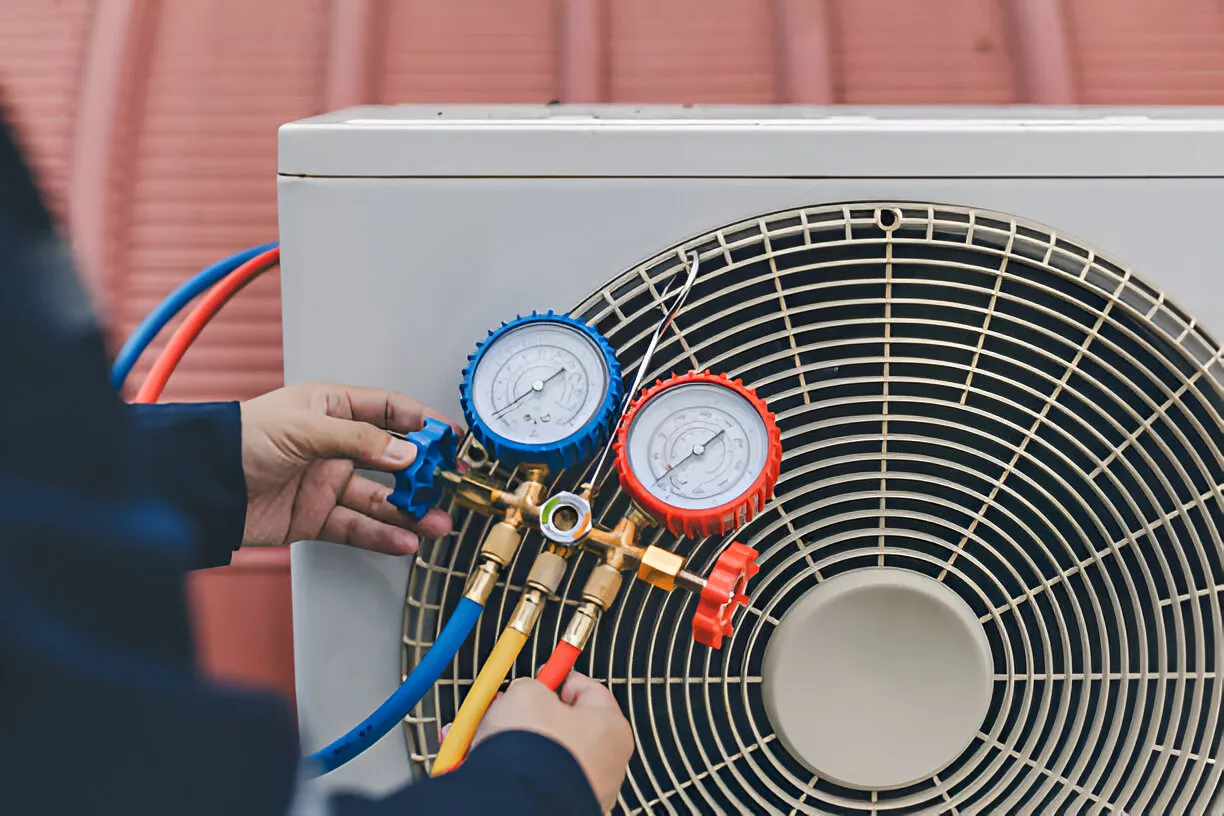
- Check refrigerant levels and pressure; identify signs of leaks or moisture in the system
- Inspect and test condensate drain and pan; clear clogs and ensure proper drainage
- Test and calibrate thermostat performance and setpoints
- Inspect electrical components: contactors, relays, breakers, and wiring for wear or loose connections
- Test safety controls and switches to confirm proper operation
- Measure airflow and inspect blower wheel; clean and rebalance if needed
- Lubricate motors, bearings, and moving parts where applicable
- Inspect belts and pulleys for wear and proper tension; replace if necessary
- Check ductwork access points for visible leaks or disconnected sections
- Inspect heat exchanger for cracks or signs of combustion leakage in gas furnaces
- Verify combustion efficiency and test combustion air and flue venting for furnaces and boilers
- Inspect outdoor unit mounting, clear debris, and check fan motor and blades
- Check start capacitors and contactors on compressors and motors
- Confirm electrical amperage of motors against manufacturer specifications
- Identify any worn or failing components that should be repaired or replaced
Each tune-up includes documentation of findings and recommended next steps so homeowners know which items are safety critical, which affect efficiency, and which can be deferred.
Detailed tune-up process: step by step
Pre-inspection and homeowner briefing
- The technician reviews system history and any homeowner concerns. This sets priorities for the inspection and notes unusual behavior to reproduce.
Safety shutoff and basic electrical checks
- Power to the unit is turned off before inspecting wiring and components. The technician checks fuses, breakers, contactors, and control voltage.
Airflow and indoor unit inspection
- Filters are checked and replaced as needed. The blower assembly is inspected, cleaned, and lubricated. Airflow measurements are taken to identify restrictions or duct problems.
Coil cleaning and condensate maintenance
- Evaporator and condenser coils are cleaned to maximize heat transfer. The condensate drain is flushed and checked for proper slope and trap condition.
Refrigerant and pressure checks (for cooling systems and heat pumps)
- Refrigerant pressures and temperatures are recorded. Low refrigerant can indicate a leak; repairs are documented and prioritized. The technician identifies refrigerant type, noting older systems that may still use R-22.
Electrical and component performance testing
- Capacitors, relays, contactors, and motors are tested under load. Amperage draw is measured and compared against manufacturer limits to identify failing motors or dying capacitors.
Safety and combustion testing (for gas furnaces)
- The furnace combustion chamber and heat exchanger are inspected for cracks and corrosion. Pilot assembly or ignition system operation is checked. Combustion efficiency and venting are evaluated for CO risk.
System startup and operational checks
- The system is run through a full cycle with the technician observing for proper pressures, temperatures, and control operation. Thermostat response and system cycling are confirmed.
Final report and recommendations
- The homeowner receives a clear summary of work performed, parts replaced, and items requiring attention. Urgent safety issues are highlighted, along with efficiency opportunities.
Common issues uncovered during tune-ups and typical solutions
- Dirty coils and clogged filters: Cleaning coils and replacing filters restores efficiency and improves airflow. This is one of the most common and cost-effective fixes.
- Low refrigerant: Often due to leaks. A technician will locate and repair leaks, then recharge the refrigerant to specifications. For older systems using R-22, recharging can be expensive due to supply constraints.
- Failing capacitors and contactors: These start and run major motors. Replacing weak capacitors or worn contactors prevents hard-starts and compressor damage.
- Worn blower motors or bearings: Lubrication can help, but failing motors require replacement to restore airflow and efficiency.
- Cracked heat exchangers or flue problems: These are safety-critical issues for gas heating systems and require immediate repair or replacement.
- Clogged condensate drains: Clearing the drain and treating the drain line prevents water damage and microbial growth.
- Thermostat calibration issues: Replacing or calibrating the thermostat improves comfort and prevents short cycling.
- Duct leaks and poor insulation: Addressing duct problems improves airflow and system efficiency, often with significant comfort improvements in older Pickerington homes with unsealed ducts.
When a tune-up finds major repair or replacement needs
A tune-up may reveal problems that are best addressed with a repair or, in some cases, system replacement. Common indicators that repair or replacement is necessary include:
- Repeated compressor failures or an expensive compressor repair on an older unit
- Refrigerant leaks in systems that use phased-out refrigerants such as R-22
- Heat exchanger cracks in aging furnaces that compromise safety
- Electrical issues that pose a fire risk or indicate systemic wiring problems
- Recurrent motor failures where replacement offers better long-term value
Technicians provide objective assessments, comparing repair cost against expected remaining life and efficiency gains from replacement. In Pickerington homes where comfort needs are seasonal but critical, these decisions weigh short-term costs against long-term reliability and energy savings.
Benefits of regular HVAC tune-ups for Pickerington homeowners
- Improved energy efficiency and lower utility bills: Clean, properly charged systems run closer to rated efficiency, reducing monthly energy use.
- Fewer breakdowns during peak seasons: Preventative maintenance catches worn components and avoids emergency calls in extreme weather.
- Extended equipment life: Routine service reduces stress on major components and delays the need for full system replacement.
- Better indoor air quality: Clean coils, fresh filters, and functional condensate drains reduce dust, allergens, and microbial growth.
- Safer operation: Combustion checks and electrical inspections reduce risks of carbon monoxide exposure and electrical hazards.
- Preserved warranty coverage: Many manufacturers require documented annual maintenance to keep warranties valid.
- Predictable maintenance budgeting: Regular tune-ups make repair needs visible and allow homeowners to plan for part replacements or future upgrades.
How tune-ups integrate with maintenance and service agreements
Many homeowners find the best value through a maintenance agreement or membership plan. Best Service Heating & Cooling’s Maintenance Plan conceptually aligns with what homeowners need for long-term system health: scheduled inspections, priority service, discounts, and documented maintenance.
Typical maintenance plan features that enhance tune-up value
- Scheduled seasonal tune-ups with record-keeping: Ensures both the cooling and heating systems are inspected at the right times.
- Priority or emergency service: Members receive expedited service during peak demand periods.
- Parts and labor discounts on repairs: Reduces the cost of addressing issues discovered during a tune-up.
- Extended equipment life and tracking: Regular service events allow technicians to track performance trends over time and plan ahead.
- Documentation for warranties and resale: Records of professional maintenance can support warranty claims and add credibility when selling a house.
Joining a maintenance plan streamlines the tune-up process, removes the burden of scheduling, and generally results in faster, more consistent service for homes across Pickerington.
What to expect during the visit and homeowner responsibilities
A professional tune-up typically takes 60 to 120 minutes depending on system type and condition. Homeowners should expect the technician to:
- Arrive with tools and test equipment
- Ask about recent operating issues or unusual behavior
- Perform a safety-first inspection and required maintenance tasks
- Provide a written summary of findings and recommendations
Homeowner responsibilities that improve tune-up outcomes:
- Ensure access to indoor and outdoor equipment, including clearing debris around outdoor units
- Replace basic disposable filters between scheduled services if you have pets or heavy pollen exposure
- Note dates and any odd symptoms before the technician arrives to help diagnostics
- Keep service records and maintenance agreement documentation in a safe place
Cost considerations and long-term value
While tune-up pricing varies, the decision should be framed as an investment in reliability and energy savings rather than a simple expense. Regular maintenance reduces the likelihood of expensive emergency repairs, keeps warranties intact, and helps systems operate at peak efficiency, which lowers utility costs over the life of the equipment.
When comparing costs, consider:
- Frequency of use in Pickerington’s seasonal climate
- Age and condition of equipment
- Potential savings from improved efficiency
- Discount benefits from a maintenance plan
Common misconceptions about HVAC tune-ups
- Misconception: Tune-ups are only necessary when something is wrong.
- Reality: Most tune-ups are preventative. Systems often fail without obvious warning; maintenance finds issues early.
- Misconception: Replacing filters is enough.
- Reality: Filters help, but coils, refrigerant, electrical components, and combustion systems also require professional inspection.
- Misconception: New systems do not need tune-ups.
- Reality: New equipment still needs annual checks to ensure proper installation, correct refrigerant charge, and safe operation.
Local factors in Pickerington that affect HVAC performance
- Humidity: High summer humidity increases load on air conditioners and can lead to microbial growth in condensate pans if not properly maintained.
- Pollen and spring allergens: Increased debris and pollen can clog filters and reduce coil efficiency in spring.
- Freeze and thaw cycles: Winter conditions can stress outdoor heat pump components and lead to condenser coil damage or icing problems if the defrost cycle is compromised.
- Older housing stock: Some Pickerington homes have older ductwork or equipment that benefits from more frequent inspection and targeted duct sealing.
A local technician familiar with Pickerington will tailor tune-up procedures to these conditions, recommending filter types, preventive treatments for condensate lines, and seasonal adjustments that maximize reliability and comfort.
How technicians document and follow up after a tune-up
A thorough tune-up should include documentation of all baseline measurements and actions taken. Typical documentation includes:
- Filter type and replacement date
- Coil condition and cleaning performed
- Refrigerant pressures and any corrective actions
- Electrical test results and components replaced
- Combustion metrics for gas appliances
- Recommendations with priority levels and estimated timelines
Follow-up may include scheduling a repair appointment for recommended items, enrollment in a maintenance plan for ongoing coverage, or periodic checks for systems with marginal performance.
When to escalate from tune-up to a full system evaluation or replacement
Consider a full system evaluation when:
- The system is older than 12 to 15 years and requires frequent repairs
- Efficiency is poor and repair costs approach replacement cost
- Safety issues such as a cracked heat exchanger are discovered
- Refrigerant type is obsolete and recharge costs are recurring
- Comfort needs have changed (e.g., home additions or increased occupancy)
A professional evaluation compares remaining equipment life, efficiency losses, and repair costs to potential savings from a new, more efficient system.
Hot Deals & Cool Savings

.webp)
New Service Agreement Membership
.webp)
Any New Client Service
Next Service for Referring a New Client
New Service Agreement Membership
Any New Client Service
Next Service for Referring a New Client
.webp)
.webp)

Service Areas
