
HVAC Tune-up in Berwick, OH
Berwick, OH HVAC tune-up improves efficiency, reduces breakdowns, and extends equipment life with a clear inspection and maintenance plan. Schedule today.

An HVAC tune-up is a focused, professional inspection and maintenance visit that keeps your heating and cooling equipment running safely, efficiently, and reliably. In Berwick, OH, seasonal tune-ups are especially valuable because the area’s humid summers and cold winters place significant strain on HVAC systems. Best Service Heating & Cooling provides comprehensive tune-ups designed to reduce breakdowns, lower energy use, and extend equipment life—backed by documented checks and clear recommendations so you know exactly what was done and why it matters.
Why seasonal HVAC tune-ups matter in Berwick, OH
Berwick sits near Columbus and experiences humid summers, variable spring and fall conditions, and freezing winters. Those weather swings create several local challenges:
- High summer humidity increases cooling runtime, causing faster coil and filter clogging.
- Pollen, tree debris, and neighborhood construction lead to heavier filter loading and dirt in condensers and ductwork in spring.
- Freeze-thaw cycles and winter combustion demands stress furnaces, heat exchangers, and venting systems.
- Many local homes are older and can have leaky ducts or aging systems that need closer attention.
A seasonal tune-up addresses these local stresses before they cause inconvenient failures or efficiency losses. Regular maintenance also helps keep manufacturer warranties valid and supports consistent comfort throughout the year.
Common HVAC problems Berwick homeowners see
Most service calls that could have been prevented with a timely tune-up fall into these categories:
- Reduced cooling capacity during heat waves because of dirty evaporator coils or low refrigerant.
- Uneven heating or cooling from clogged filters, unbalanced ducts, or malfunctioning thermostats.
- Short cycling or noisy cycling due to thermostat miscalibration or restricted airflow.
- Higher than normal utility bills caused by dirty components, worn bearings, or loose electrical connections.
- Furnace safety and performance concerns in winter, including pilot/ignition issues, blocked vents, or deteriorating heat exchangers.
- Condensate drain backups that lead to moisture damage or microbial growth.
- Refrigerant leaks that reduce performance and can damage components if left unchecked.
What a full HVAC tune-up includes
A professional tune-up is systematic and documented. Best Service Heating & Cooling follows an industry-standard checklist adjusted for the local climate and common equipment types in Berwick homes. The primary elements include:
Inspection checklist (visual and operational)
- Overall system visual inspection for signs of wear, corrosion, leaks, or rodent damage.
- Check air filter type and condition and replace or recommend replacement if needed.
- Inspect and test thermostat accuracy and settings.
- Examine ductwork visible at registers and accessible plenums for loose connections and insulation gaps.
- Verify proper airflow at supply and return grilles.
- Evaluate system run cycles and sequence of operation.
Cleaning and lubrication
- Clean or vacuum indoor evaporator coil and outdoor condenser coil where accessible.
- Clean blower assembly and housing to restore airflow.
- Clear condensate drain and trap; flush drain line to prevent backups and mold growth.
- Lubricate motors, fan bearings, and moving parts where manufacturer allows to reduce friction and wear.
- Remove debris from around the outdoor condenser and straighten any bent fins to restore airflow.
Electrical, controls, and safety checks
- Tighten electrical connections; inspect contactors, relays, and capacitors for wear.
- Measure voltage and amperage to motors and compressors to detect electrical stress.
- Test safety switches and limit controls on furnaces and heat pumps.
- Examine heat exchanger for visible cracks or corrosion and test for combustion safety on gas-fired equipment.
- Check venting and flue systems for proper draft, blockage, and secure connections.
Refrigerant and combustion safety where applicable
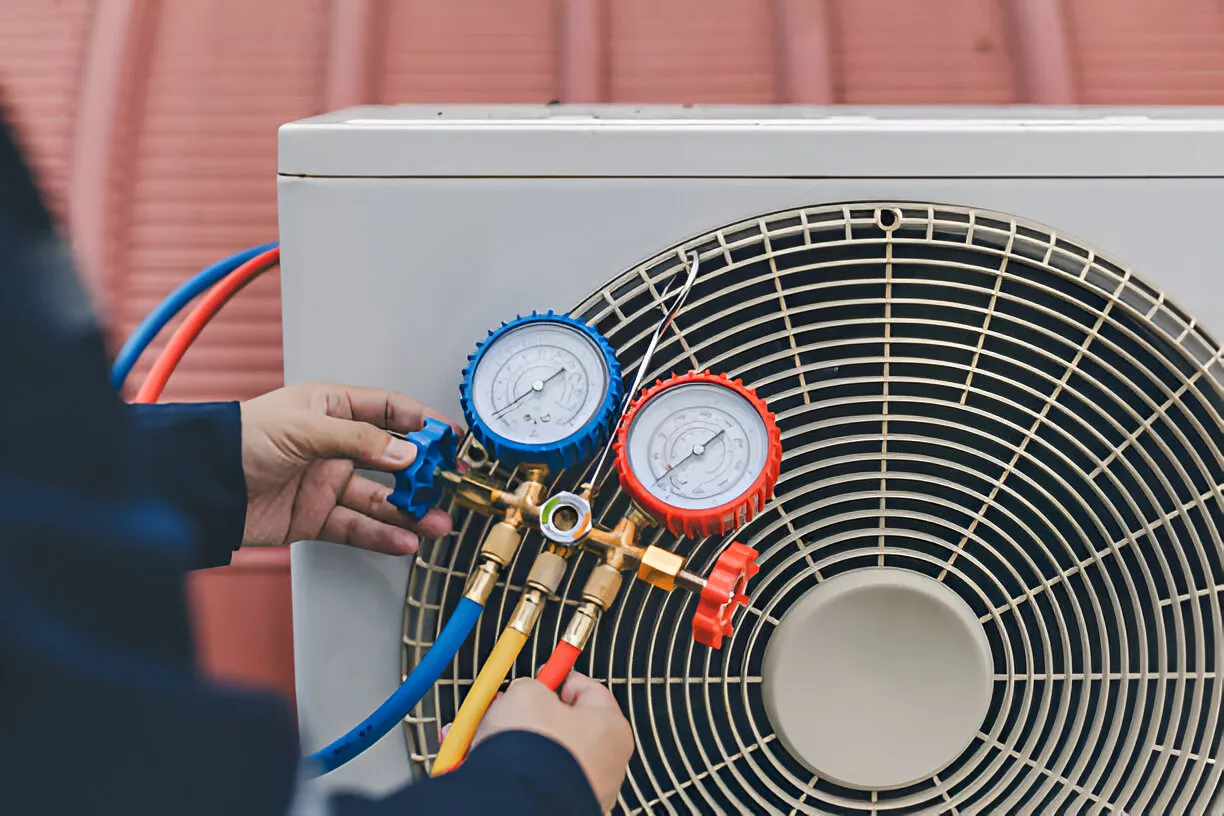
- Measure refrigerant charge and pressures; compare to manufacturer specifications and diagnose leaks if levels are low.
- Perform temperature split measurement (delta T) to assess cooling performance.
- On gas furnaces, check burner flame, perform a combustion analysis if necessary, and test for carbon monoxide risk.
- Verify integrity of seals on refrigeration line sets and service ports.
Thermostat calibration and control optimization
- Calibrate thermostats to ensure setpoint accuracy within a small margin.
- Verify programmed schedules and compatibility with system equipment.
- Replace thermostat batteries if applicable and test remote sensors or zoning controls.
Documentation and recommendations
- Provide a written report of items inspected, readings taken, and recommended repairs or upgrades.
- Prioritize findings into immediate safety concerns, performance issues, and long-term improvements.
- Estimate expected life extension and efficiency improvements when recommendations are implemented.
Diagnostics and performance checks explained simply
During a tune-up technicians take several simple measurements that tell a lot about system health. Here is what they look for and why it matters:
- Temperature split (delta T): Measures the difference between supply and return air temperatures. A healthy cooling system typically has a 15 to 20 degree Fahrenheit difference. A low split indicates airflow issues or low refrigerant.
- Refrigerant pressure and subcooling/superheat: These values confirm the correct refrigerant charge. Low refrigerant reduces capacity and increases compressor stress.
- Motor amperage and line voltage: Abnormal amperage or low voltage can indicate failing motors, bad capacitors, or electrical supply problems.
- Airflow and static pressure: Restricted airflow damages components and shortens life. Measuring static pressure helps find duct restrictions or dirty coils.
- Combustion analysis and CO checks (furnaces): Confirms burners are operating safely and efficiently and checks for dangerous carbon monoxide levels.
Technicians use these diagnostics to make precise recommendations rather than guesswork.
Typical tune-up process and what homeowners can expect
A professional tune-up follows a consistent flow to maximize value in a single visit:
- Pre-inspection and homeowner review: The technician confirms the system type, maintenance history, and homeowner concerns.
- Visual inspection and basic cleaning: Covers filters, access panels, condensate drainage, and outdoor coil clearing.
- Operational start-up and system run checks: The system is run through a full heating or cooling cycle while measurements are taken.
- Component checks and lubrication: Electrical connections tightened, moving parts lubricated, and belts inspected.
- Safety and refrigerant/combustion checks: Pressure checks, CO testing, and venting inspections as applicable.
- Final calibrations and airflow verification: Thermostat calibration, airflow balancing, and comfort checks throughout the home.
- Written report and recommendations: Clear documentation of work performed and prioritized next steps.
A standard residential tune-up typically takes 60 to 90 minutes depending on system age, complexity, and whether additional cleaning or repairs are needed.
Benefits of an annual tune-up for Berwick homes
Regular tune-ups deliver measurable and practical benefits:
- Improved efficiency and lower energy bills: Cleaner coils, correct refrigerant, and proper calibration help systems run less and use less energy.
- Longer equipment life: Reduced stress on components decreases premature failures and postpones costly replacements.
- Fewer emergency repairs: Proactive detection of worn parts prevents inconvenient breakdowns during extreme weather.
- Safer operation: Combustion and venting checks help prevent carbon monoxide hazards and other safety risks.
- Better comfort and indoor air quality: Proper airflow, clean components, and maintained condensate drains reduce humidity, odors, and microbial growth.
- Warranty compliance: Many manufacturers require annual maintenance to maintain warranty coverage.
- Clear records for resale: Documentation from regular tune-ups helps prospective buyers and can support home value.
Maintenance-plan discounts and ongoing value
Consistent maintenance delivers the best long-term return. Best Service Heating & Cooling’s Maintenance Plan is tailored to provide those returns with extra value for Berwick residents. Typical plan benefits include:
- Scheduled seasonal tune-ups to prepare cooling equipment for summer and heating equipment for winter.
- Extended equipment life through regular preventive care.
- Lower utility bills from ongoing efficiency improvements.
- 15% discount on all service calls for plan members, helping reduce repair costs when issues arise.
- Priority scheduling and access to emergency service for covered members when available.
- A maintenance record that supports warranty compliance and resale transparency.
These plan features make seasonal tune-ups financially smarter over the life of your equipment.
How often and when to schedule tune-ups in Berwick
- Air conditioning tune-up: Schedule in spring before the cooling season begins, ideally in March or April. This prevents peak-season failures when repair times and costs can be higher.
- Heating tune-up: Schedule in early fall before cold weather arrives, ideally in September or October, so the furnace or heat pump is ready for winter demands.
- Heat pumps and two-stage systems: Twice yearly inspections are recommended because they serve both heating and cooling roles.
- High-use or older systems: Systems over 10 years old, or units that run nearly continuously due to large households or poor insulation, may benefit from twice-yearly visits.
Consistency matters more than frequency. Annual professional attention prevents small issues from becoming major failures.
Simple pre-visit checks homeowners can do
Preparing for a tune-up helps the technician be efficient and keeps costs lower:
- Replace or examine filters 1 to 2 weeks before the visit so the tech can assess filter-related impacts.
- Clear debris and vegetation at the outdoor condenser for easy access.
- Make sure the thermostat is accessible and batteries are available if needed.
- Note any unusual noises, odors, or inconsistent comfort in specific rooms and write them down for the technician.
- Ensure access to service panels and utility shutoffs near the furnace or air handler.
These small steps let the technician focus on deeper diagnostics and repairs.
When a tune-up is not enough
A tune-up can resolve wear and efficiency issues but cannot reverse major mechanical failures or obsolete equipment. Signs you may need repair or replacement rather than just maintenance include:
- Repeated refrigerant leaks or a compressor problem.
- Persistent carbon monoxide detection or signs of heat exchanger failure.
- Frequent short cycling that persists after airflow and control checks.
- System age beyond expected life span (typically 12 to 15 years for central air units, 15 to 20 years for high-quality furnaces), especially if efficiency is low.
- Major refrigerant system or motor failures, which require parts replacement beyond a routine tune-up.
The tune-up report should clearly identify whether repairs are recommended as immediate fixes, preventatives, or long-term upgrades.
Investing in tune-ups: what it costs you and what it protects
While annual maintenance is an expense, it is an investment that protects your home comfort, safety, and equipment value. Consider the cumulative costs of:
- A major mid-summer compressor failure requiring emergency replacement.
- A winter heating breakdown that necessitates urgent service during extreme cold.
- Energy waste from a poorly tuned system that raises monthly utility bills.
- Premature equipment replacement due to avoidable wear.
Regular, documented tune-ups reduce the risk of those high-cost events and keep your system operating as intended.
Why documentation and clear reporting matter
One of the most important parts of a tune-up is the written record. A technician should provide:
- A clear checklist of items inspected and service performed.
- Measured readings such as temperature split, refrigerant pressure, and amperage.
- A prioritized list of recommended repairs or upgrades, with safety issues noted as immediate.
- Maintenance dates to maintain warranty compliance and service history for future owners.
Documentation makes preventive care trackable and supports smart decisions when repairs or replacement are needed.
Choosing the right tune-up approach for your system
Different equipment needs slightly different attention. Typical variations include:
- Central air conditioners: Focus on condenser coil cleaning, refrigerant check, and airflow.
- Furnaces (gas or oil): Emphasize combustion safety, heat exchanger inspection, and burner tuning.
- Heat pumps: Check both heating and cooling performance, reversing valve operation, and defrost cycles.
- Ductless mini-splits: Clean indoor heads and outdoor units, check line set and refrigerant charge, and verify communication between heads and outdoor condensing unit.
- Ductwork and indoor air quality: Inspect accessible ducts, check insulation, and recommend air filtration or humidity control upgrades when appropriate.
A tuned approach ensures the right checks for your specific system type and home needs.
Hot Deals & Cool Savings

.webp)
New Service Agreement Membership
.webp)
Any New Client Service
Next Service for Referring a New Client
New Service Agreement Membership
Any New Client Service
Next Service for Referring a New Client
.webp)
.webp)

Service Areas
